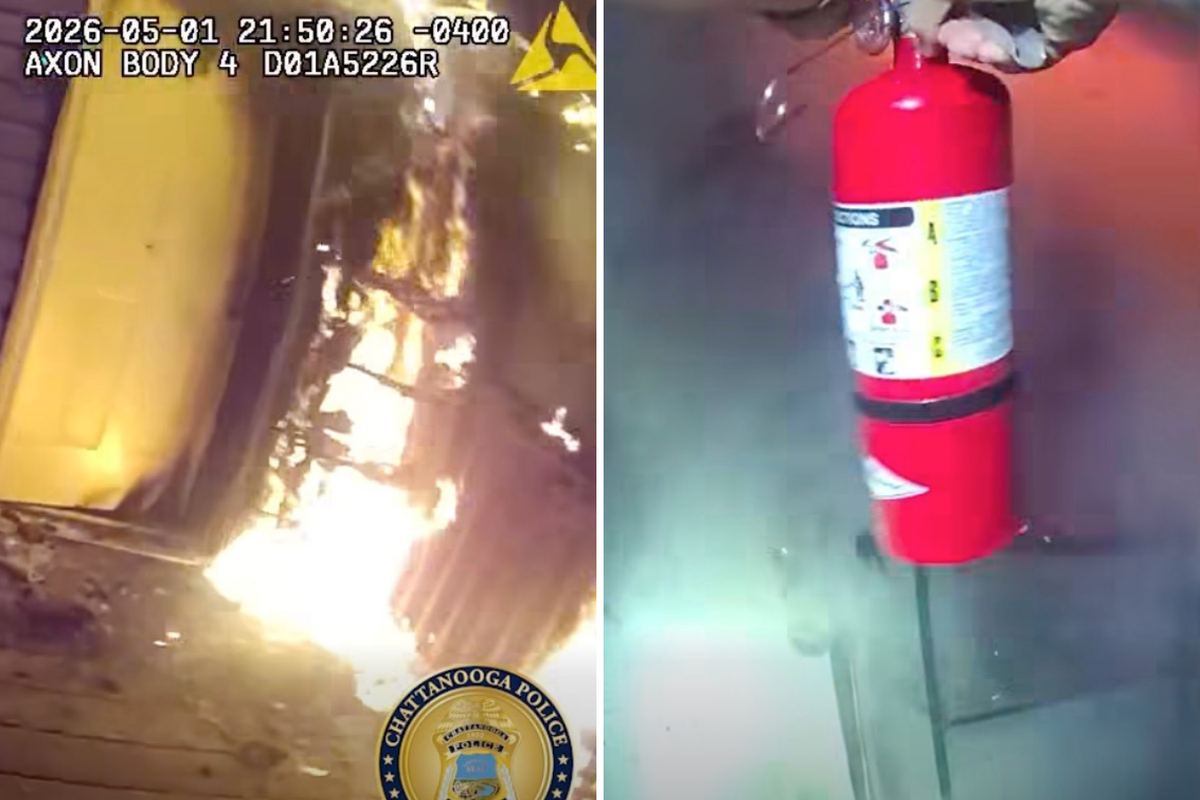
The local news cycle loves a "miracle." You’ve seen the headline a thousand times: a mother and her children trapped in a burning building, a daring ladder ascent, a narrow escape, and a tearful reunion on the sidewalk. We treat these events like cinematic triumphs of the human spirit. We toast the bravery of the first responders and move on with our day, satisfied that the system worked.
The system didn't work. The system failed the moment that family became "trapped."
If you’re waiting for a dramatic rescue, you’ve already lost the war. We are addicted to the hero narrative because it’s easier than looking at the boring, ugly reality of fire safety. We celebrate the "save" while ignoring the preventable negligence that necessitated it. Every dramatic rescue is a symptom of a systemic breakdown in personal responsibility and infrastructure maintenance.
The Myth of the Miracle Rescue
Stop calling them miracles. A miracle is an act of divine intervention that defies the laws of physics. A rescue is a high-risk gamble performed by professionals because someone—the tenant, the landlord, or the city—ignored the math of fire dynamics.
Fire doesn't care about your bravery. It follows the laws of thermodynamics. In a standard residential structure, flashover—the point where everything in a room reaches its ignition temperature simultaneously—can happen in less than five minutes. If you are "stuck" inside a burning building, you aren't waiting for a hero; you are waiting for a statistical anomaly.
Most people don't die from flames. They die from the toxic cocktail of hydrogen cyanide and carbon monoxide produced by modern synthetic furniture. When we focus on the "dramatic rescue," we gloss over the fact that the victims likely suffered permanent neurological damage or lung scarring within the first three minutes. We romanticize the escape and ignore the casualty of the environment.
The Hero Complex is a Policy Failure
We pour billions into the optics of firefighting—the shiny trucks, the heavy gear, the televised rescues—while starving the "boring" sectors: code enforcement and fire prevention education.
I have spent years looking at the charred remains of "miracles." Behind every mother saved from a second-story window is a series of catastrophic, mundane errors:
- Disabled Smoke Alarms: Usually because they "chirped" during cooking and the battery was never replaced.
- Blocked Egress: Hallways filled with bikes, strollers, or boxes that turn a simple exit into a deathtrap in zero-visibility smoke.
- The "Stay Put" Fallacy: People waiting for instructions that never come because they believe a rescue is guaranteed.
The industry insider truth? Firefighters hate "dramatic rescues." A rescue means the fire won the first round. It means the crew has to abandon fire suppression—the thing that actually saves the most lives—to perform a high-risk "grab." When firefighters are forced into a dramatic rescue, the risk of the building collapsing or the fire spreading to neighboring structures skyrockets.
We should be outraged that a family was in that position, not cheering that they got out.
Why Your "Safe" Home is a Tinderbox
Modern homes burn eight times faster than they did fifty years ago. Your grandfather’s sofa was made of wood and cotton. Your sofa is essentially solidified gasoline wrapped in polyester.
In the 1970s, you had about 17 minutes to exit a house fire. Today, you have roughly three. The "dramatic rescue" narrative suggests you have time to wait on a balcony or huddle in a bathroom. You don't.
If you aren't out in 120 seconds, you are probably not getting out at all. Yet, we continue to build with lightweight "toothpick" construction and open-concept floor plans that allow fire to travel through a home like a wind tunnel. We prioritize aesthetics over compartmentalization. We want the "great room" and the "vaulted ceiling," which are essentially chimneys for fire.
The Industry's Dirty Secret: Sprinklers
Why aren't residential sprinklers mandatory in every single multi-family dwelling? Because developers lobby against them to save a few dollars per square foot, and the public doesn't demand them because they're "ugly" or they might "accidentally go off."
Imagine a scenario where we viewed a house fire without a sprinkler system the same way we view a car without seatbelts. We would call it criminal. A single sprinkler head can contain a fire in its room of origin 90% of the time. It turns a "dramatic rescue" into a "minor plumbing issue."
But there’s no glory in a sprinkler head. You can’t put a sprinkler on the front page of the evening news and talk about its "bravery." So, we continue to fund the theater of rescue while ignoring the engineering of survival.
Stop Asking "How Were They Saved?"
The "People Also Ask" sections of news sites are filled with useless inquiries:
- How did the fire start? (Usually a stove or a space heater—it doesn't matter).
- Was the family okay? (Physically, maybe. Financially and psychologically, never).
- Who was the firefighter who saved them? (Irrelevant to your own safety).
The question you should be asking is: "Why was the exit blocked?" We need to stop treating fire safety as a passive service provided by the city. It is an active responsibility of the occupant. If you live in an apartment building and the fire door is propped open with a brick, you are looking at a future "dramatic rescue" in the making. That brick is a death warrant.
The Unconventional Advice You Actually Need
Forget the "stop, drop, and roll" fluff. That’s for when you’re already on fire. If you’re on fire, you’ve already failed the most basic levels of situational awareness.
- Sleep with the door shut. A closed door can keep a room at $38°C$ while the hallway is $537°C$. It’s the difference between waking up and never waking up.
- Buy a $50 fire ladder. If you live on a second or third floor and you don't have a collapsible ladder under your bed, you are gambling your children's lives on the response time of a truck that might be stuck in traffic.
- Audit your landlord. If your hallway lights are out or your smoke detectors are ancient, don't file a request. File a complaint with the fire marshal. Be the "difficult" tenant. It’s better than being the "dead" tenant.
- Stop hoarding. High "fuel load" in a home turns a small kitchen fire into an unsurvivable inferno in seconds. Your clutter is the reason the "dramatic rescue" becomes a recovery mission.
The Cost of the Narrative
When we celebrate these rescues, we give everyone else a false sense of security. We make people think that as long as they get to a window, a red truck will show up and a man in a helmet will carry them to safety.
This is a lie.
Firefighters are human. They get delayed. They get lost in the smoke. They run out of air. Relying on a rescue is like relying on a lottery win to pay your mortgage. It’s a bad strategy that relies on luck and someone else's sacrifice.
The next time you see a headline about a "miracle rescue," don't click "like." Don't share it as a feel-good story. View it for what it is: a terrifying reminder that our buildings are failing, our standards are slipping, and we are one malfunctioning lithium-ion battery away from another "miracle" that might not happen next time.
Stop cheering for the rescue and start demanding the prevention.
Buy a ladder. Check your batteries. Close your door.
Stop being a victim in waiting.