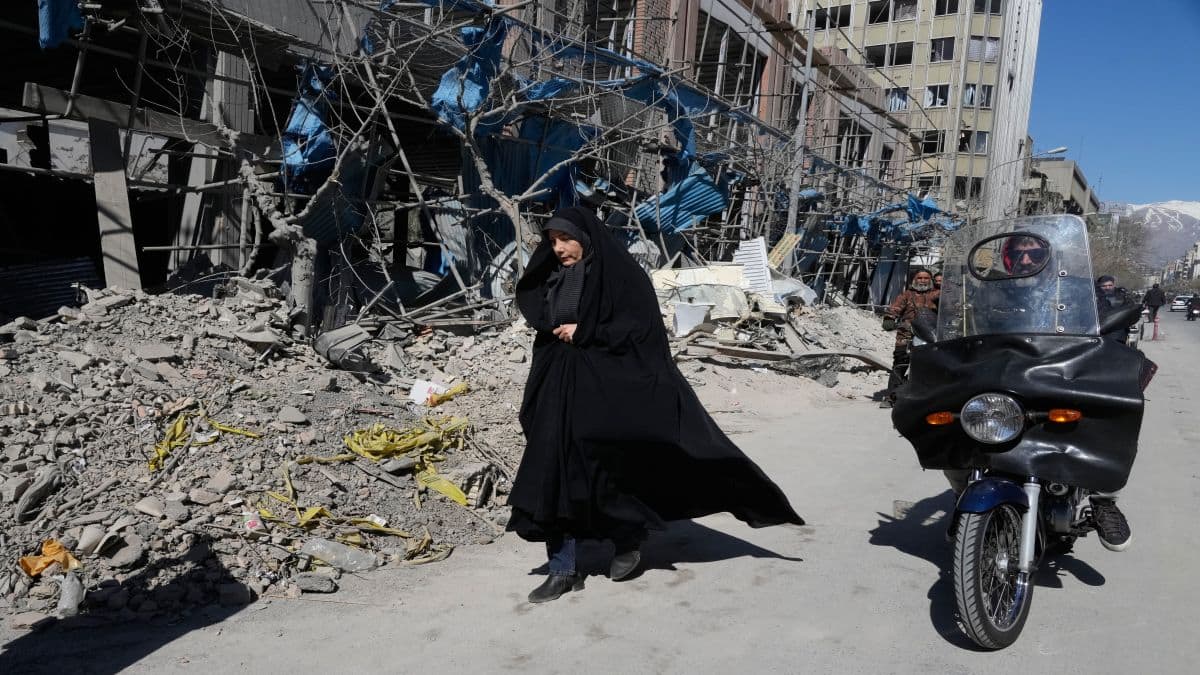
The physical safety of human capital and the integrity of supply chains are the two primary variables currently dictating the operational footprint of global technology firms in the Middle East. While surface-level reports focus on flight cancellations and temporary office closures, the underlying strategic shift is a transition from static regional hubs to Elastic Operational Models. Companies are no longer merely "reacting" to conflict; they are quantifying geopolitical volatility as a fixed cost of doing business, leading to a structural decoupling of talent location from regional market presence.
The Triad of Operational Disruption
The impact of regional instability on technology operations can be categorized into three distinct pressure points: the mobility of high-value human capital, the latency of physical hardware logistics, and the integrity of localized data infrastructure.
1. Human Capital Mobility and the "Expatriate Risk Premium"
Technology firms in hubs like Dubai, Abu Dhabi, and Tel Aviv rely on a high density of international talent. When regional airspace becomes a point of contention, the "fly-in, fly-out" model of specialized engineering and executive leadership collapses.
- Risk Mitigation Costs: Firms are increasingly forced to internalize the cost of "Standby Evacuation Protocols." This includes retainer fees for private security logistics and the maintenance of "Shadow Offices" in secondary geographies like Cyprus, Greece, or India.
- The Talent Drain Coefficient: Sustained instability triggers a measurable decline in the recruitment of top-tier Western engineering talent. The premium required to attract a Senior Software Engineer to a volatile region increases in direct proportion to the frequency of airspace closures.
2. Physical Supply Chain and Hardware Latency
For firms involved in semiconductors, data center construction, or hardware distribution, the disruption of air freight is not an inconvenience—it is a catastrophic break in the "Just-in-Time" delivery cycle.
- Air Freight Dependency: Unlike heavy manufacturing, the tech sector relies on high-value, low-weight air transport. When commercial carriers suspend flights, the alternative—chartered cargo—can cost 4x to 6x the standard rate.
- Component Obsolescence: In a sector where hardware cycles move in months, a six-week delay in a regional shipping lane can render a specific product iteration less competitive upon arrival.
3. Infrastructure Resilience and Sovereignty
The digital layer of the Middle East is increasingly defined by localized data centers (AWS, Microsoft Azure, and Google Cloud regions). While these provide low latency, they create a "Geographic Lock-in" where physical threats to the data center site pose a direct threat to regional digital sovereignty.
The Cost Function of Regional Volatility
To analyze the strategic response of a firm like Intel, Microsoft, or Nvidia, one must look at the Volatility-Adjusted ROI (VAROI). Decisions to scale back operations are rarely based on a single event but on the cumulative cost of three specific variables:
- Direct Operational Friction (DOF): The immediate costs of flight cancellations, increased insurance premiums for employees (War Risk Insurance), and the price of redundant telecommunications.
- Opportunity Cost of Focus (OCF): The management bandwidth diverted from product innovation to crisis management.
- Capital Flight Incentives (CFI): The pressure from institutional investors to shift R&D centers to "Neutral Zones" to protect the valuation from regional geopolitical shocks.
The sum of these variables ($DOF + OCF + CFI$) now frequently outweighs the tax incentives or market proximity benefits previously offered by Middle Eastern tech hubs.
Structural Decoupling as a Defensive Strategy
We are observing a shift from "Regional Concentration" to "Functional Dispersal." In this model, tech firms maintain a skeletal sales and marketing presence in the Middle East to capture regional revenue, while moving the "Engine Room"—the R&D and core engineering teams—to more stable, adjacent time zones.
The Rise of "Safety Hubs"
Cyprus and Riyadh are emerging as contrasting examples of this shift. While Riyadh attempts to draw firms in via Project HQ mandates (requiring regional headquarters for government contracts), many firms are utilizing Cyprus or Eastern Europe as the actual workspace for the talent that services those contracts. This creates a Dual-Node Architecture:
- Node A (Market Capture): High-visibility offices in Riyadh or Dubai.
- Node B (Operational Continuity): Distributed teams in Lisbon, Warsaw, or Bangalore.
The Logic of Flight Suspensions
The decision by major carriers (Lufthansa, United, Delta) to suspend flights into the Levant and surrounding areas is the primary trigger for tech firm "hibernation" periods. This creates a Logistical Bottleneck that prevents the "Face-to-Face" collaboration essential for complex hardware integration and high-stakes sales cycles.
- The 48-Hour Rule: Most tech firms have internal protocols that trigger mandatory work-from-home or relocation if commercial flight options drop below a certain threshold within a 48-hour window. This ensures that employees are not "trapped" if a total airspace closure occurs.
- Digital Alternatives and Their Limits: While Zoom and Teams facilitate continuity, they cannot replace the physical presence required for data center maintenance, hardware testing, or government-level security audits. Consequently, "Flight Suspensions" act as a leading indicator of a regional economic slowdown in the tech sector.
Quantifying the Shift in R&D Investment
The most significant, albeit less visible, change is the redirection of venture capital and corporate R&D budgets. Data suggests a cooling of "Greenfield" investments in regions directly adjacent to active conflict zones.
- Valuation Discount: Startups headquartered in volatile regions are experiencing a "Geopolitical Discount" during Series B and C rounds. Investors are demanding a "Relocation Clause," requiring a portion of the engineering team to be based in the US or EU to de-risk the investment.
- Internal Reallocation: Large multinationals are shifting their "Growth Headcount" from Middle Eastern offices to their APAC or North American counterparts. This is not an exit, but a "Strategic Freeze"—maintaining current levels while directing all future expansion elsewhere.
The Resilience of Sovereign Tech Initiatives
Despite the disruption to international firms, regional sovereign wealth funds (such as Saudi Arabia's PIF) are doubling down on localized tech infrastructure. This creates a bifurcated environment:
- The International Tier: Highly sensitive to travel disruptions and expatriate safety; currently in a "Defensive" posture.
- The Sovereign Tier: Actively building domestic capacity (AI models, local chip design) to reduce dependency on the very international firms that are currently retreating.
This "Localization out of Necessity" may eventually reduce the leverage that Western tech firms hold in the region, as domestic alternatives are funded to fill the vacuum left by retreating international talent.
Strategic Play for Regional Tech Leadership
The current environment demands a move away from the "Centralized Regional HQ" model. To maintain a competitive edge while mitigating geopolitical risk, firms must implement a Distributed Continuity Framework:
- Audit for Site-Specific Dependencies: Identify every critical path process that requires physical presence in the Middle East. If a process cannot be performed remotely, it must have a "Mirror Site" in a different geopolitical theater.
- Transition to Asynchronous Collaboration: Shift internal workflows to reduce the reliance on real-time synchronization between the Middle East and Western hubs. This minimizes the impact of localized outages or sudden personnel movements.
- Implement "Geofenced" Data Protocols: Ensure that regional data centers can operate autonomously if the "Management Layer" (the overseas headquarters) is temporarily unable to provide oversight due to communications or travel breakdowns.
The firms that survive this period of volatility will not be those that waited for "peace," but those that built an organization capable of functioning regardless of the status of regional airspace. The objective is to make the physical location of the employee irrelevant to the output of the firm.