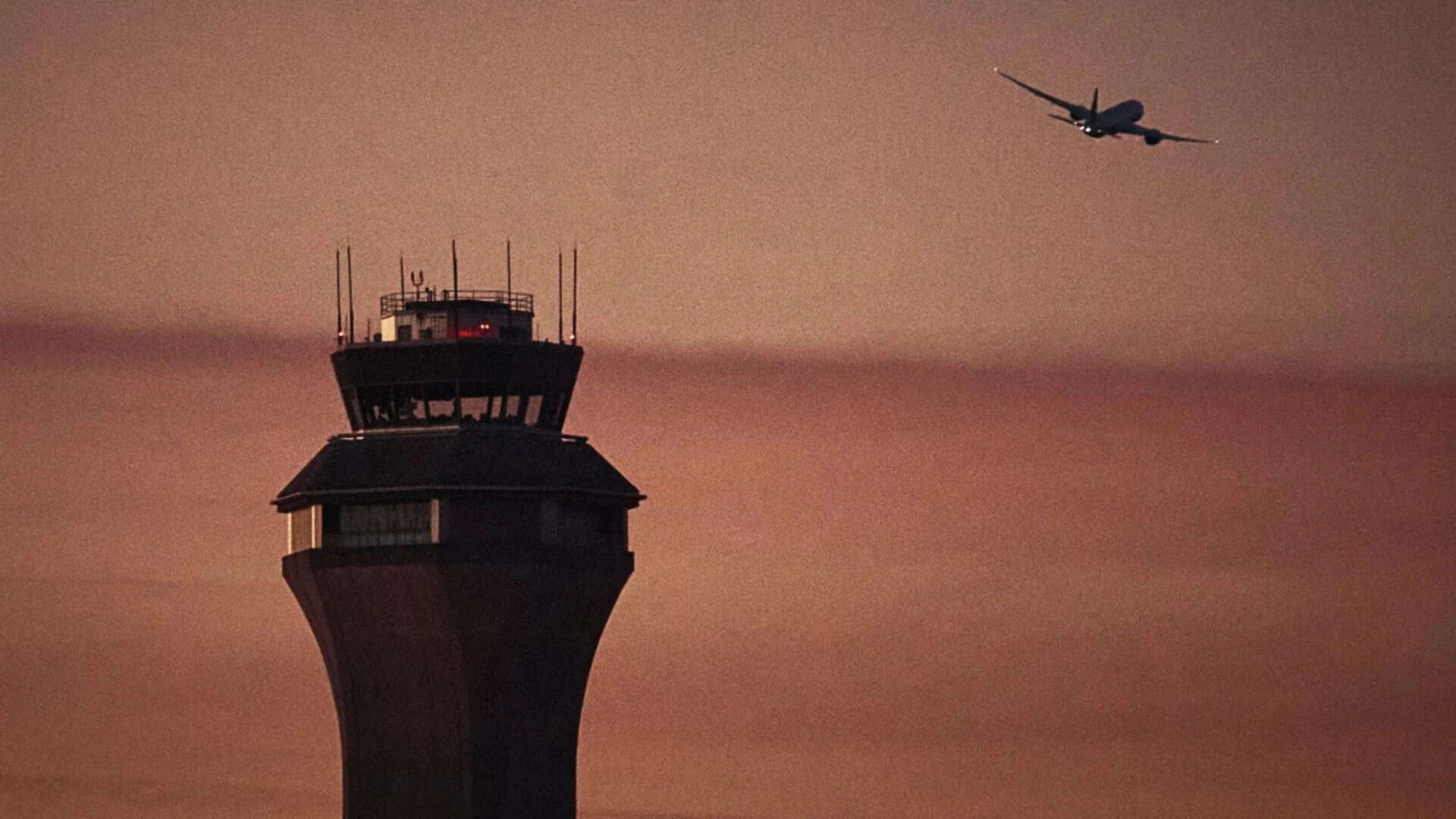
The evacuation of the Newark Liberty International Airport (EWR) air traffic control tower on March 21, 2026, serves as a high-fidelity case study in the vulnerability of centralized infrastructure within the global aviation network. While mainstream reporting focuses on the sensory experience—the smell of smoke and the subsequent flight delays—the true narrative lies in the Single Point of Failure (SPOF) logic governing Category X airports. When a physical workspace responsible for the separation of hundreds of aircraft becomes uninhabitable, the failure does not remain localized; it propagates through the National Airspace System (NAS) as a non-linear disruption.
The Triad of Operational Dependency
To understand why a localized "burning smell" can paralyze transcontinental logistics, one must deconstruct the air traffic control (ATC) environment into three distinct layers of dependency.
1. Physical Environment and Life Safety Protocols
The immediate catalyst for the Newark disruption was a reported smell of smoke in the tower cab, the glass-enclosed level where controllers maintain visual contact with the runways. Federal Aviation Administration (FAA) protocols are binary: if the air quality or fire risk compromises the cognitive or physical ability of the controllers, the facility must be vacated. There is no "reduced capacity" mode for a smoke-filled tower. This creates a hard stop in ground and local control operations.
2. Technological Handoff and TRACON Redundancy
When a tower is evacuated, the responsibility for the airspace typically shifts to a Terminal Radar Approach Control (TRACON) facility. For Newark, this is the New York TRACON (N90). While radar-based separation can continue, the loss of the tower cab eliminates "visual separation" and "surface management." This transition increases the Minimum Longitudinal Separation between aircraft. In high-density corridors, increasing separation by even 20% can reduce runway throughput by 50%, leading to immediate ground stops.
3. The Human Capital Constraint
ATC is not a system that can be operated remotely with current-generation infrastructure. Control is tethered to the physical consoles and radio arrays within the tower. The evacuation of personnel does not just remove the "eyes" from the field; it removes the localized decision-making engine that manages gate pushbacks, taxiway sequencing, and emergency responses.
Quantifying the Ripple Effect: The Logistics of a Ground Stop
A Ground Stop (GS) is the most restrictive tactical solution available to the Air Traffic Control System Command Center (ATCSCC). By halting aircraft at their points of origin, the FAA prevents a "holding stack" saturation in the arrival airspace. The Newark incident illustrates the Cascading Delay Function, where the duration of the stop ($D_s$) and the recovery period ($R_p$) share a proportional relationship often exceeding 1:3.
If the tower is offline for 60 minutes, the recovery period—clearing the backlog of departures and re-sequencing arrivals—typically lasts 180 minutes or longer. This is due to the Inelasticity of Runway Capacity. A runway can only handle a finite number of operations (takeoffs and landings) per hour. Once an hour of capacity is lost, it cannot be recovered; it can only be mitigated by pushing subsequent flights into later windows, eventually colliding with crew rest requirements and airport curfews.
The Architecture of the Burning Smell: Investigative Variables
In a mission-critical environment like an ATC tower, a burning smell is rarely a simple electrical fault. Analysts categorize these events into three primary risk tiers:
- HVAC Contamination: The most common cause, where mechanical failure in the climate control system distributes smoke from a seized fan motor or overheated belt.
- Infrastructure Degradation: Aging electrical conduits or Uninterruptible Power Supply (UPS) batteries off-gassing during a failure cycle.
- External Intake: Smoke from ground-level machinery or aircraft exhaust being pulled into the tower's pressurized environment.
The FAA’s response—dispatching technicians and fire crews to "clear" the building—is a race against the Systemic Saturation Point. Every minute the tower remains empty, the probability of a "knock-on" cancellation at a spoke airport (e.g., ORD, LAX, or LHR) increases.
Risk Mitigation and the Future of Remote Towers
The Newark evacuation highlights the urgent need for Virtual or Remote Tower (RT) technology. Unlike the current centralized model, a Remote Tower uses a high-definition 360-degree camera array to feed visual data to a control center that can be located miles away—or even serve as a "hot standby" for multiple airports.
Advantages of the Remote Standby Model
- Geographic Decoupling: A fire or smoke event at the physical airport does not require the evacuation of the controllers managing the traffic, as they are housed in a separate, hardened facility.
- Digital Overlay: Enhanced vision systems (infrared and augmented reality) allow for continued operations in low-visibility or smoky conditions that would traditionally trigger a stoppage.
- Scalable Redundancy: A single regional backup center could theoretically assume control of EWR, JFK, or LGA in an emergency, maintaining a baseline of 70% operational capacity rather than a 0% ground stop.
The limitation of this strategy is the current pace of federal certification and the massive capital expenditure required to retrofit legacy airports like Newark. Until the physical "cab" is decoupled from the "control function," the aviation industry remains at the mercy of localized mechanical failures.
Strategic Recommendation for Travelers and Logistics Managers
In the event of a Category X tower evacuation, stakeholders must pivot from "wait-and-see" to "active rerouting" within the first 15 minutes of the Ground Stop announcement.
The first step is the Alternative Hub Assessment. For Newark-bound traffic, this involves immediate diversion to Philadelphia (PHL) or Allentown (ABE) before the regional airspace becomes congested with diverted fuel-critical aircraft. The second step is the Crew Legal-Clock Audit. If a flight is delayed by more than two hours due to an ATC evacuation, there is an 80% probability that the flight deck or cabin crew will "time out" under FAA Part 121 regulations, leading to a cancellation even after the tower is cleared.
The strategic play is to treat any tower-related ground stop as a permanent disruption for that calendar day and initiate "re-accommodation" protocols immediately. The complexity of re-sequencing a saturated hub like Newark means that the "brief halt" reported in the media is, in operational reality, a systemic reset that will take 12 to 24 hours to normalize.
Would you like me to analyze the specific FAA Part 121 crew rest requirements that trigger cancellations during these types of ground stops?