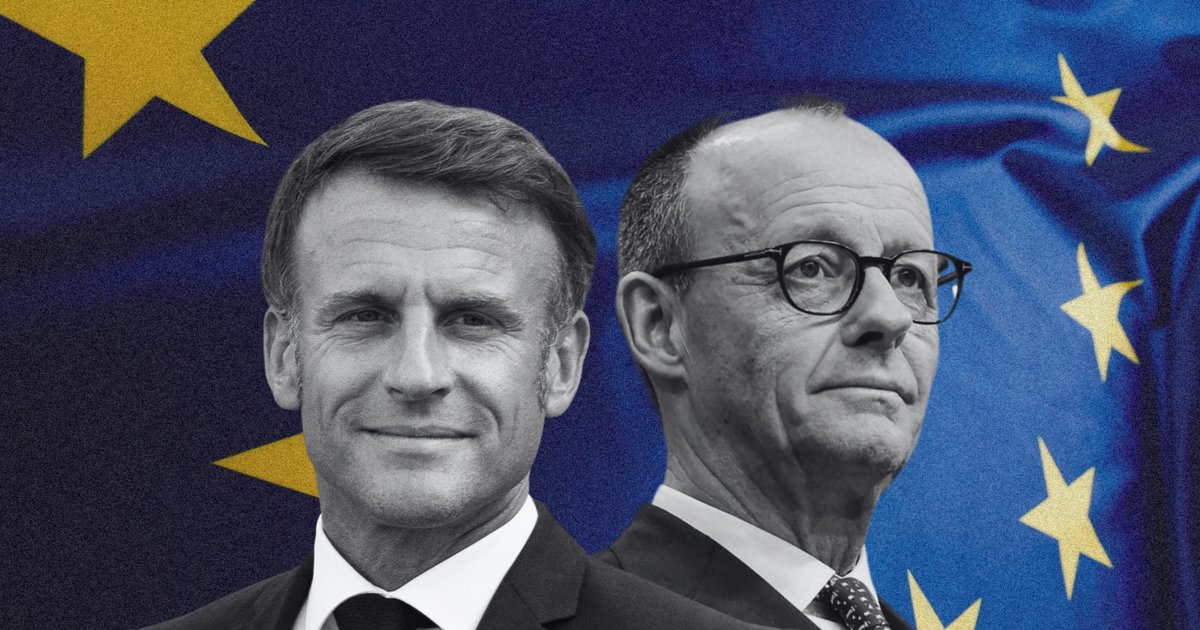
Visual literacy is a lie. We have been conditioned to believe that a well-timed photograph captures the "essence" of a leader or the "truth" of a geopolitical crisis. It doesn't. It captures a shutter speed. When pundits look at a photo of Donald Trump—or any high-stakes leader—speaking about Iran and claim it "tells us all we need to know," they aren't performing journalism. They are performing Rorschach tests on themselves.
The obsession with optical storytelling is a symptom of a cognitively lazy electorate. We prefer the neatness of a scowl or a pointed finger over the messy, boring reality of centrifuges, enrichment levels, and the $Stuxnet$ legacy. If you think a photo explains Iran policy, you have already lost the plot.
The Myth of the Telling Moment
Photography is the art of exclusion. For every frame that shows a "strongman" in mid-sentence, there are a thousand frames of that same person blinking, scratching their ear, or looking confused. To select the "authoritative" shot is a deliberate act of editorial fiction.
In the world of intelligence and foreign policy, the image is noise. The signal is the data. When the U.S. monitors Iran's nuclear capabilities, they aren't looking at the posture of the Supreme Leader in a press release. They are looking at satellite imagery of the Natanz facility. They are analyzing the flow of dual-use technologies through shell companies in Dubai.
To suggest that a politician's facial expression during a speech provides insight into the "seriousness" of an administration is to fall for the oldest trick in the propaganda playbook. It’s theater. And you are paying for the ticket with your attention.
Geopolitics is Not a Vibe
The "lazy consensus" among political commentators is that "optics matter." This is a half-truth that hides a dangerous fallacy. Optics matter for polling; they do not matter for outcomes.
Consider the Joint Comprehensive Plan of Action (JCPOA). The "optics" of the 2015 signing were filled with smiles, handshakes, and pens. It looked like a triumph of diplomacy. Fast forward a few years, and the structural flaws—the "sunset clauses" and the lack of ballistic missile oversight—led to its collapse. The "vibes" were impeccable. The policy was a sieve.
Conversely, the most effective geopolitical moves often look "bad." They look messy. They look like a leader shouting at a podium or a tense, awkward meeting in a windowless room.
The mechanics of power look like this:
- Economic Strangulation: Sanctions aren't photogenic. You can't take a picture of a 20% inflation rate in Tehran and put it on the front page of a Sunday magazine to make a point about a president's "resolve."
- Proxy Attrition: When the IRGC (Islamic Revolutionary Guard Corps) funds militias in Yemen or Iraq, the response isn't a photo op. It's a cyberattack on a power grid or a quiet shipment of anti-drone tech to a regional ally.
- The Enrichment Math: $U^{235}$ enrichment levels don't care about a politician's chin angle.
If you want to understand the Iran situation, stop looking at the man at the lectern. Look at the $breakout \ time$—the theoretical time required to produce enough weapons-grade uranium for one nuclear bomb. That number is calculated through physics and logistics, not body language.
The Dangerous Allure of "Authenticity"
We are living through a crisis of "perceived authenticity." Because we are bombarded with AI-generated garbage and deepfakes, we cling to the "still photo" as a bastion of truth. This is a mistake.
In my years analyzing how information spreads in high-volatility industries, I’ve seen millions of dollars lost because traders reacted to a "vibe" on a news feed rather than the underlying fundamentals. The same happens in politics. A "strong" photo of a president can lead to a false sense of security or a manufactured panic.
The media loves these photos because they are cheap. Writing a 3,000-word breakdown of how the SWIFT banking system interacts with Iranian oil exports requires an actual education. Typing 800 words about how a photo of a "defiant" leader "speaks volumes" requires only a pulse and a thesaurus.
Dismantling the "People Also Ask" Delusions
People often ask: "Does Trump's rhetoric actually scare Iran?"
The honest, brutal answer: Rhetoric is a tool, not a strategy. Iran's leadership doesn't watch CNN to see if the U.S. President looks "tough." They watch the movement of Carrier Strike Groups in the Persian Gulf. They monitor the Pentagon’s budget allocations for the "Massive Ordnance Penetrator" (MOP) bomb.
If the photo shows a leader looking "unhinged," the sophisticated observer asks: "Is this a deliberate application of the Madman Theory, or is it just a bad camera angle?"
Another common query: "What does this photo tell us about the future of the Middle East?"
Answer: Absolutely nothing. A photo is a record of the past—specifically, a record of 1/125th of a second. Using it to predict the future is like trying to drive a car by staring exclusively into the rearview mirror while wearing a blindfold.
The High Cost of Visual Narrative
When we prioritize the "look" of a policy over the "logic" of a policy, we get exactly what we deserve: theatrical politics.
Politicians know you are looking at the photo. They have entire teams—Chiefs of Photography, lighting technicians, "advance" crews—whose only job is to ensure the "telling photo" is the one they want you to see. When you analyze that photo and think you’ve discovered a hidden truth, you haven't. You've just finished the meal they cooked for you.
Real insight is found in the spreadsheets. It is found in the boring, dry transcripts of IAEA (International Atomic Energy Agency) briefings. It is found in understanding the difference between a centrifuge's $SWU$ (Separative Work Unit) and a political soundbite.
| Strategic Metric | Why it Matters | Why it’s Ignored |
|---|---|---|
| Centrifuge Count | Determines the speed of nuclear breakout. | Hard to photograph; looks like industrial plumbing. |
| Regional Proxy Strength | Determines the actual "reach" of Iranian influence. | Occurs in shadows; no "press conference" version exists. |
| Internal Economic Pressure | The only thing that truly threatens the regime's grip. | Too complex for a 10-second news segment. |
| Leader's Facial Expression | Irrelevant to statecraft. | Easy to share on social media; fuels confirmation bias. |
The "insider" secret that no one wants to admit is that the people making the actual decisions—the ones moving the chess pieces—barely look at the photos. They are reading the raw intelligence. They are looking at the math.
If you find yourself nodding along to an article that claims a single image "tells us all we need to know," you aren't being informed. You are being entertained. You are a consumer of a narrative, not a student of reality.
Stop looking at the pictures. Start reading the data. The truth about Iran, or any other global flashpoint, isn't captured in a frame. It’s buried in the technicalities that the visual narrative is designed to help you ignore.
The next time you see a "powerful" photo of a leader, ask yourself: "What are they trying to hide with this lighting?"
The photo isn't a window. It’s a curtain.
Pull it back or stay in the dark.