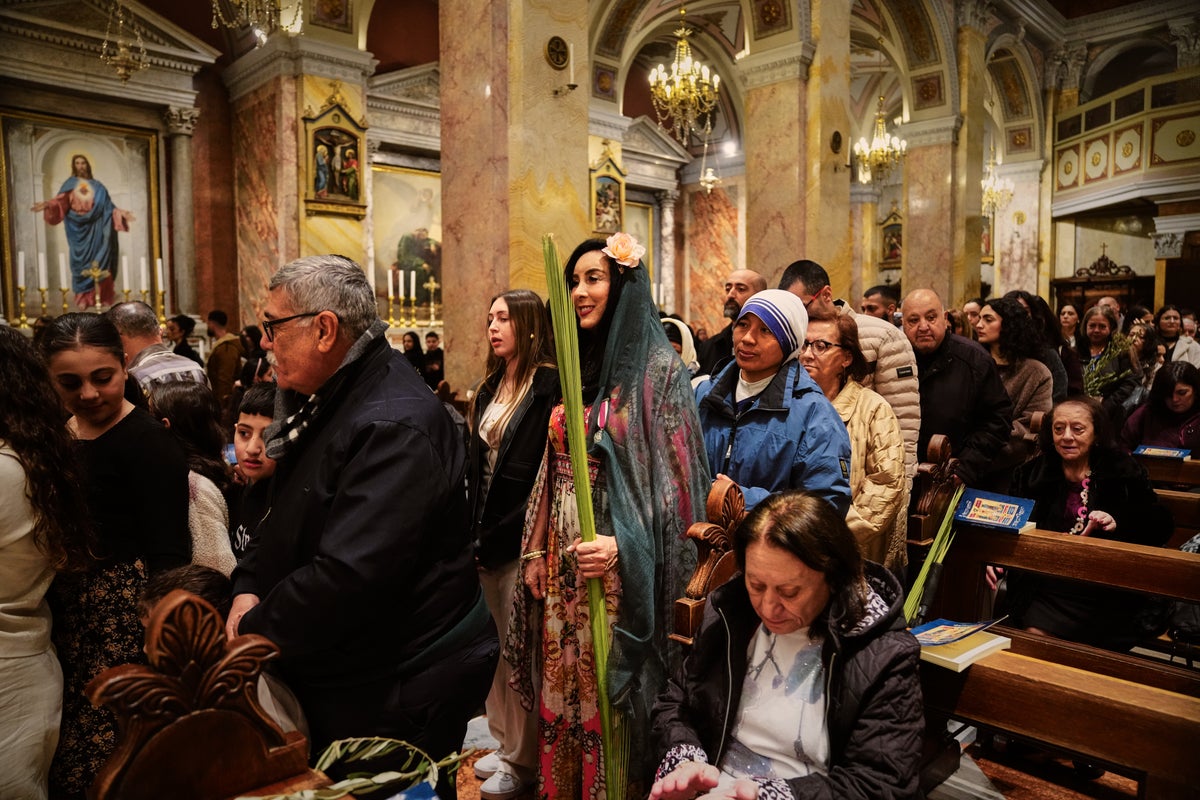
The streets of Jerusalem should have been filled with the sound of hymns and the rustle of palm fronds this past Sunday. Instead, they were defined by the metallic clink of police barricades and the tense silence of a blocked path. When Israeli police stopped Catholic leaders from reaching the church to celebrate Palm Sunday Mass, they didn't just disrupt a service. They punctured the fragile status quo that keeps this city from sliding into total religious chaos.
You might think this is just another localized scuffle in a city prone to them. It isn't. This specific incident involving the Latin Patriarchate and local Catholic clergy marks a shift in how security is being used as a blanket excuse to stifling ancient religious traditions. If you're looking for the reason why tensions are at a generational high, look at the gate of a closed church.
The Security Excuse is Wearing Thin
For years, the "security situation" has been the go-to justification for almost every restriction in Jerusalem. We get it. The city is a powder keg. But there’s a massive difference between managing a crowd and effectively canceling a centuries-old procession. When police blocked Catholic leaders and the faithful from entering the holy sites for Palm Sunday, the official line cited safety concerns and "operational requirements."
Honestly, that doesn't hold water when you look at how other events are handled.
The Catholic community in Jerusalem isn't a political insurgent group. They’re a cornerstone of the city’s identity. By preventing the Patriarch and his bishops from leading the traditional walk from the Mount of Olives into the Old City, the authorities sent a message that religious rights are now secondary to administrative convenience. Or worse, that they're being used as leverage.
What Actually Happened on the Ground
The scene was chaotic but predictable. Hundreds of local Palestinian Christians and international pilgrims gathered, expecting the usual vibrant walk. Instead, they met lines of border police. These weren't just "checkpoints." They were hard stops.
- Clergy were physically blocked. High-ranking members of the Latin Patriarchate were told they couldn't proceed.
- Permits were "delayed" or ignored. Many worshippers from the West Bank who usually get special holiday permits found themselves stuck at checkpoints, unable to even reach the city.
- The atmosphere turned from prayerful to confrontational. When you stop people from practicing their faith on one of the holiest days of the year, they don't just go home. They stay and protest.
I’ve seen this play out before, but the intensity is different now. In previous years, there was at least a veneer of cooperation between the Waqf, the various Christian denominations, and the Israeli police. That cooperation has basically evaporated. Now, it feels like the police are acting as gatekeepers of the faith itself, deciding who is "safe" enough to pray.
The Shrinking Space for Christians in Jerusalem
Don't let the headlines fool you into thinking this is only about one Mass. This is part of a much larger, uglier trend. Over the last year, Christian leaders in the Holy Land have been sounding the alarm about increased harassment. We’re talking about spitting incidents, physical assaults on monks, and vandalism of cemeteries.
When the state police—the people meant to protect everyone—become the ones blocking the church doors, it emboldens the extremists. If the police don't respect the Patriarch, why should a radical settler?
The Latin Patriarch, Pierbattista Pizzaballa, has been unusually vocal about this. He’s pointed out that the Christian presence is being squeezed. It’s a slow-motion eviction of the city's diverse religious heritage. By shutting down the Palm Sunday procession, the police provided a visual metaphor for what the community feels every day: they're being pushed out.
Why This Matters for the Rest of the World
If you think this is just a "Jerusalem problem," you're missing the point. Jerusalem is the barometer for global religious stability. When the rights of Catholics are trampled there, it sets a precedent for how minority religions are treated everywhere.
The international community, including the Vatican, usually tries to play a diplomatic game. They use soft language. They "express concern." But the time for soft language ended when the police barricades went up. The Holy See has a direct interest in the "Status Quo" agreements that have governed these sites since the 19th century. Israel is technically bound to respect these.
Breaking those agreements isn't just a local policy shift. It's an international legal violation.
The Logistics of Religious Suppression
The way these shutdowns happen is rarely through a formal decree. It’s death by a thousand "operational" cuts.
- The Permit Trap: Authorities announce that permits are available, but the system to apply for them crashes or the criteria change 24 hours before the event.
- The "Safety" Capacity: Police claim a church that holds 500 can only safely hold 50. They use this to bar the other 450 from even entering the neighborhood.
- The Last-Minute Barricade: Everything seems fine until two hours before the service. Then, "intelligence" suddenly suggests a threat, and the entire street is cordoned off.
This isn't about safety. It’s about control. It’s about making it so difficult to practice your faith that you eventually stop trying.
What Happens if This Continues
Jerusalem thrives on its complexity. It’s a city of layers. If you peel away the Christian layer by making their most sacred days impossible to celebrate, you don't get a safer city. You get a more radicalized one.
The Christian community has historically acted as a buffer in the city. They’re a bridge. When you burn that bridge by blocking their processions and disrespecting their leaders, you’re left with a binary conflict that is much harder to manage.
The Israeli government needs to realize that security isn't just about fences and ID checks. Real security comes from a sense of belonging and mutual respect. Right now, there is zero respect being shown to the Catholic leadership.
How to Support Religious Freedom in the Region
You don't have to be Catholic to care about this. You just have to care about the principle that the state shouldn't decide who gets to talk to God.
If you want to actually do something, stop looking at this as a simple "Middle East conflict" trope. It’s a civil rights issue. Pressure needs to be put on diplomatic channels to ensure that the upcoming Easter celebrations aren't met with the same heavy-handed tactics.
Watch the news closely over the next week. If the same "security concerns" magically appear for the Holy Sepulchre during Easter, we know this isn't an isolated incident. It’s a policy.
Demand transparency on why these specific events are being targeted. Ask why a peaceful religious procession is treated like a riot. If the answers remain vague, the intent is clear: the authorities are no longer interested in protecting religious diversity; they're interested in policing it out of existence.
Keep an eye on the official statements from the Latin Patriarchate. They are the ones on the front lines. Support their calls for international observers during major holy days. It's the only way to ensure that "security" isn't used as a cloak for discrimination. The world is watching, and Jerusalem's leaders need to know that these actions have consequences beyond their city walls.