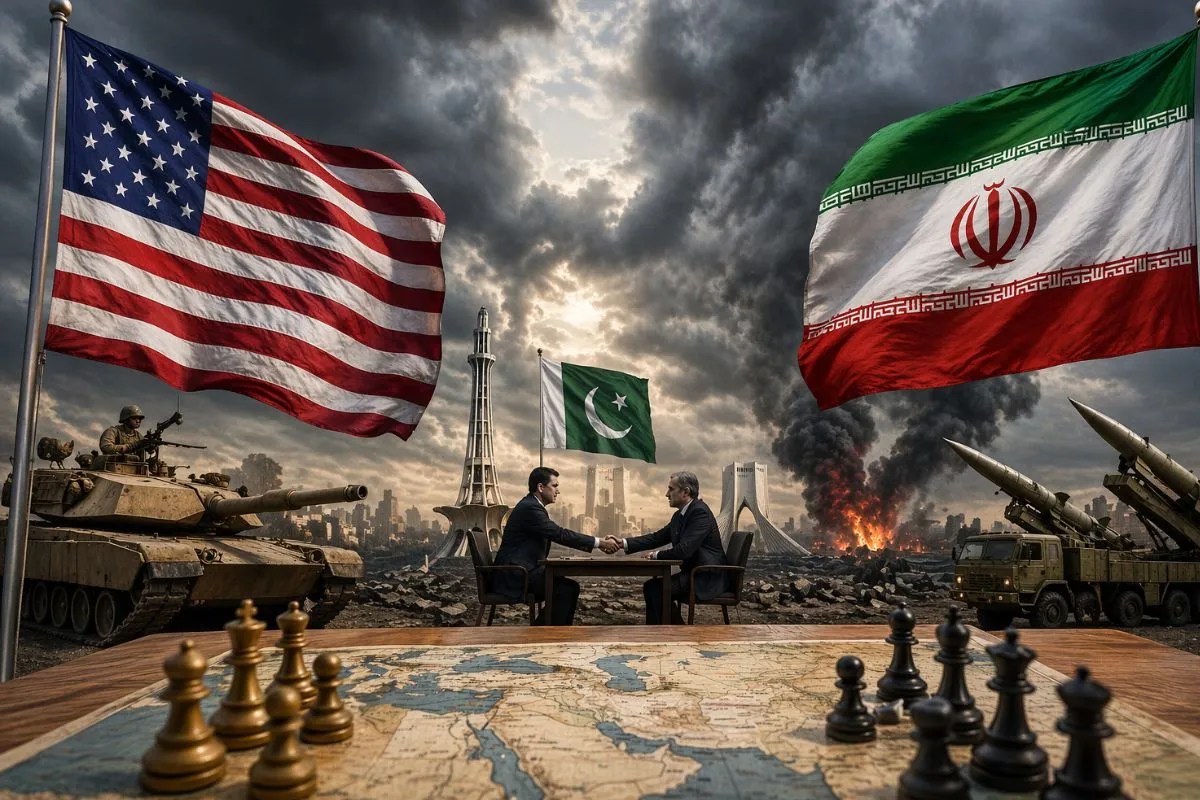
The media is obsessed with the word "ceasefire" as if it’s a magic incantation that fixes broken borders and ancient blood feuds. They report on every diplomatic refusal from Washington as a "missed opportunity" for peace. This is a fundamental misunderstanding of how geopolitical leverage works. When the US refuses to push for an extended ceasefire or rejects a specific truce proposal, the talking heads scream about the return of war. They are wrong. The war never stopped; it just changed its shape.
Ceasefires in the current Iran-US proxy theater are not about humanitarian relief. They are about reloading. In the world of high-stakes intelligence and kinetic warfare, a "pause" is simply a tactical window for non-state actors to shift drone launchers, move munitions through tunnels, and rotate exhausted fighters. By demanding an end to the fighting, observers are actually demanding a longer, more drawn-out conflict.
The Myth of the Escalation Ladder
Mainstream analysis relies on the "escalation ladder"—the idea that every strike leads to a bigger strike until someone pushes a nuclear button. It’s a tidy, academic model that fails the moment it hits the sand.
In reality, the Middle East operates on a cycle of calibrated friction. Iran doesn't want an all-out war with the United States; they can't win one. The United States doesn't want a full-scale invasion of Iran; the political cost is too high. Therefore, both sides engage in "managed violence."
When the US refuses to extend a ceasefire, it isn't necessarily a signal for total war. Often, it is a signal of strategic impatience. It is an attempt to force the opponent back to a baseline where their proxies stop hitting shipping lanes or bases. If you reward an adversary with a ceasefire every time they cause a headache, you are teaching them that headaches are profitable.
Why Diplomacy Fails the Logic Test
Most journalists assume that more talking equals less dying. I have sat in rooms where "de-escalation" was the only word on the agenda, while everyone in the room knew the maps on the wall were being updated for the next strike.
Here is the truth: Diplomacy only works when the threat of violence is credible and immediate. A ceasefire that lasts too long removes the incentive for either side to actually negotiate a permanent solution. It creates a "frozen conflict" where the underlying issues—regional hegemony, nuclear enrichment, and maritime security—fester in the dark.
- The Trap of Proportionality: We are told responses must be proportional. This is nonsense. A proportional response ensures the cycle continues forever. To stop a conflict, the response must be asymmetric.
- The Proxy Problem: Washington thinks they are negotiating with Tehran. Tehran claims they can't control the militias. This is a convenient lie that both sides use to maintain "plausible deniability."
The Logistics of the "Pause"
Let’s look at the actual data of modern skirmishes. During periods of official "calm," satellite imagery frequently shows increased activity in supply corridors. If you are a commander on the ground, a ceasefire is your most valuable asset. It’s when you fix your comms, bury your mines, and scout the next set of coordinates.
When the US signals that it won't play the ceasefire game, it disrupts this logistical cycle. It forces the adversary to operate under constant pressure, which leads to mistakes. And in this theater, mistakes are the only way you get a clear opening to end a threat.
The High Cost of Stability
The "lazy consensus" says that any day without a headline about a missile strike is a win. But what if that quiet day is exactly what allows a militant group to perfect a more lethal drone swarm?
I’ve seen this play out over two decades. We prioritize the "optics" of peace over the "mechanics" of security. By refusing to sign onto a flawed ceasefire, the US is often doing the hard work of maintaining a balance of power. It’s ugly. It’s loud. It makes for terrifying news banners. But it prevents the total collapse of the regional order that occurs when one side feels they have been given enough breathing room to launch a decisive blow.
Addressing the Flawed Premise of "Tension"
People always ask: "Is the region on the brink of war?"
The question itself is flawed. The region is at war. It has been for years. It’s a multi-domain, grey-zone conflict involving cyber-attacks, maritime sabotage, and targeted strikes. The refusal to extend a ceasefire isn't "sparking" a war; it's simply acknowledging the reality of the situation.
We need to stop treating the absence of open combat as the presence of peace. They are not the same thing.
The Counter-Intuitive Path Forward
If you want the fighting to actually end, you don't do it with a signed piece of paper that both sides intend to break. You do it by making the cost of the proxy war higher than the benefit of the negotiation.
This requires:
- Dismantling the Proxy Shield: Treating every strike by a local militia as a direct strike from their sponsors. No more "deniability."
- Economic Strangulation over Kinetic Pokes: Small missile strikes are a cost of doing business. Total maritime isolation is a death sentence.
- Refusing the "Cooling Off" Period: If the adversary is reeling, you don't give them a month to find their footing. You finish the maneuver.
The downside to this approach is obvious: it’s risky. It requires a stomach for volatility that most politicians don't possess. It means accepting that things will get worse before they get better. But the alternative—the endless cycle of "ceasefire, reload, strike"—has proven to be a failure that only piles up bodies in smaller batches over a longer period of time.
Stop looking for the ceasefire. Look for the leverage. If the US isn't extending the truce, it's because they’ve realized that the truce was the very thing keeping the war alive.
Move the pieces or get off the board.