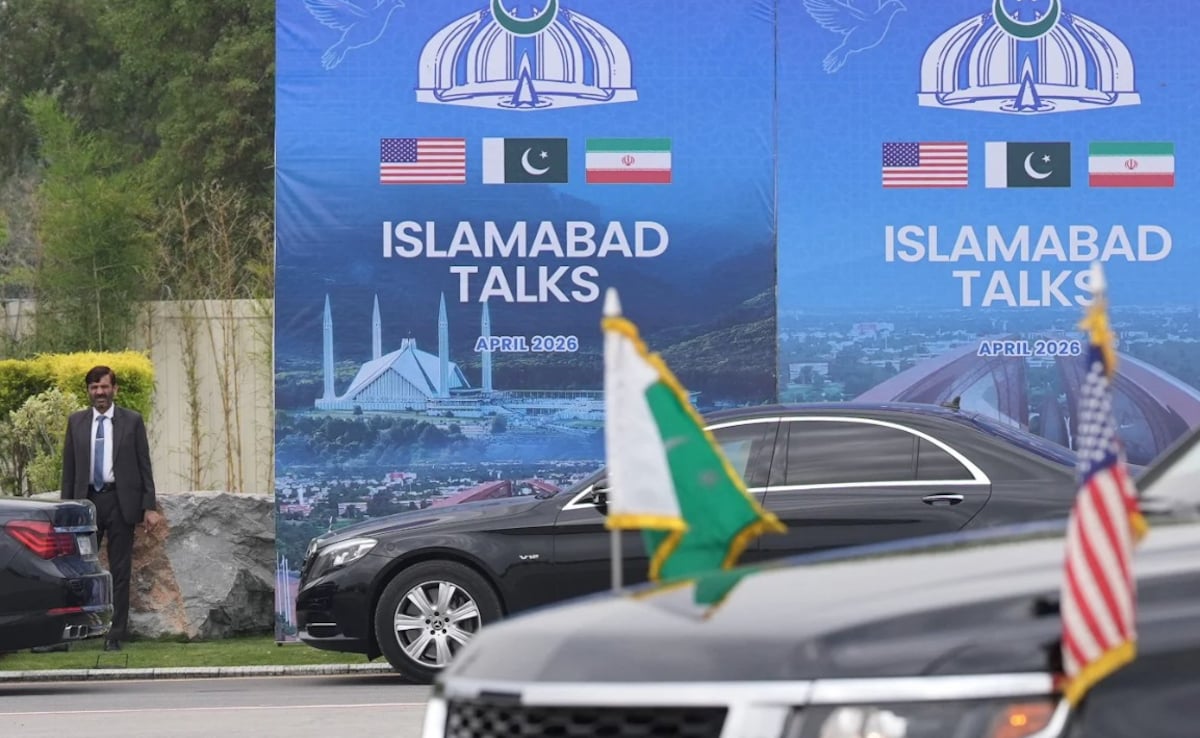
The headlines are predictable. The pundits are dusting off their "historic breakthrough" templates. The diplomatic corps is scouting the best hotels in Muscat or Geneva. You are being told that a "key peace meet" between the United States and Iran is a sign of progress.
It isn't. It is a sign of a decaying status quo where both sides have realized that actual resolution is more dangerous than managed hostility.
The consensus view—the one your favorite mainstream outlet just copy-pasted from a State Department briefing—is that these talks are about "de-escalation" and "regional stability." This is a fundamental misunderstanding of how the Washington-Tehran axis functions. We aren't looking at a peace process. We are looking at a maintenance schedule for a permanent shadow war.
The Myth of the Rational Actor
The biggest lie in international relations is the idea that every state wants "peace." Peace is expensive. Peace requires the dismantling of massive domestic narratives.
For the Iranian clerical establishment, the "Great Satan" is not an enemy to be defeated; it is a vital organ in their body politic. Without the looming threat of U.S. intervention, the internal justification for the Revolutionary Guard’s economic stranglehold evaporates.
On the flip side, the U.S. foreign policy establishment—the "Blob"—needs the Iranian threat to justify a military footprint that spans from Bahrain to Djibouti. When these two sides sit down to "talk," they aren't looking for an exit ramp. They are looking to calibrate the tension so it stays high enough to be useful but low enough to avoid a full-scale kinetic disaster that neither side can afford.
Why the Nuclear Question is a Red Herring
The upcoming agenda will focus heavily on uranium enrichment levels and IAEA inspections. This is theater.
The U.S. knows Iran has the technical capability to reach "breakout" whenever they choose. Iran knows that the U.S. knows. The negotiations over $5%$ or $20%$ or $60%$ enrichment are just accounting exercises.
True "peace" would require addressing the regional proxy architecture—Hezbollah, the Houthis, and the militias in Iraq. But those are non-negotiable for Tehran. They are the "forward defense" doctrine. To give them up would be equivalent to the U.S. dismantling its carrier strike groups.
If you see an article focusing on "centrifuges" as the metric of success, stop reading. They are missing the point. The real currency of these meetings is plausible deniability. Both sides want a framework where they can continue to hit each other’s interests via third parties without having to launch a direct missile at a capital city.
The Economic Sanctions Scam
The mainstream media loves to talk about "sanctions relief" as the carrot. It’s a flawed premise.
I have watched three decades of "maximum pressure" and "strategic patience." Here is the reality: the Iranian economy has developed a high tolerance for isolation. More importantly, a shadowy elite within Iran actually profits from sanctions. They control the black markets. They control the smuggling routes.
When the U.S. offers to "unfreeze assets," they aren't helping the Iranian people. They are refilling the coffers of the very entities they claim to be countering. This is not a failure of policy; it is the policy. By periodically loosening and tightening the valve, Washington maintains a level of influence over the internal power struggles in Tehran that a total trade embargo or total peace would never allow.
The Regional Players Aren't Invited For A Reason
Notice who isn't at the table: the Saudis, the Emiratis, and the Israelis.
The "peace meet" is a bilateral hallucination. Any agreement reached between Washington and Tehran that doesn't account for the security anxieties of Riyadh or Jerusalem is dead on arrival. But the U.S. continues this charade because it allows for a "reset" in the news cycle. It buys time.
In the Middle East, "buying time" is often mistaken for "diplomacy."
The Logic of Managed Chaos
Imagine a scenario where a grand bargain is actually signed tomorrow.
- Iran shuts down all enrichment.
- The U.S. removes all sanctions.
- Both sides open embassies.
The immediate result? A total collapse of the regional security architecture. Israel would likely take unilateral kinetic action to ensure the "peace" wasn't a cover for covert development. The Sunni monarchies would scramble for their own nuclear deterrent. The U.S. would lose its primary justification for its presence in the Persian Gulf.
The "Peace Meet" isn't about ending the conflict. It is about preventing the conflict from becoming boring or, worse, becoming a total war that destroys the global oil supply.
Stop Asking "When Will There Be Peace?"
The question itself is flawed. You are applying a 20th-century Western liberal framework to a 7th-century theological struggle fused with 21st-century asymmetric warfare.
The goal of these meetings is not a treaty. There will be no photo op on the White House lawn with a firm handshake. There will be a "joint statement" full of bureaucratic jargon that ensures more meetings will happen in six months.
Success for these diplomats isn't a world without conflict; it's a world where the conflict stays within the margins of the ledgers.
If you want to know what is actually happening, look past the "Agenda Items." Look at the movement of oil tankers in the Strait of Hormuz during the talks. Look at the frequency of drone strikes in eastern Syria while the delegates are having lunch. That is the real dialogue. The words spoken in the conference room are just noise designed to keep the public—and the markets—calm while the two giants continue to kick each other under the table.
Diplomacy with Iran is not a path to a destination. It is a treadmill. And as long as both sides are getting their cardio, they have no intention of getting off.
The "Key Peace Meet" is the highest form of performance art in the modern world. Buy the ticket if you must, but don't believe for a second that the play is real.
Move your capital. Adjust your risk. And stop waiting for a breakthrough that would actually be a disaster for everyone involved in the negotiation.