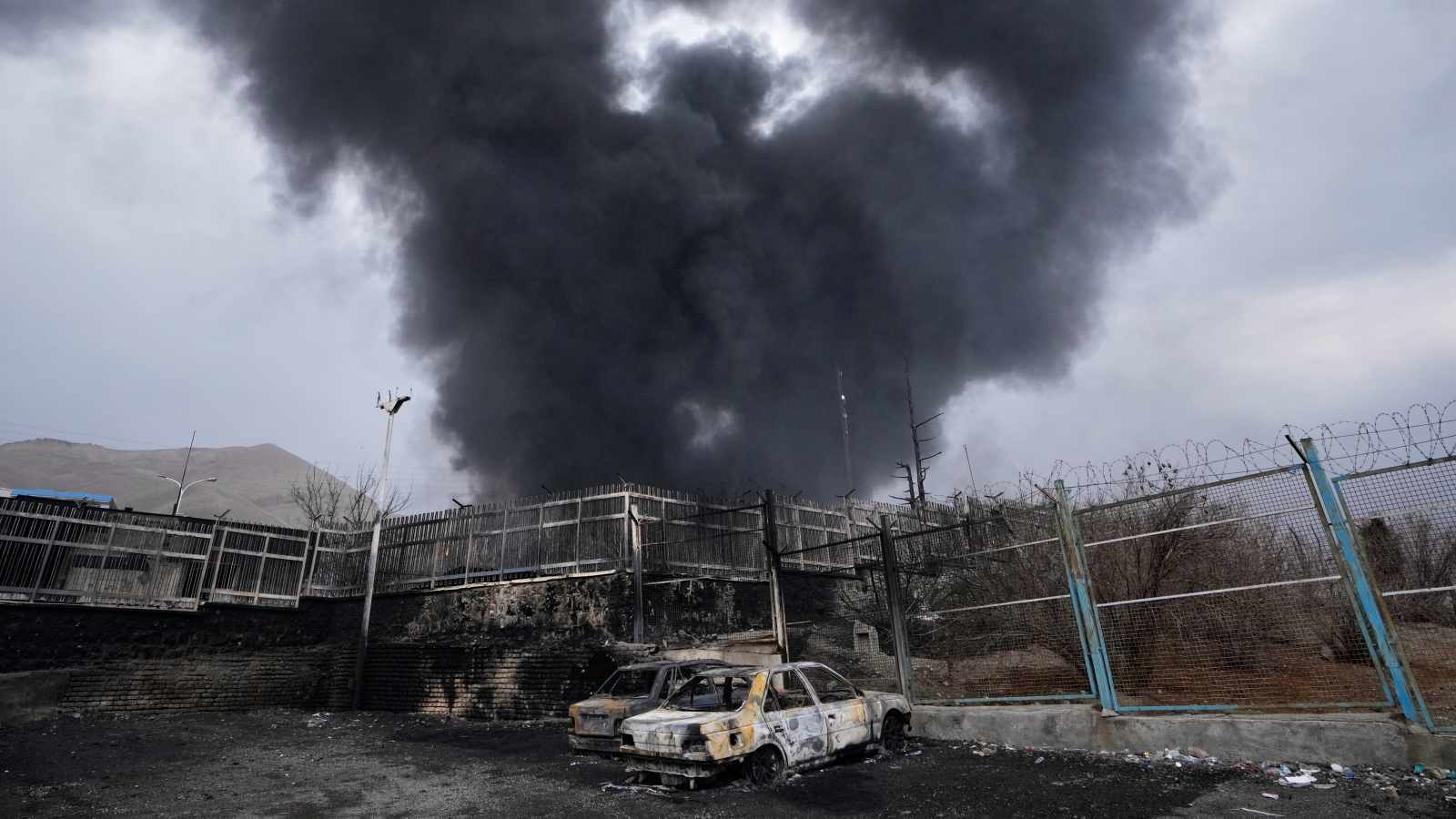
Twenty-five billion dollars is a rounding error. When a Pentagon official leaks a figure like that to the press, they aren't informing the public; they are performing a magic trick. They want you to look at the shiny $25 billion coin in their right hand so you don’t notice the trillions being bled out of the left. If you believe a conflict of this scale fits into the price of a few mid-sized tech acquisitions, you aren't just misinformed—ed you’re being played.
The "lazy consensus" in defense reporting treats war like a grocery receipt. Fuel, bullets, hazard pay, and a few lost drones. Add it up, slap a sticker on it, and call it the "cost of war." This accounting is fundamentally fraudulent. It ignores the structural decay of the domestic economy, the opportunity cost of human capital, and the long-term debt servicing that turns a $25 billion skirmish into a generational financial anchor.
The Myth of the Line-Item War
Most analysts look at the Department of Defense (DoD) budget as a static pool of resources. They assume that if we weren't spending $25 billion "over there," we’d just have $25 billion sitting in a vault. This is the first Great Lie.
War costs are never isolated. They are integrated into the very fabric of our national debt. When the Pentagon says a conflict cost $25 billion "so far," they are citing incremental costs. These are the costs above and beyond normal operations. But this ignores the "burn rate" of hardware that was bought a decade ago.
If a multi-million dollar aircraft is flown 500% harder than its design specifications allow during a regional flare-up, the "cost" isn't just the fuel. It’s the five years of service life you just shaved off a $100 million asset. The official figures never account for this accelerated depreciation. We are essentially "renting" our own military from the future at a massive markup, and the bill hasn't even hit the mailbox yet.
The Debt Trap You Aren't Calculating
Let’s talk about the math that actually matters: interest. The United States does not fight wars with surplus cash. We fight them on credit.
When the Pentagon quotes a $25 billion price tag, they aren't mentioning that this money is borrowed. At current interest rates, and considering the projected timeline of US debt, that $25 billion will actually cost the American taxpayer closer to $40 billion over the next two decades.
We saw this with the Post-9/11 wars. Estimates initially hovered in the low billions. Fast forward twenty years, and the Brown University Costs of War Project pinned the total at over $8 trillion when you include interest and veterans' care.
Why Low Estimates are Actually Dangerous
You might think a lower price tag is good news for the hawk or the dove. It isn't. It’s a sedative. By lowballing the cost of engagement, the government lowers the barrier to entry for perpetual conflict.
If the public knew the "real" price of a week of naval posturing—including the logistical strain on global shipping and the inevitable spike in insurance premiums for the private sector—the appetite for these "surgical" interventions would vanish.
- The Logistics Fallacy: We assume our supply chains are infinite. They aren't. Every shell sent to a desert is a shell not available for our own strategic defense or for more critical theaters.
- The Talent Drain: We are taking the brightest engineering and strategic minds and tasking them with solving the "problem" of how to blow things up more efficiently. Imagine that brainpower applied to domestic infrastructure or energy independence.
- The Inflationary Pressure: Spending billions on non-productive assets (bombs) is a textbook driver of inflation. You are putting money into the economy without producing a single consumer good or service. It is pure, refined devaluation of your paycheck.
The Industry Insider’s View: Follow the "O&M"
If you want to know what a war actually costs, ignore the headlines about "leaked Pentagon memos." Look at the Operation and Maintenance (O&M) accounts.
In my years tracking defense spending, I've seen how "emergency" supplemental funding is used as a slush fund to fix holes in the base budget that have nothing to do with the current conflict. The $25 billion figure is likely a curated number designed to fit within a specific political window. It’s a "palatable" number. It’s enough to sound serious, but small enough not to trigger a Congressional meltdown.
The Real People Also Ask: "Who is paying for this?"
The common answer is "the taxpayer." That’s only half-true. The real payers are the next two generations of Americans who will see their public services gutted to pay the interest on the debt we are racking up today for a conflict that will be a footnote in their history books.
- Premise: "We can afford this because we are the world's largest economy."
- Reality: Our debt-to-GDP ratio is at levels that historically precede a massive currency correction. We are "affording" it by selling our future.
Stop Asking "How Much?" and Start Asking "At What Cost?"
When a competitor tells you the war cost $25 billion, they are giving you a data point. I am giving you a diagnosis.
The obsession with the dollar amount misses the systemic risk. We are currently witnessing the "Sunk Cost Fallacy" play out at a geopolitical level. Because we’ve spent $25 billion, we feel we must spend another $25 billion to "protect the investment."
This is the logic of a failing gambler, not a superpower.
The unconventional truth is that the cheapest war is the one you don't start, and the second cheapest is the one you end immediately, regardless of how much you've already "invested." The Pentagon official quoting that $25 billion figure is trying to anchor your expectations. They want you to think, "Oh, that’s not so bad. We can handle that."
We can’t.
Not because we don’t have the money—we can always print more—but because we are running out of the credibility required to back it up.
Stop looking at the $25 billion. Look at the $34 trillion total debt. Look at the crumbling bridges in the Midwest. Look at the fact that we are subsidizing a global conflict while our own industrial base is a hollow shell of its former self.
The next time you see a "cost of war" headline, multiply it by ten. Then ask yourself if the objective is worth the price of your children’s' economic sovereignty.
The Pentagon isn't bad at math. They are just very good at making sure you don't do yours.