The morning air in the Central Valley of California doesn't smell like dirt anymore. It smells like math. For Elias, a third-generation farmer whose hands are mapped with the deep, permanent creases of sun and soil, the calculation begins before the sun even clears the Sierra Nevada. He stares at a digital invoice on his cracked tablet, the blue light reflecting in eyes that have seen droughts, floods, and pests. But he has never seen a number like this.
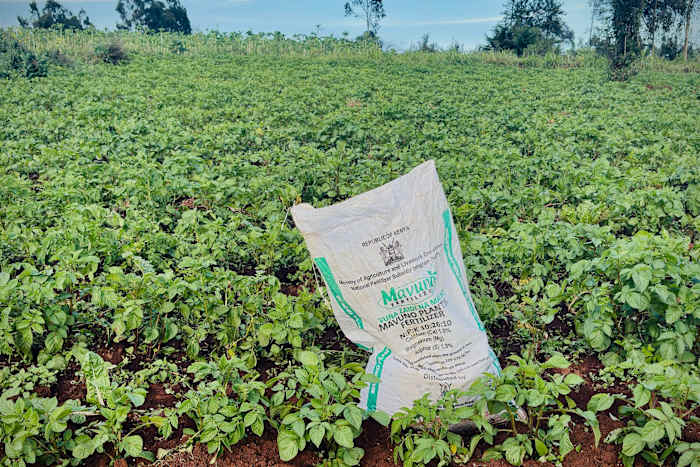
Fertilizer. Specifically, the nitrogen and phosphate blends that act as the literal fuel for the world’s caloric output. The price has tripled in a matter of weeks.
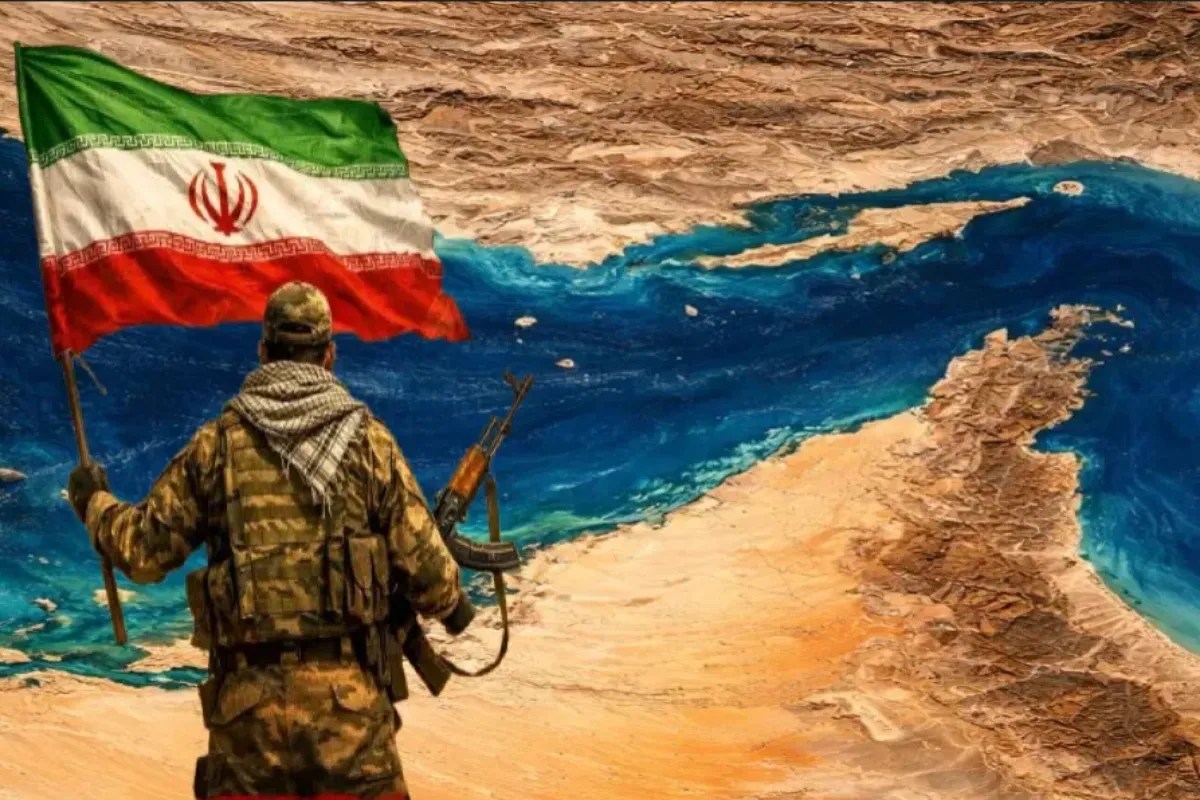
Thousands of miles away, the sky over the Strait of Hormuz is thick with the smoke of a conflict that the evening news describes in terms of "geopolitical instability" and "strategic chokepoints." To the pundits in well-lit studios, it is a war about borders and ideologies. To Elias, and to the billions of people who will sit down to dinner tonight, it is a war about bread.
Iran is not just a combatant; it is a linchpin in the invisible machinery of global chemistry. When the missiles began to fly, the world didn’t just lose a sense of peace. It lost the ability to feed itself at a price the average family can afford.
The Alchemy of Hunger
We live in a world built on a magic trick we’ve forgotten how to perform. In the early 20th century, we learned how to pull bread out of thin air through the Haber-Bosch process, turning atmospheric nitrogen into fertilizer. This single breakthrough allowed the global population to explode from two billion to eight billion. We are, quite literally, made of synthetic fertilizer.
Iran sits atop massive reserves of natural gas, the primary raw ingredient required to create these nitrogen-based fertilizers. It is also a massive exporter of urea and ammonia to markets in Asia and South America. When a region that produces the "food for the food" goes up in flames, the shockwaves travel faster than a fighter jet.
Consider the journey of a single grain of wheat. It requires a precise cocktail of nitrogen (for growth), phosphorus (for energy transfer), and potassium (for disease resistance). Iran’s involvement in a hot war has effectively severed the veins of this supply chain. Shipping lanes in the Persian Gulf are now "red zones." Insurance premiums for cargo ships have spiked to levels that make transport a gamble only the desperate or the ultra-wealthy can take.
The result is a silent, creeping starvation of the soil.
The Invisible Dominoes
It is tempting to think of this as a "farming problem." It isn't. It is a fundamental shift in the cost of human existence.
When Elias looks at his invoice, he isn't just seeing a higher business expense. He is seeing the reason why a mother in suburban Ohio will choose between a gallon of milk and a fresh bag of apples. He is seeing the reason why a bakery in Cairo—a city that relies heavily on imported grain—might face bread riots by autumn.
The math is brutal. If a farmer cannot afford the fertilizer, they have two choices: plant less or accept a lower yield. Both paths lead to the same destination. Scarcity.
Think about the grocery store. You walk down the center aisles, past the cereal boxes and the snack bags. Nearly every item there is a derivative of corn, soy, or wheat. When the cost of the input—the fertilizer—skyrockets, the price of the output doesn't just rise linearly. It compounds.
Transport costs are up because the war has spiked oil prices. Labor costs are up because inflation is eating the value of the paycheck. And now, the very building blocks of the crop itself are becoming a luxury item.
The middle class feels the pinch in the form of "shrinkflation"—the cereal box gets smaller, the price stays the same. But for the three billion people globally who live on less than a few dollars a day, this isn't an inconvenience. It is a catastrophe.
A Chemistry of Chaos
Why Iran? Why now?
The global fertilizer market was already bruised. The conflict in Ukraine had already taken a massive chunk of the world’s potash and nitrogen supply off the table. We were leaning on the remaining pillars of production to keep the world fed. Iran was one of those pillars.
With the Persian Gulf effectively throttled, the "Just-in-Time" delivery system that defines modern Earth has collapsed. Fertilizer isn't like a software update; you can't just download more. It requires massive industrial complexes, specific chemical precursors, and stable trade routes.
We are seeing a Great Re-Shoring of fear. Countries are beginning to hoard their own supplies. China, a massive producer, has previously restricted exports to ensure its own food security. As the war in Iran intensifies, other nations are following suit. It is a "beggar-thy-neighbor" policy written in urea pellets.
The irony is that the soil doesn't care about politics. The soil is a bank account that has been overdrawn for decades. We have relied on heavy chemical inputs to keep yields high enough to satisfy a growing planet. Now, the bank is calling in the loan.
The Human Cost of a Percentage Point
Let's look at Sarah. She doesn't know where the Strait of Hormuz is. She knows that her weekly grocery budget, which used to be $150, now barely covers the essentials at $220. She stands in the produce section, looking at a head of lettuce that costs twice what it did last year.
She puts it back.
This is the "human element" the economists miss when they talk about basis points and commodity futures. The war in Iran is a ghost that sits at Sarah's kitchen table. It is the reason she cancels the family outing. It is the reason the stress in her shoulders never quite goes away.
The stakes are not just financial. History tells us that when food prices rise beyond a certain threshold, governments fall. The Arab Spring was as much about the price of flour as it was about democracy. When people cannot feed their children, the social contract dissolves.
We are currently watching the fuse burn.
The Fragility of the Feast
There is a profound vulnerability in our modern success. We have created a global food system that is a marvel of efficiency and a nightmare of fragility. We have traded resilience for low prices.
Now, the low prices are gone, and the resilience isn't there to catch us.
Farmers like Elias are experimenting with "regenerative" techniques—using cover crops and natural compost to try and wean the land off the chemical needle. But you cannot transition a global industrial food system overnight. It takes years to heal soil that has been conditioned for high-octane chemical inputs. Years we don't have.
The war continues. The tankers sit idle or take the long, expensive way around the Cape of Good Hope. The factories in the desert are dark or diverted to the war effort.
In the quiet of the evening, Elias walks out into his field. He kneels and picks up a handful of earth. It’s dry. It’s hungry. He knows that in a few months, the world will look at the price of a loaf of bread and wonder what went wrong. They will blame the retailers, the politicians, and the weather.
He will look toward the horizon, knowing the truth is much simpler and much more terrifying. We have built a civilization on a foundation of chemistry, and the lab is on fire.
The Phosphorus Ghost isn't coming. It's already here, haunting the aisles of every supermarket and the dreams of every father wondering if there will be enough to go around. The true cost of war isn't measured in the shells spent; it's measured in the empty seats at the table.
Elias drops the dirt. It scatters in the wind, thin and gray, a silent witness to a world that forgot how to feed itself without the permission of the warlords.