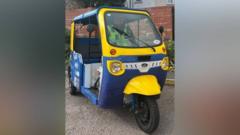
Gwent Police just admitted what most of us suspected the moment those three-wheeled vehicles hit the streets. The force finally sold off its fleet of crime-fighting tuk-tuks, and the financial hit is enough to make any taxpayer wince. After two years of trying to make these glorified golf carts work for modern policing, the experiment ended with a loss of roughly £28,000.
It's a classic case of "innovation" for the sake of a photo op. The force originally bought four of these Bajaj RE auto-rickshaws back in 2022. They spent about £33,000 on the vehicles and the subsequent "police branding"—which basically means they paid thousands for some high-visibility stickers and a few blue lights. When the hammer finally fell at a recent auction, the fleet brought back a measly £4,900.
That’s a 85% drop in value.
The goal was supposedly to help officers patrol parks, walkways, and "safe spaces" in Newport and Abergavenny. The logic? A tuk-tuk can go where a squad car can't. But here’s the reality. A bicycle can go those places too. So can a pair of sturdy boots. Instead, the force opted for a vehicle with a top speed of about 35mph and the structural integrity of a soda can.
The Logistics of a Policing Flop
You don't need to be a mechanical engineer to see the flaws here. These vehicles were never designed for the damp, hilly terrain of South Wales. They were designed for the congested, sun-drenched streets of Delhi or Bangkok.
When Gwent Police rolled them out, the backlash was instant. Locals called them a joke. Social media had a field day. But the force doubled down. They argued these vehicles would "foster" (let's say encourage) better communication with the public. They thought the novelty would make officers more approachable.
It did make them approachable, mostly by people wondering why their tax money was being spent on a motorized tricycle.
The maintenance alone was a headache. Finding parts for a niche Indian-manufactured rickshaw in the UK isn't like popping into a local Ford dealership. While the vehicles sat idle or struggled up hills, the costs mounted. By the time they decided to pull the plug, the "crime-fighting" utility of the fleet was essentially zero. They weren't catching criminals in a 35mph chase. They weren't responding to emergencies. They were essentially expensive, slow-moving billboards for a department that lost its way.
Why Branding Is Not Policing
There is a growing trend in UK policing to prioritize "engagement" over enforcement. This tuk-tuk saga is the peak of that identity crisis. The £28,000 loss isn't just about the money. It's about the opportunity cost.
Think about what £28,000 buys in a real-world setting:
- Thousands of hours of actual foot patrols.
- Better equipment for officers facing rising knife crime.
- Upgraded thermal imaging or drone tech that actually catches suspects.
Instead, that money vanished into the ether of a failed PR stunt. The force claims the vehicles were used for "community engagement events" and "pop-up surgeries." That's government-speak for parking them at fairs so people can take selfies.
I’ve seen this before. A department wants to look "forward-thinking" or "eco-friendly," so they buy a gimmick. They ignore the frontline officers who tell them it's a bad idea. Then, two years later, they quietly sell the evidence of their mistake for pennies on the pound. Gwent Police isn't the first, and they won't be the last.
The Auction Reality Check
The auction results were the final insult. Selling four vehicles for under £5,000 total means each tuk-tuk went for roughly £1,225. That’s less than the price of a decent used mountain bike.
It highlights a fundamental truth about specialized police gear. If it’s not practical for the job, it has no resale value to anyone else. A decommissioned police interceptor or a sturdy van still has utility in the private sector. A high-vis tuk-tuk with a history of mechanical apathy? Not so much.
The buyers were likely collectors or people looking for a quirky promotional vehicle for a private business. They got a bargain. The public got the bill.
Moving Past Gimmick-Based Policing
If we want to stop seeing these five-figure losses, the focus needs to shift back to the basics. Modern policing doesn't need novelty. It needs reliability.
The next time a police commissioner suggests buying something that looks like it belongs in a tourist resort, the oversight boards need to ask three simple questions. Can it catch a suspect? Can it protect an officer? Will it be worth more than a scrap heap in two years? If the answer is no, keep the checkbook closed.
For those living in Gwent, the lesson is clear. Demand more transparency on "innovation" funds. These small losses across hundreds of police forces add up to millions of pounds in waste.
Stop buying the hype. Start buying what works. The tuk-tuks are gone, but the debt remains on the books. Check your local council or police authority's annual spend reports. Look for "specialist vehicle" line items. That's where the next tuk-tuk is hiding, waiting to turn your tax pounds into auction-house pennies. It's time to hold these departments accountable for the "fun" projects that fail the math test.