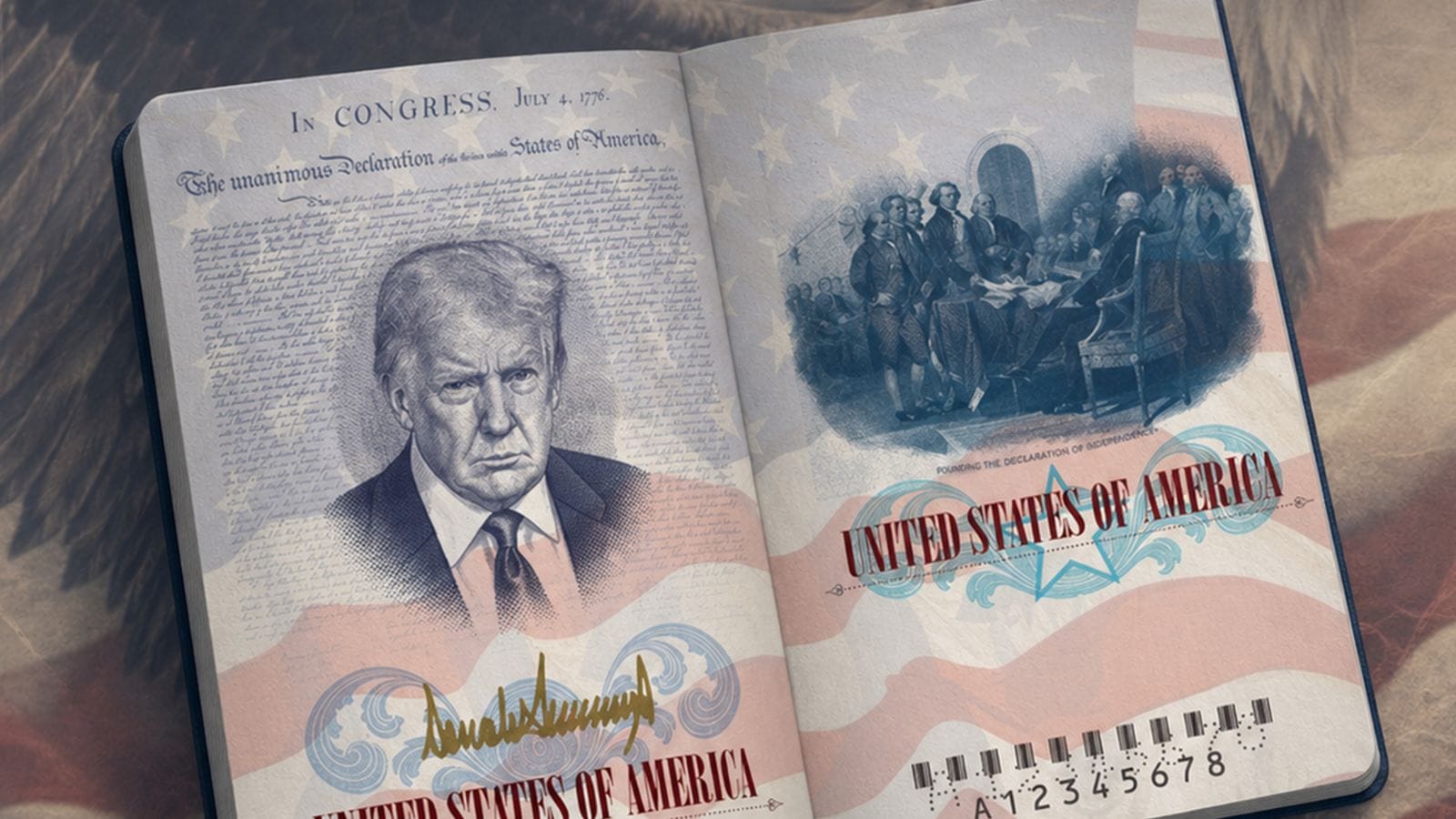
The recent announcement regarding a "Patriot Passport" featuring Donald Trump’s portrait marks a stark departure from traditional government neutrality in official documentation. While the White House frames this as a celebratory collector's item for supporters, the move triggers immediate questions about the intersection of federal branding and partisan iconography. This is not just a piece of paper. It represents a significant shift in how the executive branch utilizes its administrative power to cement a specific political identity within the very tools of citizenship.
Standard passports serve as a functional handshake between nations. They are designed to be boring, bureaucratic, and above all, non-partisan. By introducing a variant that carries the likeness of a specific political figure, the administration is effectively testing the durability of civil service norms that have existed for over a century. If you found value in this piece, you might want to check out: this related article.
The Mechanics of Symbolic Identification
The production of these documents involves more than just a printer and a signature. It requires the coordination of the State Department’s Bureau of Consular Affairs and specific budgetary allocations that are typically reserved for security upgrades or logistical efficiency. When the government pivots these resources toward a "limited edition" product, the cost is not merely financial. It is institutional.
Critics argue that this creates a tiered system of national identity. In one tier, you have the standard blue book representing the collective populace. In the other, you have a branded document that signals an individual's loyalty to a specific leader. This distinction is dangerous. It suggests that national belonging can be customized or bought through political alignment. For another perspective on this story, check out the latest update from The New York Times.
Legal and Ethical Guardrails
Federal law generally prohibits the use of government funds for "publicity or propaganda purposes" not authorized by Congress. Traditionally, this has meant that the executive branch cannot spend taxpayer money to promote its own image in a way that resembles a political campaign. The Patriot Passport pushes this boundary to its breaking point. If the administration argues that the costs are offset by the "limited edition" sale price, they are essentially turning the State Department into a retail wing of a political movement.
Legal scholars point to the Anti-Deficiency Act, which prevents federal agencies from spending money they don't have or using funds for purposes other than what they were appropriated for. If Congress did not specifically set aside money for the creation of portrait-heavy identity documents, the administration may be on thin ice.
International Repercussions and Border Security
A passport's primary job is to be accepted at a foreign border. It is a request from one government to another to allow a citizen to pass safely. When that document becomes a political statement, it invites scrutiny from foreign customs officials. Imagine a scenario where a traveler presents a Patriot Passport in a country with strained relations with the current administration. The document itself becomes a target for harassment or denial of entry.
Security experts also worry about the integrity of the document's anti-counterfeiting features. Every time the design of a passport changes, it creates a window of opportunity for forgers.
- Substrate complexity: High-security paper must be sourced and vetted.
- OVDs (Optically Variable Devices): These are the holograms that are difficult to replicate.
- Ink chemistry: Specific reactive inks are used to prevent tampering.
Changing these elements for a short-run "limited edition" item is an expensive and risky technical feat. If the Patriot Passport lacks the full suite of security features found in the standard e-Passport, it becomes a liability for the holder. If it does include them, the R&D costs for such a small batch are staggering.
The Commercialization of the Executive Branch
The business model behind this rollout looks less like government policy and more like a high-end fashion drop. Using phrases like "limited edition" creates artificial scarcity. This is a tactic designed to drive demand and create a sense of urgency among a specific demographic. It treats the office of the President as a brand rather than a public trust.
This commercialization has a corrosive effect on public perception. When the symbols of the state are sold back to the public with a markup, the relationship between the citizen and the government changes from one of service to one of transaction. This is a consumerist approach to governance that prioritizes the "fan base" over the general public.
The Precedent Problem
If this administration can put a portrait on a passport, what stops the next one from putting a different face on a driver’s license or a social security card? We are entering a period where the neutral aesthetic of the state is being dismantled.
Historically, portraits on currency or stamps have been reserved for figures who are either deceased or have achieved a level of historical consensus that transcends current party bickering. Breaking this tradition turns every official document into a potential battleground for the next culture war. It forces civil servants to become participants in a branding exercise they may not agree with.
Bureaucratic Resistance and the Deep State Narrative
Behind the scenes, career officials at the State Department are reportedly voicing concerns. These are the people who manage the day-to-day operations of American diplomacy. For them, the Patriot Passport is a logistical nightmare. It requires new training for staff, updated scanning software at entry points, and a protocol for handling lost or stolen "special edition" documents.
This friction is likely to be framed by the administration as "bureaucratic overreach" or "interference." By framing a standard professional concern as a political attack, the White House can further isolate its supporters from the career experts who keep the government running. It is a calculated move to delegitimize the expertise of the permanent civil service.
Financial Transparency and Revenue Streams
Where does the money go? If these passports are being sold at a premium, the public deserves to know how that profit is being handled.
| Expense Category | Standard Passport | Patriot Passport (Estimated) |
|---|---|---|
| Application Fee | $130 | $130 |
| Execution Fee | $35 | $35 |
| "Limited Edition" Premium | $0 | $250+ |
| Security Tech Surcharge | Included | Additional 15% |
If the surplus funds are directed back into the General Fund, it is an unorthodox tax on political supporters. If they are directed toward a specific "Patriot Fund" or other pet projects, it bypasses the traditional Congressional appropriations process. This is an end-run around the power of the purse.
The Digital Identity Shift
The physical passport is only half the story. There is a growing push for digital identity credentials that can be stored on a smartphone. The Patriot Passport initiative likely includes a digital component—a "digital badge" or verified status that exists in a parallel ecosystem. This creates a feedback loop where the physical document serves as an entry point into a private digital network managed or influenced by political entities.
The risk here is data privacy. When a government agency collects data specifically for a branded product, who owns that data? Is it stored in the same secure silos as standard passport data, or is it handled by third-party contractors hired to manage the "limited edition" rollout? History shows that private contractors are often the weakest link in the data security chain.
Strategic Polarization as Policy
The ultimate goal of the Patriot Passport is not to improve travel efficiency or enhance security. It is a tool of strategic polarization. By creating a physical marker of "patriotism" that is tied to a specific leader, the administration forces a choice. You are either with the brand, or you are with the old, "failed" system.
This binary choice is the hallmark of modern populist movements. It removes the gray area where most of the country lives. It turns a routine trip to the airport into a political statement. The passport becomes a uniform.
For the veteran observer, this is a clear signal that the guardrails are not just being tested—they are being ignored. The administration is betting that the public's desire for identity-based products will outweigh their concern for institutional norms. It is a high-stakes gamble that uses the machinery of the State Department as the chips.
The introduction of the Patriot Passport is a bellwether for the future of the American administrative state. It suggests that moving forward, no part of the government is too small or too functional to be exempt from the demands of the modern political machine. The blue book was a symbol of a unified nation. The new portrait-laden version is a symbol of a nation divided by its own branding.
Check the fine print on your application. The true cost of this document isn't the fee you pay at the window; it's the precedent it sets for every official record that follows.