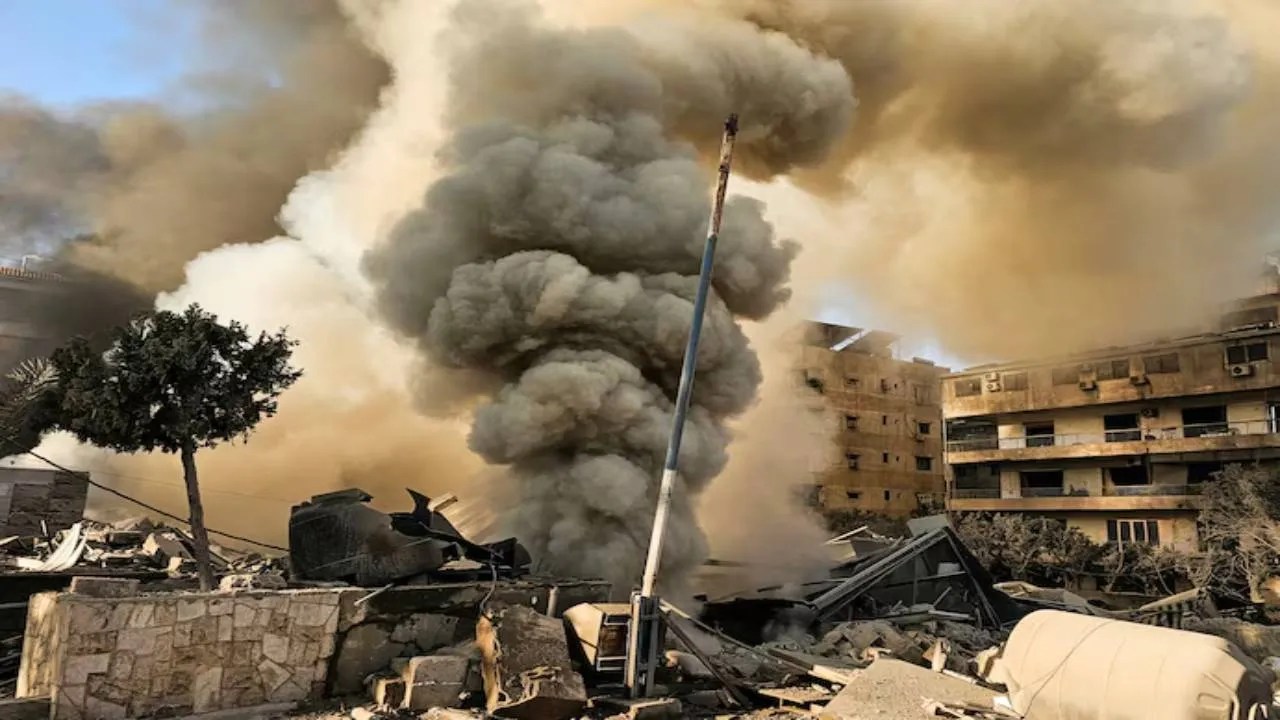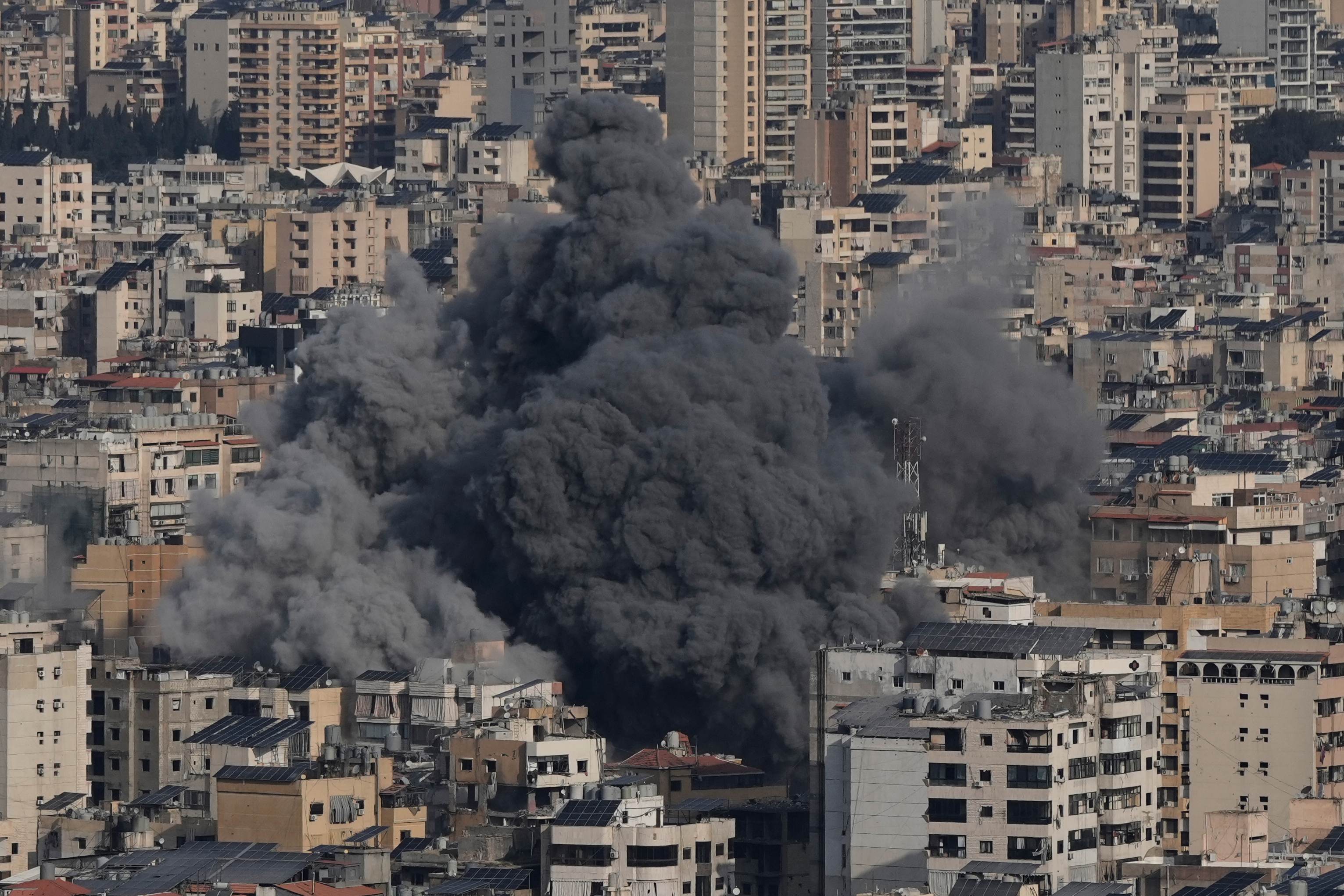
The recent waves of Israeli kinetic strikes against dozens of command and control centers in Tehran represent more than a localized escalation. They signal the functional collapse of Iran’s "strategic depth" doctrine. For decades, the Islamic Republic predicated its security on keeping conflict far from its borders through a network of regional proxies. That buffer has vanished. By bypassing the perimeter and striking the central nervous system of the Iranian military apparatus in the heart of the capital, Israel has demonstrated a technical and intelligence supremacy that renders traditional geographic defenses obsolete. This is a surgical dismantling of the infrastructure required to coordinate multi-front warfare.
The Architecture of a Modern Air Campaign
Modern suppression of enemy air defenses (SEAD) involves a complex choreography of electronic warfare, cyber disruption, and precision munitions. When the Israeli Air Force (IAF) targeted Tehran, the objective was not indiscriminate destruction. Instead, the focus rested on hardened command nodes, signal intelligence facilities, and the logistics hubs that bridge the gap between high-level orders and field execution.
To reach these targets, the IAF had to neutralize Russian-made S-300 batteries and indigenous Iranian radar systems. This was not achieved through brute force alone. Analysts suggest the use of sophisticated stand-off munitions—missiles fired from outside the immediate range of terminal defenses—combined with low-observable (stealth) aircraft like the F-35I "Adir." These platforms act as forward sensors, identifying gaps in the radar net and feeding real-time telemetry back to the strike packages.
The sheer volume of targets—cited as "dozens" of centers—indicates a massive intelligence failure within the Iranian security services. Targeting such specific rooms within massive urban complexes requires "human intelligence" (HUMINT) to verify what the satellite imagery suggests. Someone on the ground likely confirmed which floors held the servers and which basements housed the commanders.
The Intelligence Breach Behind the Blast
You cannot hit forty targets in a heavily defended capital without knowing exactly where the skeletons are buried. The technical execution of the strike is secondary to the intelligence preparation of the battlefield. The Iranian Revolutionary Guard Corps (IRGC) has long been infiltrated, a reality made plain by the successive assassinations of nuclear scientists and the high-profile hit on Ismail Haniyeh in a supposedly secure guest house.
The Vulnerability of Digital Command Chains
The shift toward digital command structures has created a double-edged sword for regional powers. While a centralized digital network allows for rapid communication with proxies in Lebanon, Iraq, and Yemen, it also creates a single point of failure. If the central hub in Tehran is compromised, the "spokes" of the wheel are left spinning in a vacuum.
- Encryption Weaknesses: Standard military-grade encryption can be bypassed if the physical hardware is accessed or if the side-channel signals are intercepted during the strike.
- Latency Issues: Without the Tehran nodes, field commanders must rely on decentralized decision-making, which often leads to hesitation and tactical errors during high-intensity conflict.
- Physical Destruction: Servers and fiber-optic junctions are fragile. A single well-placed munition can blind an entire regional sector for weeks.
The Myth of Persian Impenetrability
For years, Tehran boasted that its "Eagle 44" underground bases and sophisticated radar nets made the capital a fortress. That narrative is now in tatters. The strikes proved that even the most reinforced bunkers have a "p" value—a probability of kill—that modern bunker-busters can exploit.
The IAF likely utilized the GBU-72 Advanced 5,000-pound penetrator, or similar munitions, designed specifically to burrow through meters of reinforced concrete and soil before detonating. When these weapons hit a command center, the result is a catastrophic overpressure event that kills everyone inside and liquefies the hardware. The psychological impact on the surviving leadership is perhaps more significant than the physical damage. They now know that no basement is deep enough to hide from a GPS-guided kinetic rod.
The Role of Domestic Unrest
Internal stability remains the ultimate wildcard. An external strike often rallies a population around the flag, but in Iran, the relationship between the citizenry and the state is fraught. Each strike on an IRGC facility serves as a reminder to the local population that the regime is not invincible. If the state cannot protect its own high-command centers in the capital, the average citizen wonders how it intends to maintain internal order if the situation deteriorates further.
Technical Specifications of the Engagement
The hardware used in these sorties highlights the widening gap between Western-aligned military technology and the aging Soviet-era or domestic Iranian hardware.
| System Category | Israeli/Western Asset | Iranian Defense Counterpart | Outcome |
|---|---|---|---|
| Aviation | F-35I Adir (Stealth) | MiG-29 / F-14 Tomcat | Total air superiority; Iranian jets remained grounded. |
| Missiles | Rampage / Blue Sparrow | S-300 / Bavar-373 | High penetration rate; radar arrays disabled early. |
| Cyber | Classified EW Suites | Localized Intranets | Significant signal jamming and spoofing reported. |
The S-300, once feared as a "game-ender" for any potential air strike, appears to have been bypassed or directly destroyed with relative ease. This raises serious questions for other nations relying on Russian export variants for their national defense. If the S-300 cannot protect Tehran, it certainly cannot protect smaller, less defended hubs.
The Proxies are Now Orphaned
The most immediate consequence of the Tehran strikes is the "orphaning" of the proxy network. Hezbollah in Lebanon and the Houthis in Yemen rely on a steady stream of tactical intelligence, satellite data, and financial authorization from these Tehran-based command centers.
When the head is severed, the body flails. We are seeing a breakdown in the "Axis of Resistance" coordination. Without the central nervous system, these groups are forced to operate autonomously. Autonomy sounds good in theory, but in modern warfare, it leads to a lack of synchronized pressure. Israel can now deal with these threats piecemeal rather than fighting a coordinated multi-front war.
The Red Line Shift
The "Red Lines" have moved. Previously, striking inside Tehran was considered a move toward total war. Now, it has become a tactical reality that the international community seems to have priced into the regional risk. This normalization of strikes on sovereign capitals suggests a new era of warfare where borders are secondary to the "active defense" of a nation's interests.
The Economic Aftermath of Kinetic Diplomacy
War is expensive, but the loss of infrastructure is an economic drain that Iran can ill afford. The centers destroyed were not just rooms with maps; they were high-tech facilities housing millions of dollars in specialized equipment that cannot be easily replaced due to international sanctions.
- Supply Chain Disruption: The specialized semiconductors and specialized cooling systems required for military servers are hard to smuggle past modern trade barriers.
- Resource Diversion: Money meant for social subsidies or keeping the rial from total collapse must now be diverted to rebuilding the IRGC’s shattered headquarters.
- Investment Flight: Any remaining foreign interest in Iranian markets evaporates when the capital city becomes a target for precision bombing.
The Asymmetric Response Trap
The regime now faces a dilemma. If they do not respond, they look weak to their own hardliners and their regional proxies. If they do respond with a massive missile barrage of their own, they risk a second, even more devastating wave of Israeli strikes that might target more sensitive infrastructure—such as the oil refineries at Kharg Island or the nuclear enrichment sites at Natanz.
Israel has essentially put Iran in a "zugzwang" position—a chess term where every move makes the player's situation worse. By taking out the command centers first, Israel has ensured that any Iranian retaliation will be less coordinated and more prone to interception.
The Logistics of the "Day After"
Rebuilding a command and control network is not like fixing a bridge. It requires a total audit of security protocols. Every survivor must be interrogated. Every remaining cable must be checked for bugs. Every new server must be vetted for supply-chain interdiction. This process takes months, if not years.
During this "blind period," the IRGC is effectively paralyzed. They cannot plan major operations because they cannot be sure their communications are private. They cannot move high-ranking officials because they cannot be sure their locations aren't being tracked via the very devices they use to lead.
The IAF has not just destroyed buildings; it has destroyed the trust required to run a military. When a commander looks at his radio and wonders if it is a beacon for a Hellfire missile, the command structure has already failed. This psychological paralysis is the ultimate goal of high-precision warfare.
The era of Tehran acting as a safe sanctuary for the architects of regional instability is over. The geography of the Middle East has been flattened by the reality of 21st-century air power, leaving the regime with a stark choice: adapt to a world where they are no longer untouchable, or watch the rest of their infrastructure vanish one coordinate at a time.
Verify the structural integrity of your own communications before the next siren sounds.