The air in the Four Corners region carries the scent of sagebrush and the heavy, electric stillness of the high desert. It is a place where distance is measured in hours, not miles. For Sarah, a public health investigator who had spent a decade tracking invisible killers through these canyons, the silence was usually a comfort. But in the spring of 2024, the silence felt brittle. It felt like a glass vase held inches above a stone floor.
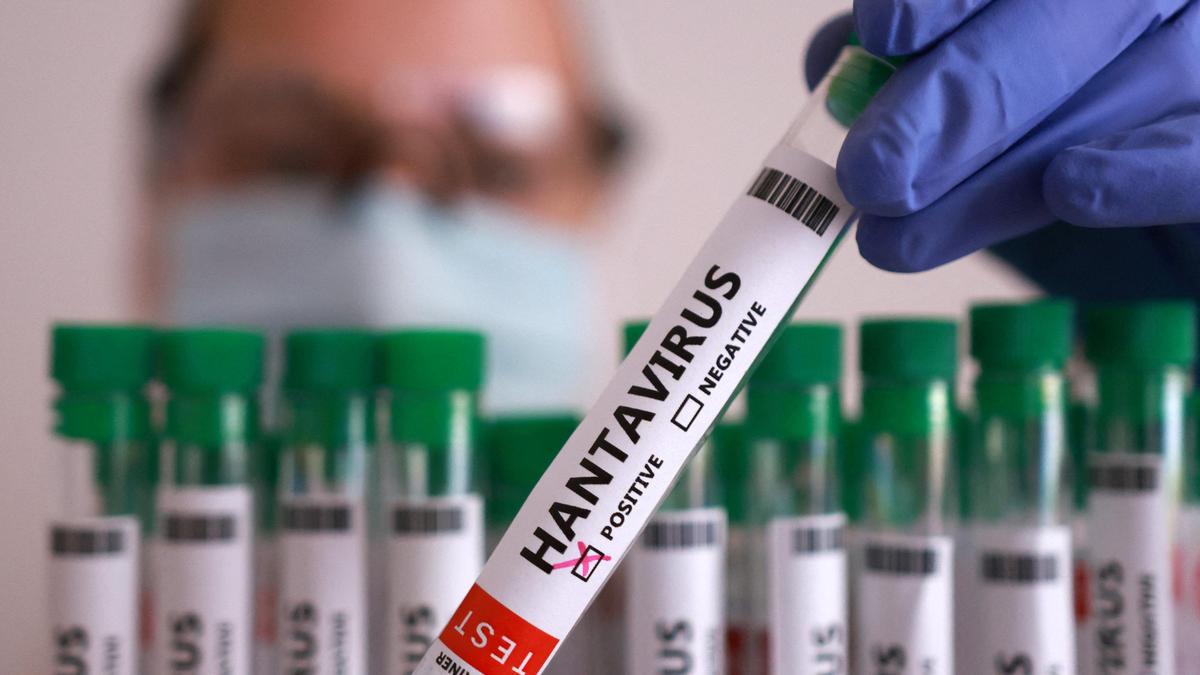
She sat in a cramped office in a county clinic, staring at a set of lab results that shouldn't have been there. A young man, previously healthy and strong, had died within twenty-four hours of hospital admission. His lungs had simply filled with fluid. It was the classic, terrifying signature of Hantavirus Pulmonary Syndrome.
This isn't a ghost story. It is a mechanical failure.
When we talk about national preparedness, we often visualize massive underground bunkers or fleets of gleaming ambulances. The reality is far grittier. Preparedness is Sarah’s ability to drive three hundred miles on a Tuesday to trap a deer mouse. It is the funding for the specific reagents in a local lab. It is the invisible net that catches a spark before the forest goes up in flames.
But over the last several years, the mesh of that net has been stretched until the ropes began to snap.
The Anatomy of a Shriveled Shield
Between 2017 and 2021, a series of quiet, bureaucratic choices fundamentally altered the biology of American safety. The administration at the time initiated a sequence of budget cuts that targeted the very agencies responsible for "boring" work. These weren't the high-profile military projects that command headlines. These were the line items for the Centers for Disease Control and Prevention (CDC) and the complex infrastructure of the Global Health Security Agenda.
Imagine a house where the owner decides to stop paying for termite inspections because the wood looks fine today.
The cuts weren't just about money; they were about the erosion of institutional memory. When the National Security Council’s global health security unit was dissolved in 2018, the United States didn't just lose a department. We lost the "smoke detector" of the executive branch. We lost the people whose entire job was to wake up every morning and ask: What is the thing we aren't seeing yet?
For Sarah, this wasn't a political debate. It was a logistical nightmare.
The local health departments, often the first and only line of defense against zoonotic diseases like Hantavirus, saw their federal grants stagnate or disappear. Training programs for environmental specialists were quietly shuttered. The expertise required to identify the subtle shifts in rodent populations—driven by climate change and shifting weather patterns—began to vanish.
The Mathematics of a Breath
Hantavirus is not like a cold. It doesn't linger. You breathe in the dust from the nest of an infected deer mouse, and the clock starts.
The virus targets the endothelium, the thin layer of cells lining your blood vessels. It makes them leak. It turns your own circulatory system against you. Without rapid intervention and highly specialized supportive care, the mortality rate hovers around 38%. To put that in perspective, that is a coin flip where one side is a long life and the other is a ventilator and a grieving family.
Success in these cases depends on a hair-trigger response. A doctor in a rural clinic needs to recognize the symptoms instantly. They need to have a direct line to a state lab. That lab needs to have the staffing to run a sample overnight.
When the funding for the CDC's Public Health Emergency Preparedness (PHEP) cooperative agreements is slashed, that line goes dead.
During the period of the Trump-era cuts, the focus shifted toward "reactive" funding. The philosophy was simple: wait for the emergency, then throw money at it. It sounds fiscally responsible on a spreadsheet. In practice, it is a death sentence. Public health is a proactive discipline. You cannot "react" your way out of a viral surge that has already reached the lungs of a teenager in rural New Mexico.
The infrastructure required to handle a Hantavirus flare-up is the same infrastructure needed to stop the next pandemic. They are not separate systems. They are the same muscle. And in those four years, that muscle was allowed to atrophy.
The Vanishing Expert
Consider the case of the field biologist.
In the old system, a biologist might spend years monitoring the "sin nombre" strain of Hantavirus. They would know that a particularly wet winter leads to a boom in the piñon nut crop, which leads to a spike in the mouse population, which leads to a human outbreak in the spring.
When the grants dried up, those biologists moved into the private sector. They took jobs in tech or environmental consulting. They took their decades of hyper-specific, life-saving knowledge with them.
Now, when Sarah calls the regional office for data on rodent density, she often gets a voicemail. Or she gets a junior staffer who is overworked, underpaid, and trying to manage three different counties with a gas budget that hasn't been updated since 2014.
We traded the wisdom of the veteran for the efficiency of the empty desk.
The Cost of the "Quick Fix"
There is a seductive logic to cutting "wasteful" spending in government. It appeals to a sense of rugged individualism. Why should a taxpayer in a high-rise in Chicago care about mouse populations in the desert?
The answer arrived in 2020, though many chose not to hear it.
The dismantling of the pandemic response teams and the reduction in CDC's global footprint didn't just affect Hantavirus. It created a culture of blindness. When you stop looking for the small threats, you lose the ability to see the large ones. The "cuts" were presented as a way to streamline government, but they functioned as a sensory deprivation chamber for the nation's health.
The impact was felt most acutely in the "last mile" of healthcare.
In rural America, the health department is often the only entity providing vaccinations, water testing, and disease surveillance. When federal support is pulled back, these departments have to make impossible choices. Do they fund the opioid outreach program, or do they maintain the Hantavirus surveillance traps?
They usually choose the immediate crisis. The "invisible" threat of a virus lurking in a barn is pushed to the bottom of the pile. Until it isn't.
The Dust in the Air
Sarah drove out to the deceased man's ranch late in the afternoon. The family was devastated, moving in the slow, underwater motion of the newly bereaved. They didn't know about the National Security Council or the CDC’s budget trials. They only knew that their son had been cleaning out an old shed on Saturday and was gone by Wednesday.
She put on her respirator, the plastic seal biting into her cheeks. She stepped into the shed.
The light filtered through the cracks in the wood, illuminating a billion dancing motes of dust. In a properly funded world, this shed would have been the subject of a public service announcement. There would have been a well-funded local agent visiting the local schools, explaining the dangers of dry-sweeping in mouse-prone areas. There would have been a robust system of "sentinel" testing that would have alerted the community to an increased viral load in the local fauna weeks ago.
Instead, there was just Sarah, a lone investigator with a depleted kit and a sense of profound, heavy frustration.
The tragedy of the cuts wasn't a sudden explosion. It was a slow leak. It was the quiet departure of a scientist here, the expiration of a reagent there, and the shuttering of a small-town lab over the hill. We didn't lose our preparedness in one day; we surrendered it in a thousand small concessions to a budget-line fantasy.
Beyond the Spreadsheet
We are told that the economy is the most important metric of a nation’s health. We track the numbers, the growth, and the "synergy" of the markets. But the real economy is the breath of a young man in the desert.
The real cost of the 2017–2021 policy shifts isn't measured in dollars saved. It is measured in the capacity to care. It is measured in the minutes we lose when a system fails to communicate. It is measured in the fear that takes root when we realize that the people we trusted to keep watch have turned out the lights to save on the electricity bill.
As Sarah finished her work, she stood in the yard and watched the sun dip below the mesas. The sky turned a bruised purple.
The high desert was silent again.
The danger of Hantavirus, like the danger of any systemic failure, is that it is patient. It doesn't care about election cycles. It doesn't care about fiscal years. It only cares about the opening. It only cares about the moment we decide that being prepared is too expensive to maintain.
She packed her gear into the back of her dusty SUV. She had one more stop to make, another family to warn, and a report to write that she knew might never be read by anyone with the power to change the budget.
But she did it anyway. Because in the absence of a functioning system, all that remains is the individual—holding a thin, fraying line against the dark.
The wind picked up, swirling the dust across the dry earth. Sarah closed the door, the click of the latch sounding tiny against the vast, indifferent landscape. We are only ever as safe as the most neglected part of our defense. And currently, in the quiet corners of the country, the defense is holding its breath, waiting for a wind that might never come.