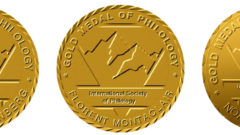
In the hallowed, dusty corridors of academia, prestige is the only currency that never devalues. For a professor at a top-tier institution, your worth is not measured by the quality of your coffee or the size of your office, but by the weight of the accolades trailing behind your name like a comet’s tail. It is a world of quiet desperation cloaked in velvet robes.
Consider the case of a man we will call the Scholar of High Ambition. He sat within the prestigious walls of a French university, a place where the air is thick with the scent of old paper and the crushing pressure of "publish or perish." He had the tenure. He had the respect of his peers. But apparently, he lacked the one thing that keeps the ego warm during those long, lonely nights of research: a shiny, international trophy to prove he was the best in the world.
So, he decided to invent one.
The Architecture of a Lie
Fraud in the ivory tower usually looks like a fudged data point in a biology lab or a misattributed quote in a history thesis. It is usually small, a desperate nip and tuck to make a theory fit the reality. But this was different. This was an act of pure, cinematic imagination.
The professor didn't just lie about an award; he manufactured an entire universe to house it. Imagine a hypothetical digital stage, complete with a professional-looking website, a list of distinguished (yet entirely fictional) board members, and a mission statement that sounded exactly like the high-minded prose found in the brochures of the Nobel or the Pulitzer committees. He called it an international prize for excellence. He gave it a name that rang with authority.
Then, with the stroke of a key, he awarded it to himself.
It was a masterstroke of psychological projection. He understood a fundamental truth about our modern era: we are so overwhelmed by the sheer volume of information that we have stopped checking the foundations of the houses we admire. If a website looks sleek, if the font is serifed and elegant, and if the recipient wears a suit and speaks with the gravity of a man who knows the secrets of the universe, we believe. We want to believe.
The Weight of the Invisible Medal
For a while, the plan worked beautifully. The university, proud of its "world-class" faculty member, trumpeted the news. Press releases were drafted. Colleagues offered stiff, envious congratulations in the faculty lounge. The professor likely felt a surge of adrenaline every time he saw his name linked to the prize in a Google search.
But lies of this magnitude have a specific kind of gravity. They require constant maintenance. Every time someone asks about the "other" winners or the history of the foundation, the liar must spin another thread, and then another, until they are caught in a web of their own making.
The stakes here weren't just about one man’s vanity. They were about the invisible contract between an institution and the public. When we look at a professor, we aren't just looking at a teacher; we are looking at a gatekeeper of truth. We trust them to tell us what is real. When that gatekeeper starts selling us ghosts, the entire structure of higher education begins to creak and groan.
The Cracks in the Digital Facade
The undoing of a grand deception is rarely a sudden explosion. It is usually a slow drip. In this instance, it began with a few curious minds—perhaps a skeptical journalist or a rival academic with a keen eye for detail—who started pulling at the loose threads.
They looked for the "International Committee." They found digital footprints that led nowhere. They searched for previous winners and found a void. The "prestigious" organization had no physical address, no tax records, and no history before the professor’s sudden windfall. It was a digital Potemkin village, a beautiful front with nothing behind it but the professor's own ambition.
When the investigation began, the narrative shifted from a story of triumph to a tragedy of the absurd. The university, once the professor's loudest cheerleader, had to face the humiliating reality that they had been conned by one of their own. They weren't just victims of a lie; they were the megaphone that amplified it.
The Human Cost of Faked Glory
Why do it? That is the question that lingers long after the disciplinary hearings end and the office is packed into cardboard boxes.
The pressure to be "extraordinary" has become a toxin. In a globalized world, being a respected local expert isn't enough anymore. You have to be a "thought leader." You have to be "award-winning." You have to be a brand. We have created a culture where the appearance of success is often more profitable than success itself.
The professor was likely not a "villain" in the traditional sense. He was a man who looked into the mirror and saw a person who was merely "good" when the world demanded he be "great." The fake prize was a life jacket for a drowning ego.
But in reaching for that fake glory, he burned the one thing that is truly irreplaceable in the life of a scholar: integrity. You can buy a domain name. You can design a logo. You can even write your own glowing citation. But you cannot manufacture the quiet, steady trust of your students and your peers once it has been shattered.
The Silence After the Storm
The investigation continues, and the headlines will eventually fade, replaced by the next scandal or the next breakthrough. The professor’s name will become a cautionary footnote in academic journals, a shorthand for the dangers of vanity in the age of the internet.
But the real damage is done in the quiet moments. It’s in the heart of the student who wonders if their mentor’s lectures are as hollow as his awards. It’s in the mind of the taxpayer who sees a prestigious university fooled by a basic internet scam.
Truth doesn't need a trophy to be real. It doesn't need a gala or a gold-embossed certificate. It exists in the patient, often boring work of actually doing the research, actually teaching the class, and actually earned the respect of the world through merit rather than manufacture.
The golden ghost of the professor's prize has vanished, leaving behind nothing but the cold, hard reality of a desk that needs to be cleared and a reputation that can never be rebuilt.