The recent strike on a major international aviation hub by an Iranian-designed suicide drone marks the crossing of a strategic Rubicon. For years, the threat of loitering munitions was a theoretical concern for high-level defense planners or a localized nightmare for border outposts. That has changed. When a $30,000 fixed-wing drone, built with off-the-shelf civilian components, can bypass multi-million dollar integrated air defense systems to crater a runway or shatter a terminal, the global security architecture hasn't just been dented. It has been invalidated.
This isn't just about one drone or one airport. It is about the democratization of precision strike capabilities. For the price of a mid-sized sedan, non-state actors and secondary powers can now project power across borders with the kind of accuracy once reserved for the United States Air Force. The "terrifying moment" captured on grainy smartphone footage isn't an isolated incident of a country being "dragged into war." It is the debut of a new, permanent reality where no target is too deep in the rear, and no defense is truly airtight.
The Brutal Math of Attrition
Modern air defense is built on a fundamental economic flaw. To intercept a low-cost loitering munition like the Shahed-136, a military typically fires an interceptor missile—such as the Patriot PAC-3 or an IRIS-T—that costs between $2 million and $4 million per shot. This is a losing equation. If an adversary launches fifty drones costing a total of $1.5 million, and the defender spends $100 million in interceptors to stop them, the defender loses the war of attrition before the first explosion occurs.
The attackers don't even need to hit their targets to win. They only need to exist. By forcing an airport to shut down, diverting international flights, and spiking insurance premiums for global shipping and aviation, the drone achieves its strategic objective through economic disruption. The psychological toll on a civilian population seeing a nosediving "moped in the sky" is simply a bonus for the aggressor.
We are seeing the transition from "exquisite" warfare to "industrial" warfare. The exquisite era relied on a few, highly expensive platforms like the F-35 or Aegis destroyers. The industrial era, which we have now entered, relies on the "swarm." Quantities have a quality of their own. When dozens of these drones are launched simultaneously, they saturate the radar screens of even the most advanced systems. Radars can only track and target a finite number of objects at once. Once that limit is reached, the remaining drones get through.
How the Shahed Evades the Grid
To understand why these drones are nosediving into airports, you have to understand what they are not. They are not sophisticated cruise missiles. They are slow, loud, and made of carbon fiber and honeycomb structures. Yet, these very weaknesses are their strengths.
Traditional radar systems were designed to spot fast-moving, high-altitude metal objects—fighters and bombers. A small drone flying at 120 miles per hour at an altitude of 200 feet is often filtered out by radar software as "clutter," indistinguishable from a large bird or a weather anomaly. By the time the system recognizes the drone as a threat, it is often too late to engage effectively.
Furthermore, the navigation systems in these drones have evolved. While early versions relied heavily on GPS, which is easily jammed, newer iterations use inertial navigation systems (INS). These systems don't need a satellite signal; they calculate their position based on their starting point and their movement. You cannot "jam" a piece of math. If the drone knows where it started and how fast it is going, it will find its way to the coordinates of a stationary target like an airport terminal regardless of electronic warfare efforts.
The Component Trail
An investigation into the wreckage of these drones reveals a chilling truth about the global supply chain. These are not products of a secluded, high-tech military-industrial complex. They are built using:
- Commercial Spark Plugs: Often sourced from international automotive suppliers.
- Consumer Grade Semiconductors: The same chips found in your microwave or smart fridge.
- Open Source Flight Software: Available for download by any hobbyist.
- Satellite Navigation Modules: Easily purchased on the open market for less than $100.
This "Lego-style" assembly makes sanctions nearly impossible to enforce. You cannot ban the export of every consumer electronic component in the world. As long as these parts are available, the assembly lines in places like Isfahan or Russia’s Tatarstan region will continue to churn out hundreds of units a month.
The Geopolitical Ripple Effect
The strike on an international airport isn't just a tactical move; it’s a message to the neighbors. When a drone hits a hub in a country previously uninvolved in a conflict, it signals that neutrality is no longer a shield. The reach of these weapons effectively shrinks the map.
We are seeing a shift in how middle powers conduct foreign policy. Previously, if you wanted to threaten a neighbor’s infrastructure, you needed an air force, which requires pilots, hangers, and massive budgets. Now, you just need a few shipping containers and a launch rail. This has lowered the "barrier to entry" for war.
Consider the implications for global trade. If an airport in the Middle East or Eastern Europe can be shuttered by a single drone strike, what happens to hubs in Dubai, Singapore, or Frankfurt? The insurance industry is already recalculating the risk. We are moving toward a world where "safe" airspace is a luxury that few can afford to guarantee.
Countermeasures and the Tech Gap
The rush to develop "C-UAS" (Counter-Unmanned Aircraft Systems) is the new gold rush in the defense industry. But the solutions are currently lagging behind the threat.
Electronic Warfare (EW): This involves "jamming" the link between the drone and its operator or its GPS. As mentioned, this is becoming less effective against autonomous, INS-guided drones.
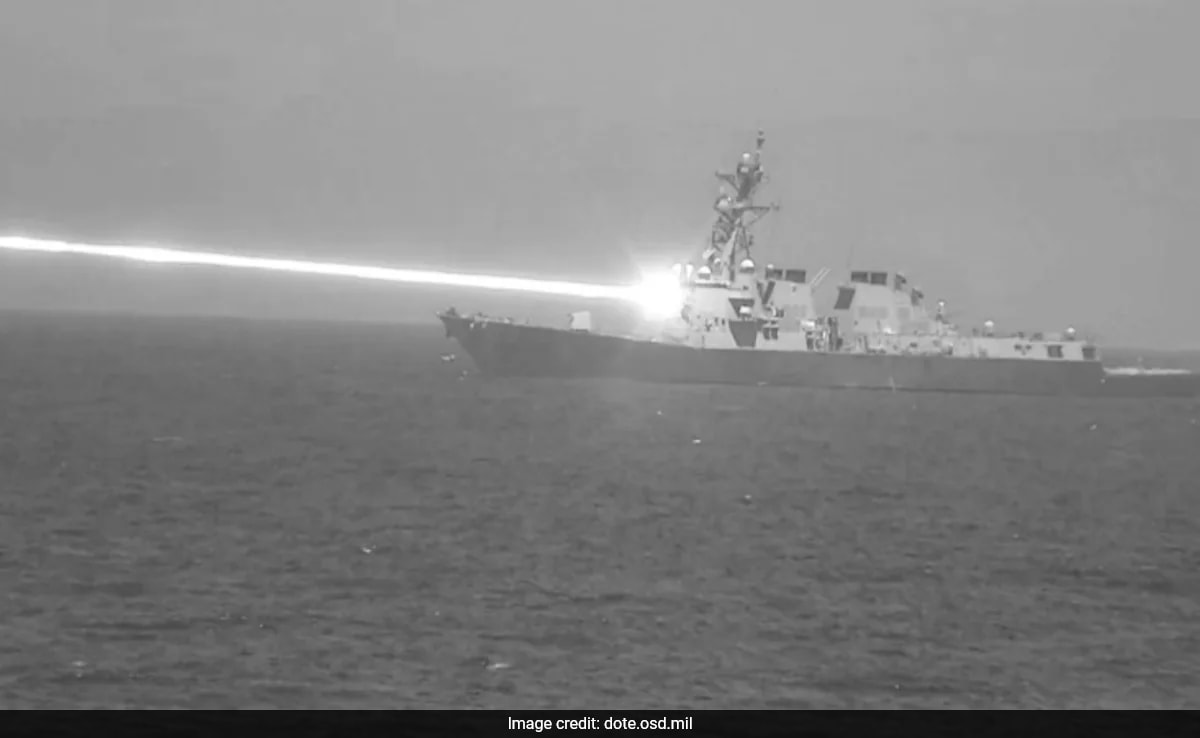
Directed Energy (Lasers): The dream is a "zero-cost" shot. A laser beam that burns through the drone's casing. While promising, lasers struggle with atmospheric conditions like fog, rain, or smoke—the exact conditions an attacker would choose for a strike.
Kinetic Interceptors: Small, "anti-drone" drones that ram into the attacker. This is currently the most promising avenue, but scaling this to meet a 100-drone swarm remains a logistical nightmare.
Traditional AA Guns: We are seeing a return to 1940s-style anti-aircraft cannons. Systems like the German Gepard have proven remarkably effective. They use programmable "airburst" ammunition that creates a cloud of tungsten pellets in the drone's path. It is low-tech, but it works.
The End of the Rear Guard
For the last century, "the front" was a specific place where soldiers fought. Behind the front was the "rear," where civilians lived and logistics functioned in relative safety. The suicide drone has effectively abolished the rear.
An airport 500 miles from the border is now just as much a target as a trench on the front line. This necessitates a total rethink of civil defense. We will likely see the installation of permanent anti-drone batteries at every major power plant, water treatment facility, and transportation hub. The aesthetic of our cities will change; the "Iron Dome" model is moving from a regional quirk to a global necessity.
This is not a temporary surge in violence. This is the new baseline for 21st-century conflict. The nosediving drone is the successor to the trench mortar and the V-2 rocket—a weapon that changes the psychology of everyone it can reach.
The Coming Swarm
The next phase is already in development: AI-driven swarming. Currently, drones are launched in groups but act individually. True swarming involves drones that communicate with each other in flight. If one drone is shot down, the others adjust their formation. If one drone spots a gap in the radar, it signals the rest of the pack to follow.
Once this technology becomes standardized—and given the pace of AI development, it will be soon—current air defense systems will be functionally obsolete. We are looking at a future where the only defense against a swarm of drones is another swarm of drones. A literal "war of the machines" fought in the milliseconds of computer processing time above our heads.
The strike on the airport was a wake-up call, but the world seems to be hitting the snooze button. We are still debating "escalation" while the very nature of what constitutes a "front line" has dissolved. The technology has outpaced the policy. The drone didn't just hit a runway; it hit the illusion that we are in control of our own airspace.
Every nation with an international airport needs to stop asking if they are at risk and start asking how they will function when the GPS goes dark and the sky starts buzzing. The "terrifying moment" is no longer a headline. It is the new normal.
Audit your local infrastructure’s vulnerability to low-altitude, non-RF threats; the era of relying on high-altitude missile shields to protect civilian hubs is officially over.