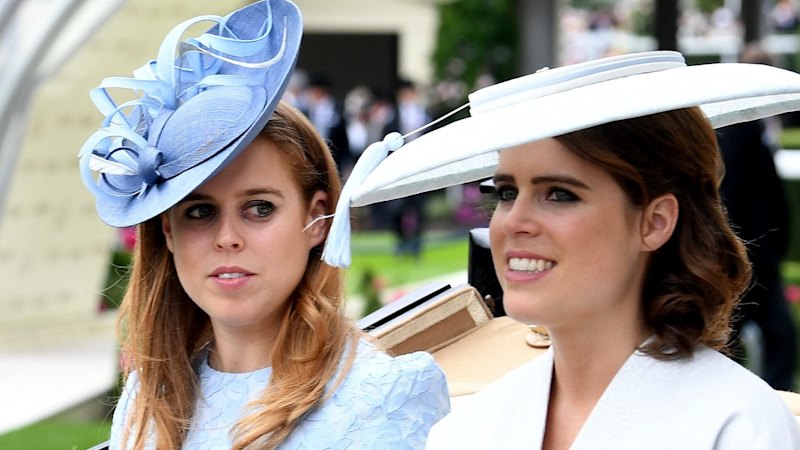
The physical positioning of members of the British Royal Family at high-visibility events like Royal Ascot is not a matter of social preference but a calculated deployment of symbolic capital. When Princesses Beatrice and Eugenie are absent from the central sovereign’s procession, it signals a deliberate contraction of the "inner core" to mitigate reputational contagion. This strategic distancing functions as a risk management protocol designed to insulate the monarchy’s primary brand—the King and the Prince of Wales—from the ongoing legal and social fallout surrounding the Duke of York. The exclusion is not a personal "ban" in the traditional sense; it is a structural realignment of the firm’s public-facing assets to prevent the blurring of lines between working royals and non-working relatives associated with systemic scandal.
The Architecture of Royal Optics
Royal Ascot operates as a high-density theater of legitimacy. The event’s hierarchy is dictated by the Royal Carriage Procession, an 1825-originating tradition that serves as a visual census of the monarchy’s power structure. Admission to this procession is the ultimate metric of institutional standing.
For Beatrice and Eugenie, the transition from "blood princesses" to "peripheral figures" is driven by three distinct variables:
- The Proximity Tax: Every meter of physical closeness to a disgraced figure (Prince Andrew) increases the reputational cost for the institution. By extension, his daughters represent a secondary link that must be managed.
- The Slimmed-Down Mandate: King Charles III’s operational strategy prioritizes a lean, functional core. Including non-working royals in high-stakes visual maneuvers contradicts the narrative of a modern, cost-effective monarchy.
- The Media Feedback Loop: Tabloid narratives thrive on juxtaposition. Placing the York sisters alongside the Princess of Wales creates a visual "A/B test" for the public, often leading to unfavorable comparisons regarding their father’s unresolved legal and ethical legacy.
The Mechanism of Strategic Isolation
The institution employs a "Buffer Zone" strategy. This involves allowing the sisters to attend the event as private citizens in the Royal Enclosure while denying them a role in the televised, state-sanctioned pageantry. This distinction is critical.
By participating in the event without the carriage procession, the sisters are functionally demoted to the status of high-net-worth guests rather than representatives of the Crown. This creates a firewall. If the media attempts to link their presence to the Duke of York’s scandals, the Palace can legitimately claim that their attendance was a private, family-oriented outing, not an institutional endorsement of the York brand. This is a classic "Plausible Deniability" mechanism.
The Financial and Legal Friction
The Duke of York’s continued legal and financial entanglements—specifically the civil settlement with Virginia Giuffre and the scrutiny over his private wealth—create a "Credit Default Swap" in royal public relations. The more Andrew is criticized, the more the value of the "York Brand" drops. For the King, the question is not about the sisters' personal merits; it is about the risk-weighted return on their visibility.
- Sovereign Grant Insulation: Working royals are funded by the Sovereign Grant. Beatrice and Eugenie are not. This distinction must be visually reinforced to justify the grant’s existence to a taxpayer-conscious public.
- The Security Surcharge: Maintaining a high-profile role for the sisters increases the demand for publicly funded security. Since their taxpayer-funded protection was removed in 2011, their inclusion in official royal functions creates an administrative and financial contradiction that the Palace is unwilling to resolve.
The Succession of Influence and the Wales Pivot
The rise of the Prince and Princess of Wales as the primary vehicle for royal soft power has recalibrated the internal hierarchy. This pivot requires a clear, uncluttered stage. The York sisters, while popular in some circles, represent a legacy of a different era—one that the current reign is desperate to supersede.
The Prince of Wales’s strategy is built on a "Future-First" model. This model necessitates the elimination of any elements that could distract from the primary mission of modernizing the monarchy. Beatrice and Eugenie’s presence in official processions would require a conversation about their father, which is a conversational dead-end for the Wales brand. This is not a personal snub; it is an organizational optimization.
The Public Perception Paradox
The Royal Family’s survival depends on a delicate balance of "Aura and Access." They must be visible enough to be relevant but distant enough to be sacred. The Duke of York’s scandal broke the "Aura" of the York branch of the family. Reclaiming that aura for the sisters is a project that would require an investment of institutional time and resources that the King simply cannot afford.
- Brand Dilution: Each "York-adjacent" headline dilutes the purity of the King’s coronation messaging.
- The Social Contract: The public expects the Royal Family to reflect contemporary values. Allowing the sisters a high-profile role during their father’s ongoing social exile would be seen as a breach of this unwritten agreement.
The Logic of Selective Participation
The sisters’ attendance at the Royal Ascot, but not in the carriage procession, is a "Soft Launch" of their new status as private royal citizens. This status is a middle ground—a way to maintain family ties without institutional entanglement.
- Beatrice’s Evolution: Princess Beatrice has carved out a niche in the tech and philanthropic space. Her value to the firm is as a private ambassador, not a public-facing royal.
- Eugenie’s Strategic Distance: Living partially in Portugal and focusing on the art world, Eugenie’s distance is both literal and figurative. This provides the Palace with a natural justification for her exclusion from daily royal duties.
The Tactical Reassignment of Royal Space
The Royal Enclosure at Ascot is a tiered ecosystem. The "Royal Box" is the inner sanctum, while the broader enclosure is for the elite. By moving the York sisters out of the Royal Box’s immediate orbit and into the general Royal Enclosure, the Palace is effectively "re-zoning" them.
This re-zoning is a tactical maneuver that prevents the sisters from being captured in the same photographic frame as the King or the Prince of Wales. This "Visual Isolation" is the most effective tool in the Palace’s arsenal. It allows for the sisters to be present, satisfying family obligations, while ensuring they remain "off-camera" in the historical record of the event.
The Institutional Conclusion of the York Branch
The decision to exclude the sisters from the central procession is a definitive sign that the York branch has been officially "de-commissioned" from the royal brand’s core assets. This is a long-term strategic play. It is not a response to a single event, but a reaction to the shifting tides of public opinion and the need for the monarchy to remain above the fray of scandal.
The institutional priority is the protection of the Crown’s primary line of succession. This requires a ruthless pruning of any branches that could introduce rot into the core. The York sisters are, unfortunately, the collateral damage of their father’s legacy. Their exclusion from the Royal Ascot procession is the most visible manifestation of this new reality.
For the sisters, the only viable path forward is to double down on their private careers and philanthropic endeavors, creating a separate, autonomous brand that is independent of the royal institution. This will eventually allow them to exist in the public eye without being viewed through the lens of their father’s disgrace. For the monarchy, the goal remains the same: the preservation of the institution through the strategic application of distance and the ruthless prioritization of the core brand over family sentiment.
The strategic play here is clear: the York sisters must accept a "Shadow Royal" status—visible at family events, absent from the state narrative—to allow the King to complete the consolidation of the slimmed-down monarchy.