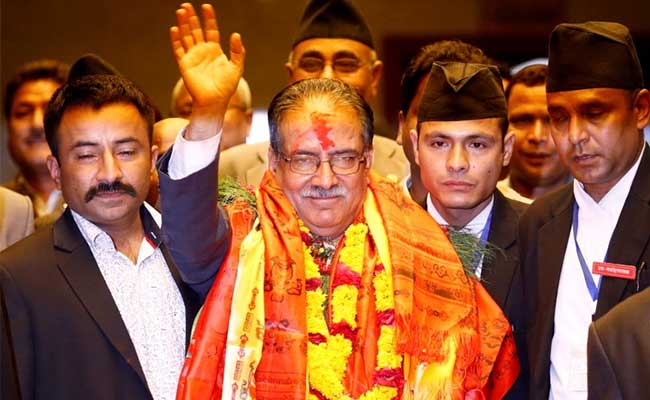
Nepal’s politics is a chaotic game of musical chairs where the music never stops and the chairs are constantly being swapped. At the center of this whirlwind is one man who has defined the country’s transition from a Hindu monarchy to a federal republic. Pushpa Kamal Dahal, better known by his nom de guerre "Prachanda" or "The Fierce One," has served as Prime Minister of Nepal three times. Each stint tells a story of a guerrilla commander who traded his assault rifle for a suit, only to find that navigating the corridors of Singha Durbar is far more treacherous than the jungles of Rolpa.
If you look at the raw numbers, Prachanda’s Maoist party hasn't been the largest force in parliament for years. Yet, he manages to keep the top job. It's not magic. It’s a masterclass in survival, leverage, and the ruthless art of the political pivot. He understands a fundamental truth about Nepal’s multi-party system: you don't need a majority to rule; you just need to be the person everyone else hates the least at any given moment.
The Underground Years and the People's War
Prachanda wasn't born a revolutionary. He started as a school teacher with a degree in agriculture. But the grinding poverty and deep-seated inequality of the Nepali countryside in the 1990s provided fertile ground for radical ideas. In 1996, he launched the "People's War" with a handful of primitive weapons and a manifesto that aimed to topple the 240-year-old Shah dynasty.
The conflict lasted a decade. It cost over 17,000 lives. Throughout this period, Prachanda remained a ghost, a mythical figure who directed operations from secret locations. He wasn't just a military leader; he was the ideological architect of "Prachandapath," a localized blend of Marxism, Leninism, and Maoism.
By the mid-2000s, the war reached a stalemate. The Royal Nepal Army couldn't crush the insurgents in the hills, and the Maoists couldn't take the capital, Kathmandu. The 2005 royal coup by King Gyanendra changed everything. It forced the mainstream political parties and the Maoists into an unlikely alliance. This culminated in the 2006 Comprehensive Peace Accord. Prachanda walked out of the shadows and into the sunlight of mainstream politics.
The First Term and the Fall From Grace
In 2008, Nepal held its first Constituent Assembly elections. The world expected the Maoists to be a minor player. They were wrong. Prachanda’s party emerged as the largest group, and he became the first Prime Minister of the new republic.
It was a moment of immense hope. People thought the "Guerilla Chief" would bring radical change. Instead, he hit a wall. His first term lasted less than a year. The breaking point came when he tried to fire the Chief of Army Staff, Rookmangud Katawal. Prachanda wanted to integrate his former rebel fighters into the national army faster than the establishment was willing to allow. The President blocked the move, and Prachanda resigned in a huff, complaining about "dual centers of power."
He learned a hard lesson then. Winning a war is about destruction; winning a peace is about compromise. He realized that the old institutions of the state—the army, the judiciary, and the bureaucracy—weren't going to roll over just because he had a mandate.
Mastering the Art of the Coalition
After his first failure, Prachanda changed his strategy. He stopped trying to be a revolutionary and started being a kingmaker. He realized that in a hung parliament, the third-largest party holds all the cards. This is why he’s been Prime Minister three times despite his electoral strength fading over the decades.
His second term in 2016 and his third term starting in late 2022 followed a similar pattern. He plays the two larger parties—the Nepali Congress and the CPN-UML—against each other. He switches sides with a frequency that would make a weather vane dizzy.
- He aligns with the left-wing CPN-UML to gain leverage.
- He breaks that alliance when he feels they're crowding him out.
- He joins forces with the centrist Nepali Congress to secure the Prime Minister's seat.
- He waits for the next opportunity to jump back.
Critics call him an opportunist. His supporters call him a pragmatist. Honestly, he’s probably both. He’s managed to stay relevant while many of his contemporary rebel leaders around the world have either been killed, imprisoned, or faded into obscurity.
The Geopolitical Balancing Act
You can't talk about Prachanda without talking about India and China. Nepal sits squeezed between two giants, and every Prime Minister has to dance on a razor's edge.
Prachanda started his political career with a strong anti-India stance, accusing New Delhi of meddling in Nepal’s internal affairs. Over time, that softened. He’s visited Delhi multiple times, seeking investment and cooperation. At the same time, he’s kept the door wide open for China’s Belt and Road Initiative. He uses this "equidistance" as a tool. If India pushes too hard, he leans toward Beijing. If China gets too demanding, he reminds the world of Nepal’s "special relationship" with India.
Why He Keeps Coming Back
There are three main reasons why Prachanda remains the most "sticky" politician in Kathmandu.
First, he’s the bridge. He’s the only leader who truly bridges the gap between the old insurgent world and the new democratic one. Without him, the peace process might have collapsed entirely. He knows where the bodies are buried—literally and figuratively.
Second, he's a phenomenal orator. Even his detractors admit that Prachanda can command a room. He speaks with a charisma that the stiff, elderly leaders of the other parties simply lack. He knows how to frame a narrative that makes his latest betrayal look like a necessary sacrifice for the "national interest."
Third, the math favors him. Nepal uses a proportional representation system for part of its parliament. This ensures that no single party gets a runaway majority. In this fragmented environment, a medium-sized party that's willing to talk to anyone is more powerful than a large party that has burned its bridges.
The Cost of the Comeback
While Prachanda survives, Nepal’s development often stalls. The constant shuffling of cabinets means that ministries change hands every few months. Long-term projects in hydropower or infrastructure get bogged down in bureaucratic limbo. People are frustrated. The youth are leaving the country in record numbers for jobs in the Gulf or Malaysia.
There's a growing sense that the "revolutionary" has become exactly what he fought against: a career politician more interested in holding onto power than in changing the lives of the people who voted for him. The transition from guerrilla chief to Prime Minister is complete, but the transition from a war-torn state to a prosperous one is still a work in progress.
If you want to understand the future of Nepal, stop looking at the ideologies and start looking at the seat count. As long as the parliament remains divided, Prachanda will always have a path back to the top. He's the ultimate political survivor in a country that specializes in making survival look like an extreme sport.
Don't just watch the headlines about who is Prime Minister today. Look at the coalition agreements being signed behind closed doors in Kathmandu. That’s where the real power lies. If you're following Nepali politics, track the movement of the Maoist Center party. They're the pivot point around which the entire country rotates.