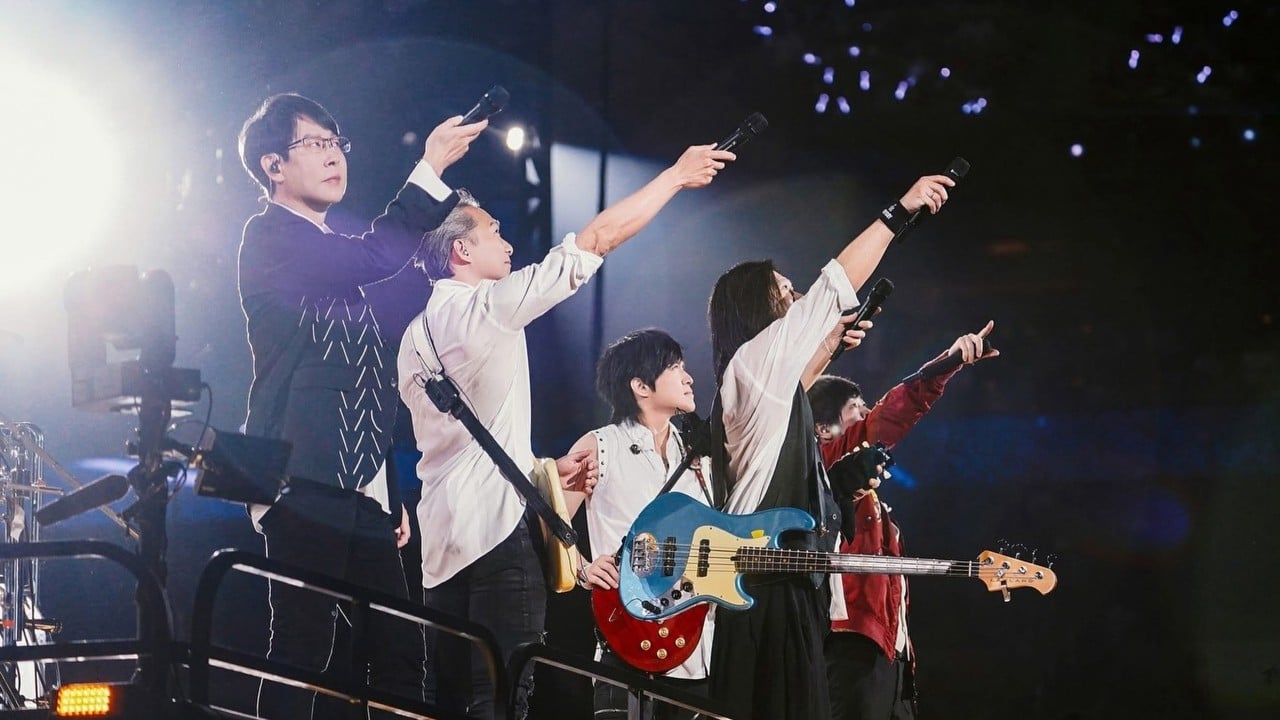
The sky over Central Harbourfront didn’t just leak; it opened up. It was the kind of humid, heavy Hong Kong downpour that turns expensive hair into wet silk and cheap ponchos into plastic skin. For thousands of Mayday fans, the rain was supposed to be part of the magic. There is a specific, poetic resilience in standing under a deluge while your favorite band plays "Noah’s Ark." It is a rite of passage. It is the stuff of legendary concert DVDs.
But on a Tuesday night that was meant to be the climax of a multi-date residency, the magic curdled. The LED screens flickered and died. The stage, a massive architectural feat of light and sound, succumbed to the elements. Short circuits aren't romantic. They are a liability.
By the time the Consumer Council started counting the fallout, the number had climbed past 160. One hundred and sixty formal complaints. But those are just the numbers on a spreadsheet. Behind every ticket reference number is a person who spent months’ worth of savings, a traveler who booked a flight from across the border, and a fan who stood in the mud only to be told that the show would not go on—at least, not tonight.
The Anatomy of a Canceled Night
Imagine a fan we will call Mei. She works a grueling job in a Shenzhen tech firm, and Mayday is her escape. She didn't just buy a ticket; she bought a moment of emotional catharsis. She navigated the labyrinth of online queues, paid the exorbitant "handling fees," and spent hours on a cross-border bus. When the announcement came that the May 1st show would be postponed to May 9th, Mei wasn't just looking at a date change. She was looking at a logistical nightmare.
The organizers offered a solution: keep your ticket for the new date or apply for a refund.
On paper, this is fair. In reality, it is a hollow gesture for anyone whose life doesn't revolve around the promoter's schedule. For someone like Mei, a Thursday night in Hong Kong a week later is a world away. It means another day of leave she doesn't have. It means another round of transportation costs. It means the hotel she booked—which likely has a non-refundable policy—is now just an expensive place to cry in the rain.
The Consumer Council's intervention highlights a growing friction in the live entertainment industry. When a show is "postponed" rather than "canceled," promoters often feel they have fulfilled their moral obligation. They haven't. They have shifted the burden of the disaster onto the shoulders of the people who can least afford it.
The Invisible Stakes of the Front Row
The complaints filed weren't just about the face value of the tickets. They were about the "hidden" economy of fandom. People don't just attend Mayday concerts; they inhabit them. They buy light sticks that sync to the music. They buy official merchandise. They book "concert packages."
When the lights went out in Central, it triggered a domino effect of financial loss that no standard refund policy covers. The Consumer Council pointed out that many of the 160 complainants were frustrated by the lack of compensation for travel and accommodation. This is the gray area of consumer rights. If a flight is canceled, you might get a voucher. If a concert is moved, you get a "sorry for the inconvenience" and a new date that you probably can't make.
There is a cold, mechanical logic to the way large-scale events are insured. The organizers are protected. The venue is protected. The band is protected. The only entity left out in the rain—literally—is the fan.
We often talk about the "experience economy" as if it’s a shimmering, risk-free evolution of capitalism. We are told to buy memories, not things. But when the memory you're sold is a soggy walk back to the Star Ferry and a 40% loss on a hotel booking, the "experience" starts to feel like a heist.
A Failure of Communication in the Digital Age
The real venom in the complaints didn't just stem from the rain. It stemmed from the silence.
In the hours following the postponement, social media became a chaotic bazaar of misinformation. Fans were shouting into the void of the organizer's comment sections. When you have 160 people taking the time to file a formal government complaint, it’s a sign that the private communication channels have failed.
Transparency shouldn't be a luxury. If a stage is unsafe due to a short circuit, the public understands. What they don't understand is being left in a holding pattern while the "logistics are being finalized."
The Consumer Council’s role here is more than just a tally-keeper. They are the only ones pointing out that "reasonable" compensation is a subjective term. To a promoter, a refund is reasonable. To a fan who flew in from Beijing, a refund is a drop of water in an empty bucket.
The Ripple Effect on Hong Kong’s Reputation
This isn't just about one band or one rainy night. It’s about Hong Kong’s ambition to be a global "mega-event" hub.
When things go wrong at this scale, the world watches. The Mayday incident follows a string of high-profile event hiccups in the city that have left a sour taste in the mouths of international visitors. If the city wants to invite the world to its doorstep, it needs a safety net for when the door gets slammed by the weather.
The Consumer Council has urged organizers to be more "human-centric" in their contingency plans. This means acknowledging that a concert is not just a transaction. It is an appointment with joy. When that appointment is broken, the repair needs to be more than just a digital credit back to a credit card. It needs to include a path for those who traveled, those who sacrificed, and those who stood in the rain until the very last flickering screen went dark.
The rain has long since dried on the pavement at Central Harbourfront. The stage has been dismantled. But for 160 people—and thousands of others who didn't bother to file a form—the music stopped far too early, and the cost of the silence remains far too high.
We are left with a fundamental question about the value of a fan's loyalty. If we are willing to stand in a storm for the music, shouldn't the industry be willing to weather a bit of the financial loss to keep us whole? Until that balance is struck, every ticket bought is not just an entry to a show; it’s a gamble where the house always wins, even when it pours.
The image that lingers is not of the band, but of a single, glowing blue light stick abandoned in a puddle near the exit, its battery slowly dying, pulsing a rhythm for a song that never finished.


