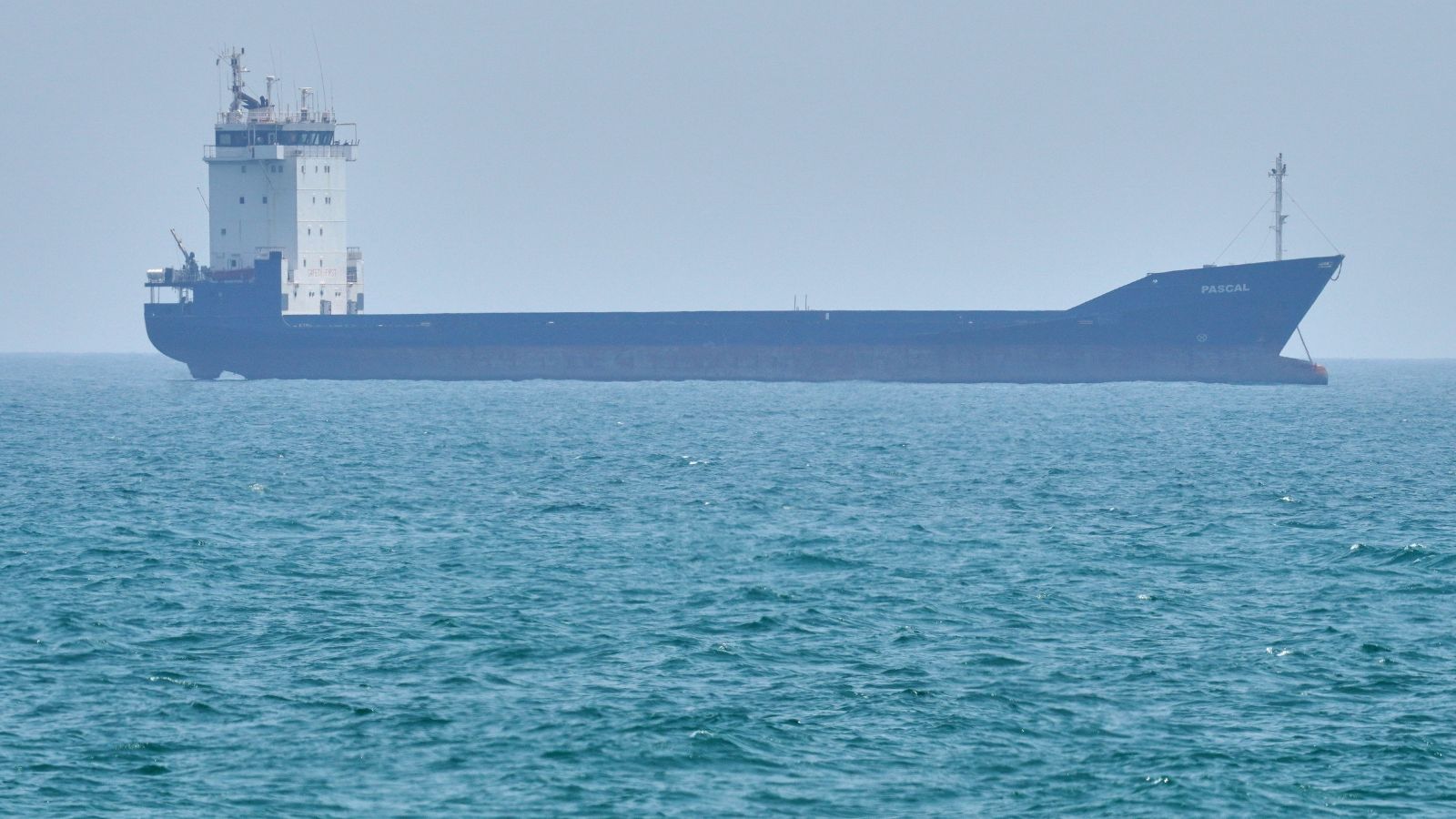
The salt air in the Strait of Hormuz doesn't smell like the ocean. Down there, at the waterline, it smells like scorched fuel and the sharp, metallic tang of anxiety.
Consider a sailor named Elias. He is not a diplomat. He is a third-generation engineer on a merchant tanker, a man who knows the heartbeat of a massive diesel engine better than he knows his own pulse. For weeks, Elias has navigated the narrow corridor where the world’s energy lifeline is squeezed between the jagged, sun-bleached cliffs of Oman and the rugged coast of Iran. He knows that in this stretch of water, a single mistake—a faulty radar blip, a misread signal, a twitchy finger on a trigger—could turn his vessel into a floating furnace.
He watches the horizon. He waits.
While Elias scans the waves, political machinery thousands of miles away grinds through its gears. The headline reaching his satellite phone is stark: Donald Trump has extended a ceasefire following a personal appeal from leaders in Pakistan. It is a reprieve. A fragile, paper-thin wall placed between two massive, grinding tectonic plates of regional tension.
But geopolitical orders rarely respect the reality of the sea.
Even as the ink dries on that diplomatic extension, the water in the Strait tells a different story. Reports are filtering in through the encrypted channels of the maritime community. Iran has struck ships. Not with words, not with sanctions, but with the kinetic, ugly reality of war. The ceasefire, held together by the gravity of Pakistan’s diplomacy, is buckling under the weight of an escalating maritime siege.
To understand the stakes here, you have to stop looking at maps. Forget the colorful borders and the neat lines drawn by cartographers. Think of the Strait of Hormuz as a throat. It is the jugular vein of the global economy. Every day, a massive percentage of the world’s oil supply flows through this choke point. If you squeeze that vein, the entire world gets lightheaded.
When a ship is struck in the Strait, the tremors go far beyond the hull of the vessel. They reach the gas pump in a suburban town in Ohio. They reach the heating bills of families in Europe. They reach the boardrooms of Tokyo.
The strategy behind these strikes is as old as naval warfare itself: deniability and disruption. By targeting shipping, actors can signal strength and apply pressure without triggering a full-scale, total war that nobody—at least in theory—truly wants. It is a game of chicken played at sea, where the casualties are ships, insurance premiums, and the nerves of men like Elias.
The news says the ceasefire was extended. The reality is that the fire never actually went out.
There is a strange, hollow feeling in watching this from the outside. We want to believe that leaders sitting in air-conditioned offices can dictate the temperature of a conflict by simply issuing a statement. We want to believe that a phone call from Islamabad to Washington can quiet the turbulent waters of the Middle East. It is a comforting thought. It makes the world seem manageable.
But the, the real problem lies elsewhere. The real problem is that these agreements are often disconnected from the men in the engine rooms and the commanders in the regional command centers. While leaders negotiate high-level strategy, local actors on the ground—or in this case, on the water—are operating on a completely different frequency. They are driven by years of historic grievances, internal pressures, and the cold, hard objective of asserting dominance in their home waters.
Think of it as a house with two different thermostats. You can turn one down in the parlor, but the furnace in the basement is being stoked by someone who doesn't care about the temperature in the living room.
This tension creates a vacuum of truth. We read the headlines about the ceasefire, and we assume safety. We hear about strikes, and we assume chaos. The truth is somewhere in the murky, terrifying middle. The ceasefire is real, but it is not absolute. It is a filter, not a shield.
When the news cycle moves on, what remains for the people in the Strait?
It is the waiting that grinds them down. It is the knowledge that the ship you are on might be the next target, not because you did anything wrong, but simply because you are there. Because you are a convenient pawn in a game that has no intention of checking you for safety.
We tend to look for heroes and villains in these narratives. We want to know who is "right." But the ocean doesn't care about who is right. The waves will keep rolling, the oil will keep pumping, and the pressure in the Strait will keep rising until something, somewhere, snaps.
The world is holding its breath. The diplomatic effort to keep the peace is valiant, perhaps even necessary. But looking at the radar screens tonight, seeing the shadows moving in the dark, one can't help but feel that we are watching a clock with no hands.
The ceasefire might be extended on paper. But for the men out there on the water, the darkness is still full of eyes, and the air still tastes like smoke.
Elias finishes his shift. He wipes the grease from his hands with a rag that has seen better days. He walks to the galley, pours a cup of coffee, and stares out at the pitch-black water. He knows that just beyond the reach of his flashlight, the balance of the world is shifting, wave by silent, dangerous wave.
He turns off the light. He listens to the engine. He waits for the morning, hoping that the surface remains as still as it is right now, praying that the quiet isn't just the breath before the strike.
The ocean knows. It keeps its secrets in the deep, cold silence between the stars and the steel.