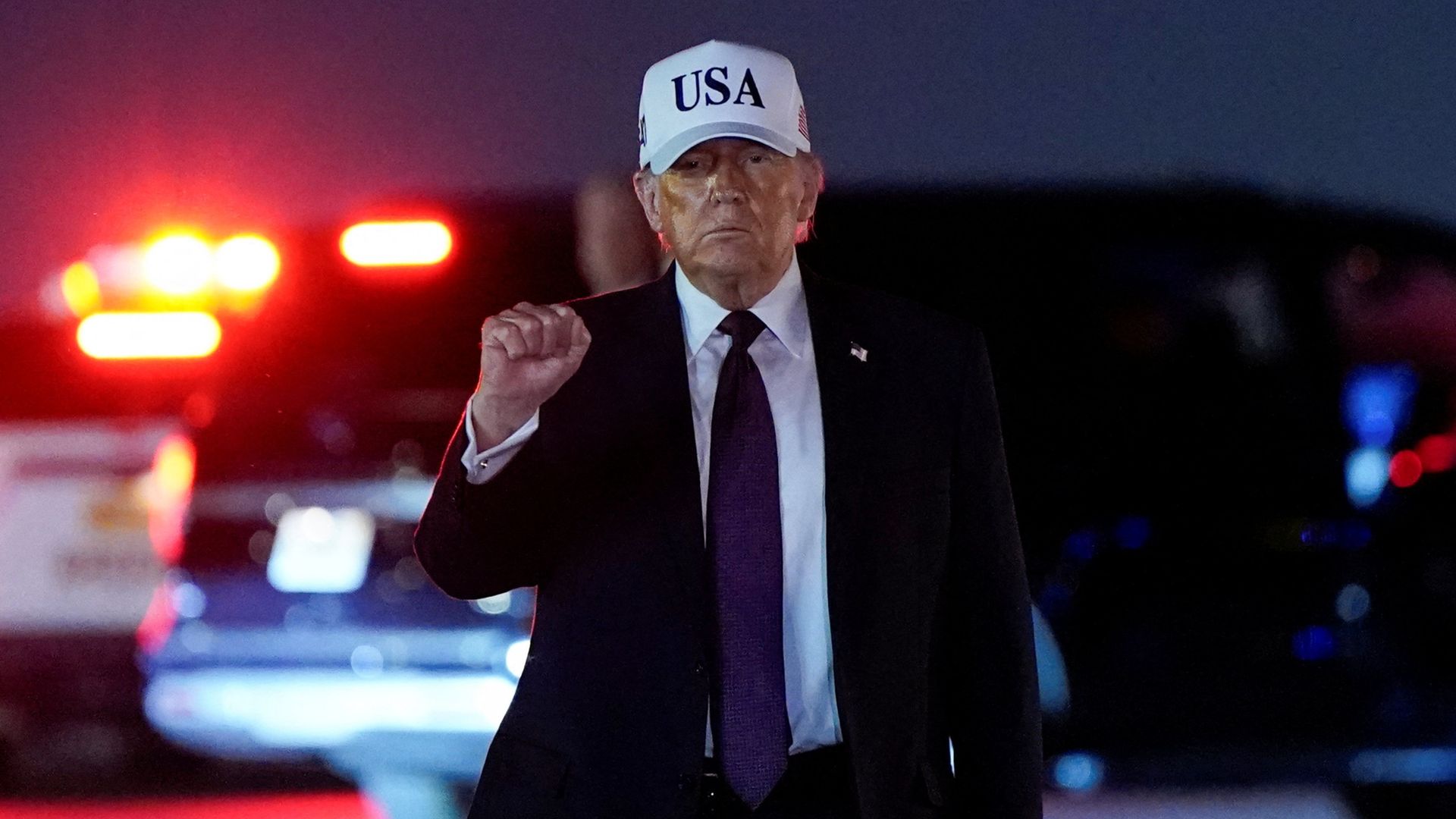
The sight of Donald Trump and Luiz Inácio Lula da Silva sharing a backstage embrace at the UN General Assembly last autumn didn't just rattle the nerves of diplomatic purists; it signaled a violent pivot in the geopolitical gravity of the Western Hemisphere. For months, the relationship was defined by a scorched-earth policy of 50% tariffs and Magnitsky Act sanctions leveled against Brazilian officials. Now, as the two leaders prepare for a high-stakes White House summit this week, the narrative has shifted from open hostility to a calculated, transactional courtship.
This isn't a sudden burst of ideological kinship. The "chemistry" Trump touts is the byproduct of a cold realization in Washington: the attempt to crush Lula’s leftist administration through economic warfare has failed, and it has inadvertently pushed Brazil deeper into the orbit of Beijing and the BRICS bloc. Trump’s pivot is a frantic attempt to claw back influence in a region where the U.S. no longer holds the only deck of cards.
The Failure of the Tariff Hammer
When the Trump administration slapped a 50% tariff on Brazilian goods in July 2025, the intent was clear: punish Lula for the judicial pursuit of Jair Bolsonaro and force a realignment. It backfired. Instead of a domestic uprising against Lula, the move triggered a "rally round the flag" effect. Lula’s approval ratings climbed as he framed the trade war as a defense of national sovereignty against "imperialist" overreach.
Economically, the damage was measurable but not catastrophic. While exports to the U.S. dipped by 20% in the immediate aftermath, Brazil’s massive agribusiness and mining sectors found a ready and waiting buyer in China. By September 2025, the Brazilian government launched the "Redata" tax program, specifically designed to lure tech firms and data centers away from U.S. influence using the very tariffs Trump intended as a weapon.
The White House soon found that its own protectionist measures were fueling domestic misery. U.S. manufacturers, particularly in the paper and diaper industries, rely on Brazilian cellulose for 80% of their supply. By late 2025, quiet exemptions were carved out for wood pulp—a tacit admission that the "maximum pressure" campaign was hurting American consumers as much as Brazilian producers.
The Critical Mineral Cold War
The true driver of Trump’s sudden warmth toward Brasilia is buried in the periodic table. As the U.S. accelerates its decoupling from Chinese supply chains, Brazil’s status as a treasure trove of rare earth minerals, lithium, and graphite has become a matter of national security.
In early 2026, China signaled a potential embargo on critical mineral shipments to the U.S. This sent the Trump administration into a tailspin. Brazil, which holds some of the world’s largest untapped reserves, suddenly went from a "socialist" adversary to a "strategic partner."
The Strategic Leverage Table
| Resource | Global Importance | Brazil's Global Rank | Key Industrial Use |
|---|---|---|---|
| Niobium | High | 1st | Jet engines, high-strength steel |
| Rare Earths | Critical | Top 5 | EV motors, guidance systems |
| Graphite | High | 3rd | Battery anodes |
Lula knows this. He is not approaching the White House as a supplicant. In his recent visit to India for the AI Impact Summit, he made it clear that Brazil’s resources are not for sale at a discount. He is leveraging the U.S. need for these minerals to demand a total reversal of the remaining tariffs and an end to the sanctions against Brazilian Supreme Court justices.
The BRICS Shadow
Washington is also spooked by the institutionalization of the BRICS+ bloc. Under Lula’s 2025 chairmanship, the group expanded its share of the world economy to nearly 39%. More importantly, the push for "de-dollarization" has moved from rhetoric to reality. The development of "BRICS Pay" and the use of local currencies in trade are direct threats to the extraterritorial power of U.S. sanctions.
Trump’s previous threats of 100% tariffs on any country that abandons the dollar were met with a shrug in Brasilia. Instead of retreating, Lula doubled down, signing a dozen cooperation agreements with India and deepening ties with South Korea. The message was sent: Brazil has other options.
The current "courtship" is an attempt to prevent the Western Hemisphere’s largest economy from becoming the permanent anchor of a Chinese-led alternative order. Trump is betting that he can peel Lula away from Beijing with "pretty good deals" on infrastructure and tech, but he is competing against a China that doesn't lecture Brazil on its internal judicial matters.
The Inevitable Friction Points
Despite the polite phone calls and the "excellent chemistry," the foundations of this truce are made of sand. Several landmines remain that could detonate the relationship before the 2026 Brazilian elections:
- The Venezuela-Cuba Equation: Trump has intensified efforts to isolate Havana and Caracas, whereas Lula remains a vocal critic of what he calls "unilateral blockades."
- The Bolsonaro Factor: While Jair Bolsonaro remains legally entangled in Brazil, his son Eduardo has set up a base of operations in the U.S., actively lobbying the Trump circle to keep the pressure on Lula.
- Environmental Divergence: Lula has staked his international reputation on Amazonian conservation. Trump’s dismissal of climate agreements as a "con job" creates an irreconcilable gap in how both nations view land use and energy.
The Pragmatic Pivot
We are witnessing a "cold peace." It is a relationship born of necessity, not shared values. Trump needs Brazil’s minerals and its market to offset his trade wars elsewhere; Lula needs the U.S. to stop strangling his economy so he can deliver on his domestic promises of redistribution.
Lula’s strategy is a modern reimagining of "active non-alignment." He is walking a tightrope between a protectionist Washington and an expansionist Beijing, betting that Brazil's size and resources make it too important for either side to truly cast away.
The upcoming White House meeting will be the ultimate test of this theory. If Trump offers substantive tariff relief without demanding a break from the BRICS, it will be a victory for Lula’s brand of independent diplomacy. If the "America First" agenda proves too rigid to accommodate a multipolar Brazil, the embrace we saw at the UN will be remembered as nothing more than a brief intermission in a long, grinding conflict.
Ask yourself if you would like me to break down the specific trade data on the "Redata" tax incentives and how they are currently affecting U.S. tech investment in São Paulo.