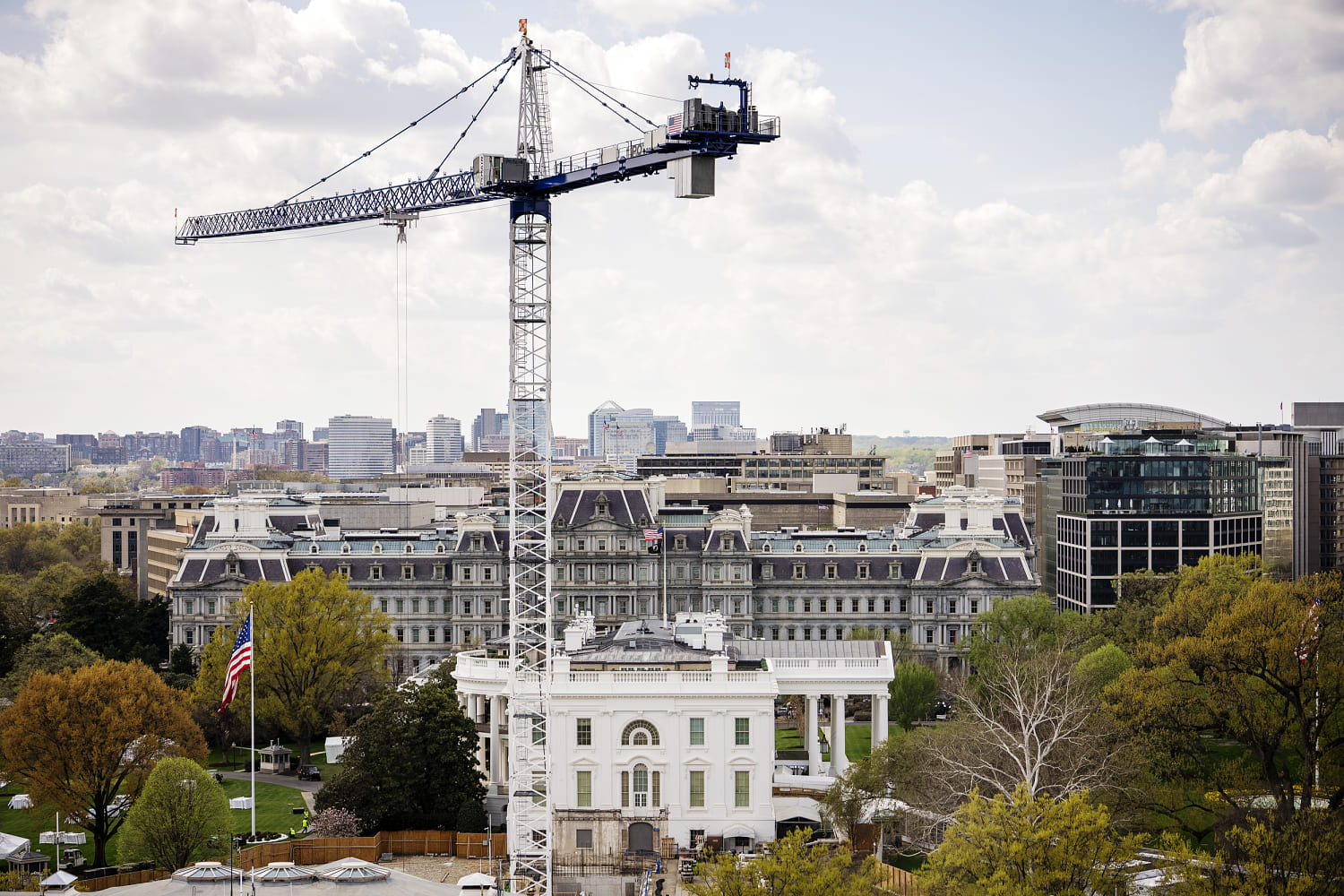
Construction cranes aren't leaving the White House lawn just yet. A federal appeals court just handed Donald Trump a temporary win, allowing work on his massive, $400 million ballroom to continue through at least April 17, 2026. This 2-1 decision from the D.C. Circuit Court of Appeals puts a pause on a lower court’s order that would've shut the whole thing down.
If you've been following the drama, you know this isn't just about a place to dance. It’s a fight over whether a president can treat the most famous house in America like his personal real estate development. Trump wants a 90,000-square-foot space that fits 1,000 people. Preservationists want to know why he demolished the historic East Wing to do it without asking Congress for a dime or a "yes."
The Security Loophole Trump is Using to Keep Digging
The core of this legal battle isn't actually about the ballroom floor or the neoclassical pillars. It’s about what’s happening underneath. Trump’s legal team made a smart, aggressive move. They argued that halting construction would "imperil the President" because the ballroom is basically a "shed" sitting on top of a sophisticated military bunker.
According to filings, this underground complex includes bomb shelters and a medical facility designed to withstand ballistic missiles and biohazards. The appeals court judges, including appointees of Obama and Biden, admitted they couldn't just stop the work on a "hurried record" without knowing if they were creating a security hole in the middle of Washington.
It’s a classic Trump move. By tying the controversial ballroom to "national security upgrades," he’s made it legally dangerous for a judge to pull the plug. If the construction stops and a security vulnerability is exposed, the blame falls on the court, not the White House.
Why the National Trust is Suing
The National Trust for Historic Preservation isn't backing down. They sued back in December after the East Wing was leveled. Their argument is simple: the White House belongs to the public, and the President is a "steward," not the owner.
Judge Richard Leon, a George W. Bush appointee who initially blocked the project, agreed. He wrote a stinging 35-page ruling essentially telling Trump he didn't have the authority to rebuild the White House on a whim.
- The project costs an estimated $400 million.
- It would accommodate 999 guests.
- The East Wing, which previously housed the First Lady’s offices, is already gone.
Preservationists argue that allowing this to proceed without congressional oversight sets a precedent that any future president can demolish and rebuild parts of the executive mansion to suit their personal taste.
The Money and the Power Play
Trump says the ballroom itself is funded by private donations, but the "security upgrades" below it are being paid for with your tax dollars. This creates a messy financial situation where it's hard to tell where the public safety work ends and the luxury event space begins.
The White House argued these two things are "inseparable." You can't build the bunker without the roof, and the ballroom is the roof. The appeals court has now sent the case back to Judge Leon, demanding he figure out exactly which parts of the project are actually "necessary for safety" and which ones are just for hosting State Dinners.
What Happens on April 17
This "win" for Trump is short-lived. April 17 is the new deadline. By then, the administration has to convince the lower court that the whole project is a security necessity, or they’ll likely try to escalate this to the Supreme Court.
Don't expect the cranes to disappear on the 18th. Trump’s strategy has always been to keep the momentum going. Once you've poured the concrete and started the framing, it’s much harder for a court to order you to tear it all down.
If you're looking for the next move, watch the Supreme Court's emergency docket. If Judge Leon stands his ground after this week's review, the White House will almost certainly ask the high court to step in. For now, the dust continues to fly at 1600 Pennsylvania Avenue.
Keep an eye on the D.C. District Court filings over the next 48 hours. That’s where the real evidence about those "secret bunkers" will come out—or get redacted.