A quiet hall in the Pentagon usually smells of floor wax and over-steeped coffee. It is a place where "risk" is a mathematical variable, something to be mitigated with armor plating or encrypted frequencies. But recently, a new kind of risk began circulating through those corridors. It wasn't a physical threat. It didn't have a serial number. It was a line of code, an architecture of thought, and a company named Anthropic.
The news broke with the weight of a gavel: the Department of Defense has officially designated Anthropic as a national security risk.
To understand why a company built on the philosophy of "AI safety" is now being viewed through the same lens as a foreign adversary or a rogue weapons program, you have to look past the press releases. You have to look at the tension between the silicon valley dream of a "helpful, harmless" assistant and the brutal reality of global power dynamics.
The Architect and the Arsenal
Picture a researcher. Let's call him Elias. He joined Anthropic because he believed in the "Constitutional AI" framework—the idea that you could give a machine a soul, or at least a set of unbreakable rules, to prevent it from ever hurting a human. He spent his days fine-tuning Claude, the company’s flagship model, ensuring it wouldn't give instructions on how to build a biological weapon or write a phishing email.
Then, the government knocked.
The Pentagon doesn't care about the poetry Claude can write. They care about what happens when that same intelligence is applied to the logistics of a theater of war. They care about the fact that if an AI can optimize a supply chain for a grocery giant, it can optimize the movement of missiles.
The designation of a "national security risk" isn't necessarily an accusation of malice. It is an admission of scale.
When a tool becomes powerful enough to tilt the balance of global influence, it stops being a product. It becomes a resource. And resources must be controlled. The Pentagon’s logic is cold: if we cannot guarantee that this intelligence stays within our walls, and if we cannot fully predict how it will behave under pressure, it is a liability.
The Invisible Border
The digital world has always laughed at borders. Data flows like water, seeking the path of least resistance. But we are entering an era of "Geofenced Intelligence."
Anthropic’s ties to massive cloud providers and its global reach created a surface area that the Department of Defense found unacceptable. There is a haunting irony here. Anthropic was founded by ex-OpenAI employees who feared that the race for artificial general intelligence was moving too fast, without enough guardrails. They sought to be the "safe" alternative.
But in the eyes of the military, "safe" is a relative term.
A model that is programmed to be "harmless" might refuse a command from a general during a crisis because the command violates its internal ethics. Or, conversely, a model that is too open might be accessed by a rival power, giving them a century’s worth of strategic evolution in a weekend.
Consider the "Dual-Use" dilemma. A knife is a tool for a chef until it is in the hand of a soldier. AI is the ultimate dual-use technology. It is a knife that can think.
The Human Cost of High Stakes
For the people working inside Anthropic, this designation feels like a betrayal of their mission. They didn't set out to build a weapon. They set out to build a partner.
There is a specific kind of exhaustion that comes with being caught in the gears of the military-industrial complex. It’s the realization that your life’s work—the code you stayed up until 3:00 AM perfecting—is now being discussed in SCIFs (Sensitive Compartmented Information Facilities) where you aren't allowed to bring your phone.
The stakes aren't just about stock prices or market share. They are about the soul of innovation. When the state decides a technology is a risk, the flow of talent changes. The "Red Folder" doesn't just contain reports; it contains the power to stifle or steer the direction of human progress.
We often talk about the "alignment problem"—the challenge of making sure AI does what we want it to do. But we rarely talk about the "allegiance problem." Who does the AI answer to when the world is on fire?
The Fracture
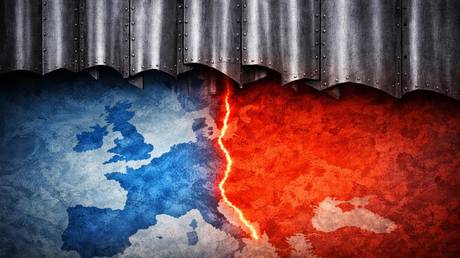
This isn't just one company’s problem. It is a signal of the Great Fracture.
For decades, technology was a bridge. We believed that more connectivity would lead to more understanding. That dream is dying. The Pentagon’s stance on Anthropic suggests that the future of AI will not be a global commons. It will be a series of walled gardens, guarded by sentries and shrouded in secrecy.
The "risk" the government sees isn't just that Claude might say something wrong. The risk is that the technology is too good, too efficient, and too portable. In a world where information is the primary currency of war, a company that masters information is, by definition, a player on the battlefield.
The silence in the Pentagon halls is deceptive. Beneath it, there is a frantic scramble to define the rules of a game that has no manual.
Anthropic now finds itself in a strange limbo. It is too big to be ignored and too vital to be left alone. The researchers who wanted to save the world from AI are now being told that they themselves are the danger.
The red folder stays on the desk. It’s not going anywhere. Neither is the code.
The real question isn't whether Anthropic is a risk. The question is whether we can survive a world where intelligence is treated as a threat.
Somewhere in a clean, white office in San Francisco, a server hums. It doesn't know about national security. It doesn't know about the Pentagon. It only knows the next word, the next sequence, the next leap into the dark. And for now, that is the most dangerous thing in the world.