The click of a gas nozzle usually signals the start of a journey. It is a mundane sound, the mechanical heartbeat of an economy that moves on four wheels. But lately, that sound has taken on a sharper, more clinical edge. It feels less like fueling a car and more like a slow, rhythmic draining of a bank account.
Consider Elias. He is a fictional composite of the millions of people currently staring at the digital readout on a pump in suburban Ohio, but his anxiety is entirely real. Elias drives a 2014 Ford F-150. He needs it for his landscaping business. Every cent that ticks upward on that glowing screen is a cent taken away from his daughter’s braces or the emergency fund he’s been trying to build since the world turned upside down four years ago.
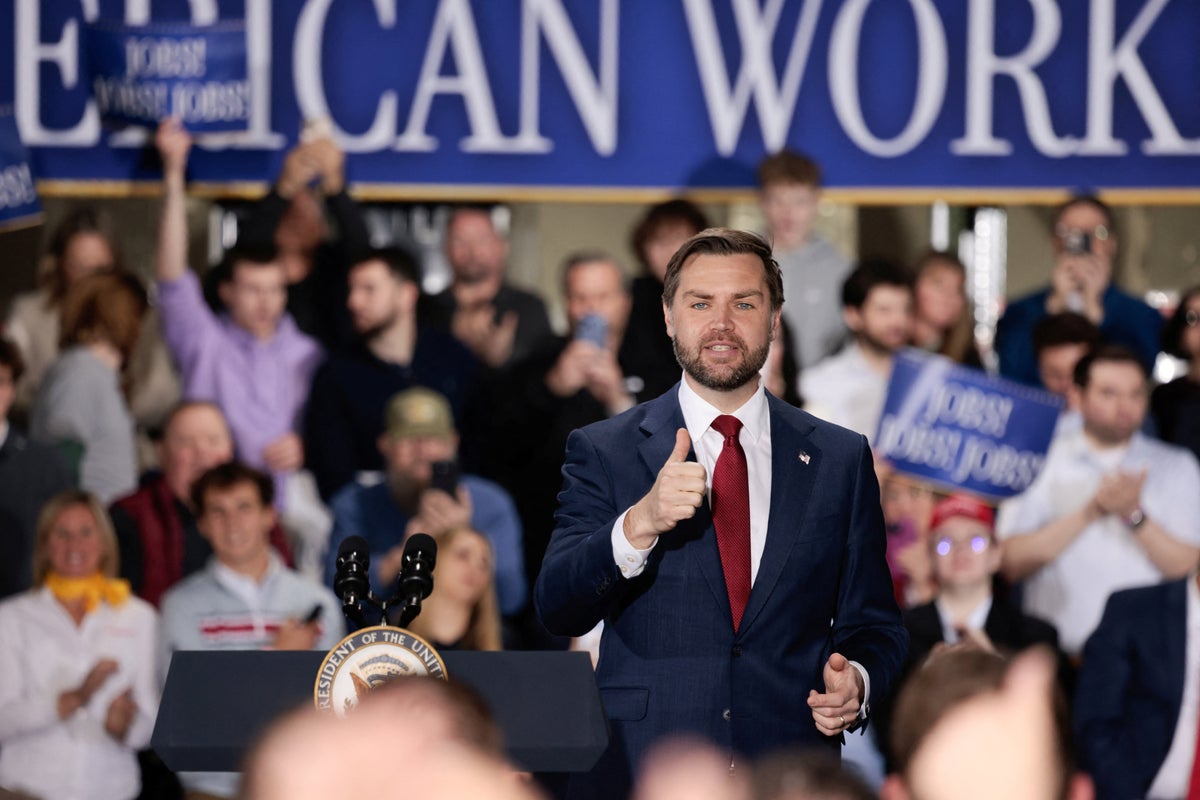
When JD Vance stands before a microphone and warns of a "rough road ahead," he isn't just talking about asphalt and tires. He is talking about the psychological weight of that red needle dipping toward E.
The Vice President-elect’s message is a complex cocktail of brutal honesty and curated optimism. He acknowledges the pain because he has to; you cannot tell a man whose tank costs eighty dollars to fill that the sun is shining. But he calls it a "temporary blip."
Temporary.
It is a word that carries an immense amount of weight, yet provides almost no immediate warmth. For the person living paycheck to paycheck, "temporary" can feel like an eternity. If you are underwater, it doesn't matter if someone tells you the tide will go out in six months. You need to breathe now.
The Anatomy of the Surge
The numbers tell a story that the political rhetoric often tries to simplify. Global oil markets are a chaotic web of geopolitical tension, refining capacity, and seasonal demand. When we see prices spike, we are seeing the ripple effect of decisions made in boardrooms in Riyadh and London, or the strategic maneuvers of a domestic policy trying to balance green energy transitions with the immediate, greasy reality of internal combustion.
But for the American consumer, the macroeconomics are secondary to the micro-shocks. The "rough road" Vance mentions is paved with the rising cost of logistics. When fuel goes up, the price of a head of lettuce goes up. The cost of shipping a Christmas gift across the country goes up. It is a hidden tax, a silent thief that enters through the tailpipe and leaves through the grocery store checkout line.
The administration’s promise that this is a short-term correction relies on a few key pillars. First, there is the push for increased domestic production—a rallying cry that sounds simple in a stump speech but involves years of permitting, drilling, and infrastructure development. Second, there is the hope that global volatility will settle.
But hope is not a strategy.
The "invisible stakes" here aren't just about money. They are about the erosion of the American sense of mobility. For decades, the ability to get in a car and go anywhere was the ultimate expression of freedom. When that freedom is metered by a price tag that keeps climbing, the world gets smaller. We stop visiting family two states over. We skip the weekend trip to the lake. We tighten the radius of our lives.
The Emotional Calculus of the Tank
There is a specific kind of silence that happens in a kitchen when a couple looks at their monthly budget and realizes the "transportation" line item has doubled. It isn't a loud argument. It’s a quiet, heavy realization.
Vance’s rhetoric taps into this. By calling it a "blip," he is attempting to manage expectations, to prevent the kind of consumer panic that leads to a full-blown recession. If people believe the pain is short-lived, they might keep spending. They might keep the gears of the economy turning.
However, the disconnect lies in the definition of time. To a politician, a fiscal quarter is a blip. To a parent trying to figure out how to afford gas for the commute and milk for the table, three months is ninety days of high-stakes gambling.
The logic used to explain these spikes often feels like a foreign language. Analysts talk about "Brent Crude benchmarks" and "OPEC+ production quotas." To the average person, these are just noises that mask a simpler truth: the system is fragile. We are tethered to a commodity that is subject to the whims of dictators and the unpredictable shifts of global weather.
Consider the metaphor of a bridge. We are currently crossing a section where the planks are rotting. The government is telling us that the solid ground is just a few yards away. They are asking us to keep walking, to trust that the structure won't give way beneath us. But as we walk, we can hear the wood cracking.
The Strategic Pivot
The promise of a "return to normalcy" is the oldest play in the political handbook. It is designed to foster a sense of patience. But the reality of 2026 is that "normal" is a moving target.
We are living through a transition that is as much cultural as it is economic. The push toward electric vehicles is often framed as the ultimate solution to the gas price roller coaster. Yet, for millions of Americans, an EV is a luxury they cannot afford, or a practical impossibility in rural areas where charging stations are as rare as a humble politician.
This creates a divide. On one side, those who can afford to opt out of the petroleum economy. On the other, those who are trapped in it, watching the price of their survival fluctuate based on a news cycle they can’t control.
The "rough road" isn't a single path. It’s a labyrinth.
If we look at the historical data, gas prices have always been cyclical. We have seen this movie before. We saw it in the 1970s, in the late 2000s, and we are seeing it now. Each time, we are told it is a temporary phenomenon. Each time, the baseline for what we consider "expensive" shifts slightly higher. We become accustomed to the pain. We adjust. We survive.
But survival shouldn't be the goal of the wealthiest nation on earth.
The real question isn't whether the prices will go down. They eventually will. The question is what is left of the middle-class spirit by the time they do. How much more "roughness" can the American psyche take before the promise of a "blip" starts to sound like a lie?
The View from the Driver’s Seat
The road ahead is indeed rough. It is littered with the remnants of old energy policies and the growing pains of a new era.
When you see the next headline about a "temporary surge" or a "market correction," remember Elias. Remember the silent kitchen. Remember that for the person behind the wheel, the economy isn't a set of charts and graphs. It is a tangible, heavy thing that sits in the pit of the stomach.
We are told to wait. We are told to have faith in the recovery.
But as the sun sets over a line of cars at a gas station on the edge of town, the light hitting the chrome and the asphalt, there is a lingering sense that the "blip" is just a symptom of a much deeper fever.
The pump stops. The nozzle clicks. Elias hangs it up, climbs back into his truck, and turns the key. The engine roars to life, consuming the very thing that is making his life harder, just so he can go back to work and earn enough to buy more of it tomorrow.
The road is long. The tank is half-full. And the needle is already moving back toward the red.