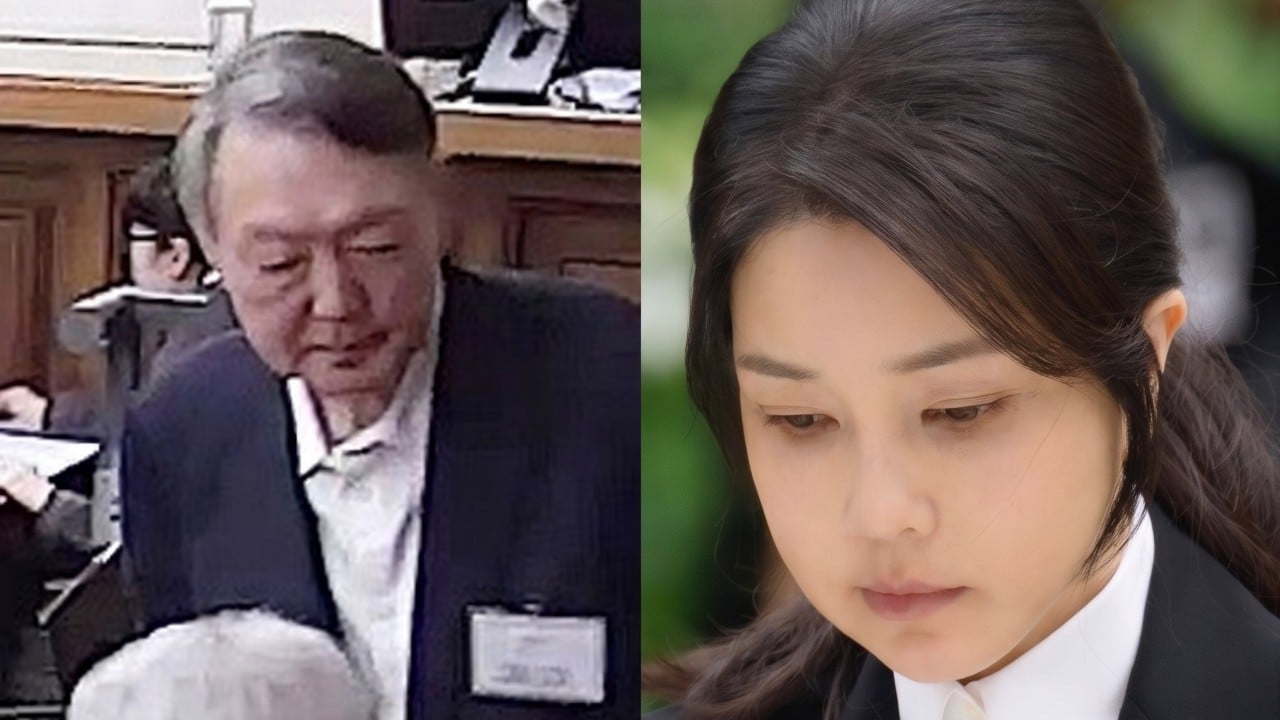
The air inside the Seoul Central District Court on April 14, 2026, wasn't just thin; it was frozen. You could see it in the way former President Yoon Suk-yeol gripped his navy suit jacket and the way his wife, Kim Keon-hee, refused to tilt her head even an inch toward him. This wasn't just a legal proceeding. It was a nine-month-in-the-making public autopsy of a marriage and a political dynasty that collapsed under the weight of scandals involving Dior bags, stock charts, and a failed martial law bid.
People expected a moment of recognition. Instead, they got a masterclass in stony silence. When Kim entered the room at 2:08 p.m., flanked by correctional officers, Yoon didn't look away. He stared. He even managed a faint, closed-mouth smile when she took the oath. But Kim? She didn't bite. She kept her eyes locked on the floor or the documents in front of her, effectively treating the man she once shared the Blue House with like a ghost.
The Myung Tae-kyun connection and the 270 million won question
The trial centers on allegations that sound like a political thriller but carry very real prison sentences. Prosecutors argue that Yoon and Kim conspired to receive free public opinion surveys—58 of them, to be exact—worth about 270 million won ($183,000) from a power broker named Myung Tae-kyun. The trade-off was supposedly a parliamentary nomination for a former lawmaker.
During the thirty-minute session, the special prosecutor’s team didn't hold back. They showed a message on the court screen of Yoon responding to poll results with a "cherry thumbs-up" emoji. They asked Kim if she’d seen her husband use it. They asked how she met Myung. Her response to every single one of the forty questions?
"I refuse to testify."
It’s a legal right, sure, but the optics were devastating. While Yoon was seen nodding or smiling at her as she left, Kim remained an ice queen. She’s been in custody since August on various corruption charges, while Yoon has been held since July over his disastrous, short-lived attempt to declare martial law. Seeing them together wasn't a "reunion" in any romantic sense; it was two defendants realizing their fates are tethered to the same sinking ship.
Beyond the courtroom drama the real stakes for 2026
If you think this is just about a "frosty" greeting, you're missing the bigger picture. South Korean politics has a long history of "the curse of the presidency," where former leaders end up in prison cells. But this feels different because it involves the First Lady so centrally. Earlier this month, prosecutors actually asked for a 15-year prison term for Kim in a separate appeal trial involving stock manipulation and bribery.
The "Dior bag scandal" might have started as a meme-worthy moment of a pastor with a spy camera, but it evolved into the catalyst for the public’s total loss of trust. It wasn't just about a $2,200 bag. It was about the perception that the rules didn't apply to the people at the top.
Why the silence matters
- Admissibility: By refusing to testify, Kim prevents her words from being used against her in her own separate trials.
- Political Shielding: Her silence protects whatever is left of the conservative bloc’s reputation, though many say that bridge burned a long time ago.
- The Emotional Gap: The lack of eye contact suggests a fracture in their personal alliance, not just their political one.
What happens next in the Seoul courts
Don't expect a quick resolution. The court indicated that hearings for this specific trial will wrap up next month, with a verdict expected sometime in June 2026. Between now and then, we’re going to see more of these "reunions" as the special prosecutor digs deeper into the Myung Tae-kyun files.
If you're following this, keep your eyes on the April 28 verdict for Kim's stock manipulation appeal. That will be the first real indicator of whether the judiciary is ready to throw the book at her.
The strategy for the Yoon-Kim defense team seems to be total stonewalling. They're betting that by saying nothing, they leave no openings for the prosecution to exploit. But in the court of public opinion, that silence is deafening. South Koreans aren't just looking for legal "not guilty" verdicts anymore; they're looking for an explanation that never comes.
Keep an eye on the official notices from the Seoul Central District Court. Most of these high-profile sessions are now being monitored by international observers because of the martial law implications from last year. If you want the truth, don't look at the smiles or the emojis—look at the sentencing memos.