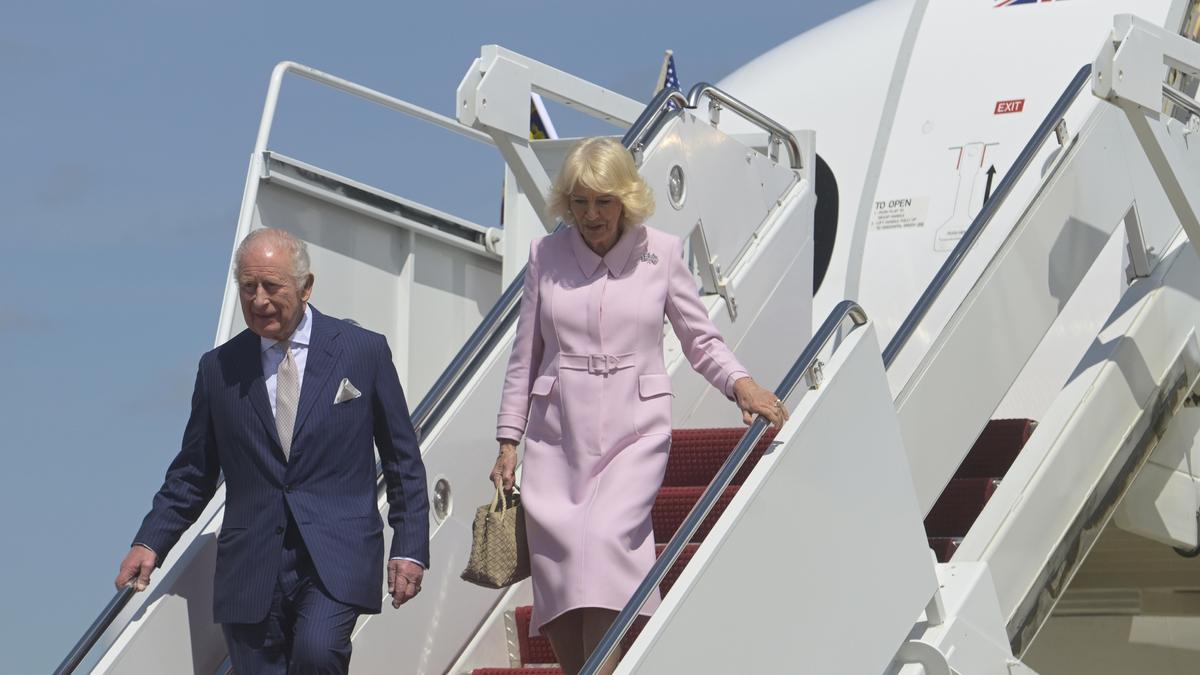
The media is currently hyperventilating over King Charles III’s arrival in Washington. They call it a "delicate mission." They frame it as a high-stakes diplomatic surgery to repair the "Special Relationship." It is a charming narrative, steeped in the nostalgia of Churchill and FDR, designed to sell newspapers and keep cable news anchors employed.
It is also entirely detached from reality.
The "Special Relationship" is not a patient in need of a royal doctor. It is a cadaver that has been taxidermied for public display. While analysts obsess over the optics of a Buckingham Palace-to-White House handoff, they are missing the brutal structural shift happening beneath their feet. The U.K. is no longer the bridge between Europe and America; it is an island searching for a purpose in a world that has moved on to Pacific-centered trade and silicon-based power dynamics. Charles isn't here to restore a relationship. He is here to pitch a legacy brand to a conglomerate that is already looking at newer, more aggressive suppliers.
The Myth of the Diplomatic Reset
The prevailing "lazy consensus" suggests that a royal visit carries the weight of a billion dollars in trade deals or a dozen military treaties. This is a fundamental misunderstanding of how modern power operates.
In the 1950s, a royal handshake could signal a shift in global alignment. Today, power lives in the treasury departments, the defense contractors, and the submarine cable networks. To suggest that a 77-year-old monarch can "restore" a fractured geopolitical bond through dinner parties and climate change rhetoric is to ignore the cold math of national interest.
The U.S. doesn't need "restoration." It needs utility. Since the exit from the European Union, the U.K.’s utility to Washington has plummeted. When the U.K. was the loudest voice at the table in Brussels, it was a vital asset for American interests. Now, London is a solo act. The U.S. is looking at the Indo-Pacific. It is looking at the AUKUS deal as a tech-sharing agreement, not a sentimental reunion. Charles is walking into a room where the hosts are checking their watches and wondering when the person with the actual checkbook—the Chancellor or the Prime Minister—is going to show up.
Sentimentality is a Bad Business Strategy
The press loves to talk about "soft power." It’s a convenient term used to justify the millions spent on pageantry. But soft power only works when backed by hard leverage.
I’ve watched executives and diplomats alike burn through political capital trying to maintain "legacy partnerships" because they feel good. It’s the same mistake legacy tech companies make when they refuse to pivot because they’re proud of their history. The U.K.-U.S. dynamic is currently stuck in a "Sununk Cost Fallacy." We keep investing in the optics of the relationship because we’ve already invested so much in the myth of it.
If you look at the raw data, the trade friction remains. The promised free trade agreement (FTA) is a phantom. The U.S. Inflation Reduction Act is actively pulling green energy investment away from British shores. No amount of royal charisma changes the fact that the U.S. is currently pursuing an "America First" industrial policy that treats the U.K. as just another competitor.
- Fact: The U.K. is currently the U.S.'s 7th largest trading partner.
- Reality Check: Mexico and Canada hold the top spots. They don’t send kings; they send supply chains.
The Climate Change Diversion
Charles is expected to lean heavily into environmental advocacy. This is framed as his "unique contribution" to the visit. On the surface, it looks like a safe, universal bridge-builder.
Dig deeper. This is actually a strategic retreat.
When a head of state can’t talk about hard security or trade tariffs without hitting a wall, they talk about the weather. Climate change is the "safe" topic because it requires no immediate legislative concessions from the host country. It allows both parties to look busy without actually doing the heavy lifting of realigning foreign policy.
The king is essentially acting as a high-end influencer for environmental policy. While his passion is genuine, its diplomatic utility is negligible. The White House will nod politely, sign a non-binding memorandum, and then go back to debating the CHIPS Act. We are witnessing the "Boutique-ification" of the British Monarchy—it’s high-end, it’s prestigious, but it has no impact on the mass market of global power.
The People Also Ask Fallacy
If you look at search trends, people are asking: "Can King Charles save the U.K.-U.S. trade deal?"
The premise of the question is flawed. A constitutional monarch has zero authority to negotiate, sign, or even influence the technical clauses of a trade deal. To think Charles can "save" the deal is to treat international law like a medieval court where the King’s favor determines the price of wool.
Another popular query: "Is the Special Relationship still special?"
The honest answer is "No." It is "Standard." It is a standard relationship between a superpower and a mid-tier regional power with a great intelligence-sharing agreement (Five Eyes). The word "special" is a linguistic security blanket. It keeps the British public from realizing that in the eyes of a Washington strategist, the U.K. is increasingly grouped with Japan, Australia, and South Korea—vital allies, certainly, but not "special" in a way that confers unique privilege.
Stop Looking for a Hero
The fixation on this visit reveals a deep-seated insecurity in the British establishment. There is a desperate hope that the crown can still open doors that the government has slammed shut through years of domestic instability and shifting priorities.
But here is the truth that no one wants to admit: The U.S. doesn't respect the crown; it's just entertained by it.
To the American political class, the British Monarchy is the ultimate piece of "heritage content." It’s a prestige drama played out on the world stage. They will provide the red carpet and the photo ops because it plays well with the voters who like The Crown. But don’t confuse a warm reception for a change in policy.
The U.K. needs to stop sending the King to ask for a "restoration." It needs to start building a post-imperial identity that doesn't rely on being Washington's favorite sidekick. The focus should be on becoming a high-tech, high-regulatory-standard, agile middle power. That requires hard-nosed trade negotiators and scientists, not a man in a sash.
The Cost of the Charade
There is a downside to this contrarian view. If we stop pretending the relationship is "special," we lose the psychological leverage that comes with the illusion. Being seen as the "primary ally" allows the U.K. to punch above its weight in global forums. If the mask slips, the U.K. has to face its actual weight class. That is a painful transition.
However, continuing the charade is worse. It leads to strategic complacency. It allows the British government to avoid the difficult work of diversifying its alliances and modernizing its economy because it thinks it can always fall back on the "special" bond.
King Charles is walking through the halls of power in D.C. right now. He will be greeted with immense respect. He will give a speech that is both eloquent and urgent. And when he flies home, the U.S. policy toward the U.K. will not have shifted by a single millimeter.
Stop watching the king’s hands and start watching the U.S. Treasury’s spreadsheets. That is where the real relationship—or what’s left of it—is being written.
The era of "special" is over. We are in the era of "transactional." The King is a man out of time, trying to pay for a modern alliance with a currency that went out of circulation fifty years ago.
Stop looking for a restoration. Start looking for an exit strategy from the nostalgia.