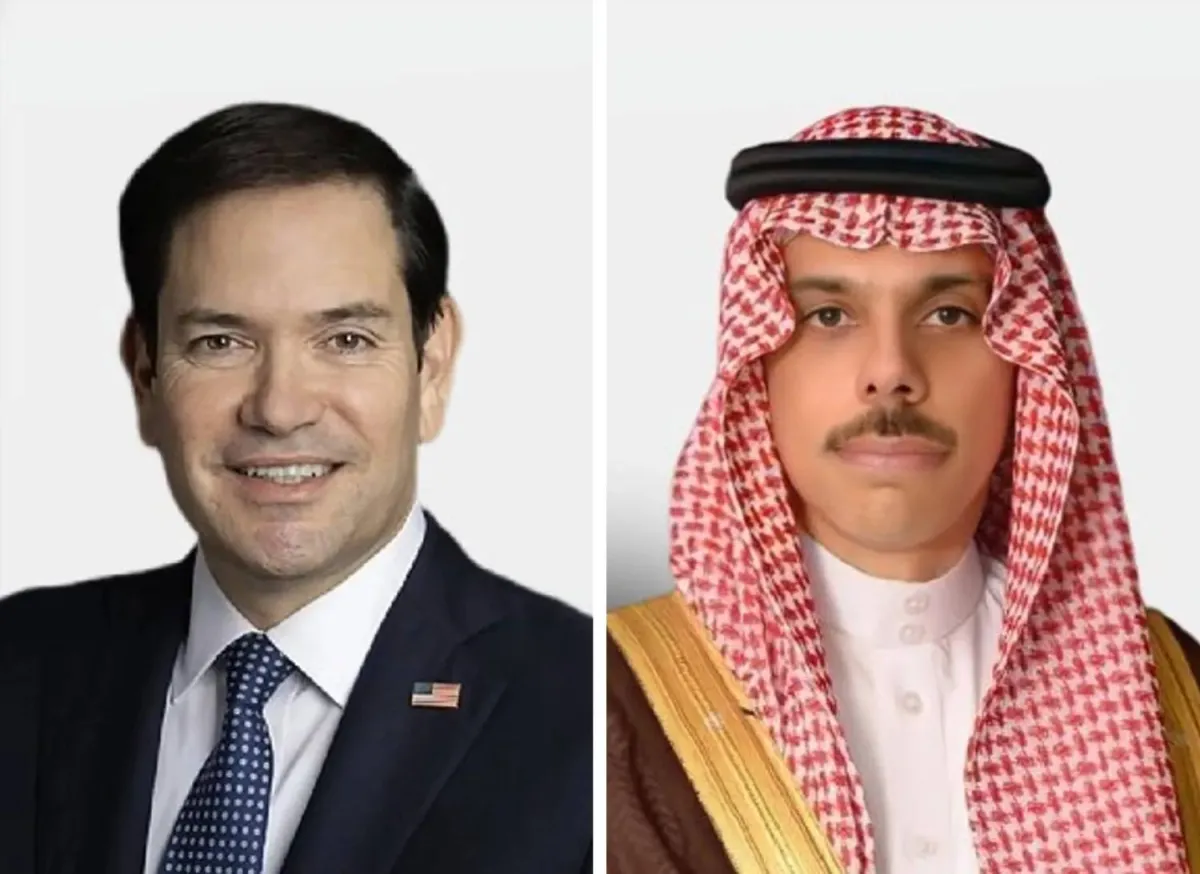
The Middle East isn’t just "tense" right now. It’s a powder keg that’s already started to pop. On Wednesday, Secretary of State Marco Rubio hopped on a call with Saudi Foreign Minister Prince Faisal bin Farhan Al Saud. On the surface, the State Department’s readout looks like your typical bureaucratic word salad about "regional stability" and "continued threats." But if you look at what’s actually happening on the ground—drones hitting embassies and missiles crossing borders—this wasn't just a polite check-in. It was a crisis management session.
The Elephant in the Room is a Drone
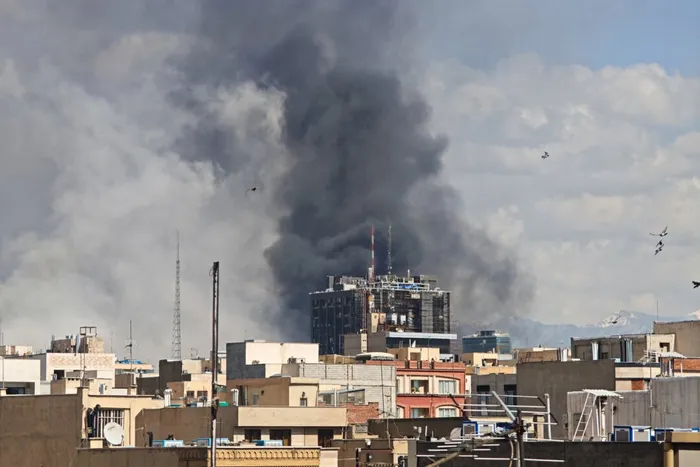
You can’t talk about stability when the U.S. Embassy in Riyadh just caught fire. On Tuesday, March 3, 2026, two suspected Iranian drones targeted the compound. While the Saudi Defense Ministry says they intercepted eight other drones near Riyadh and Al-Kharj, the fact that the embassy took even minor damage is a massive deal.
Rubio didn't just call to say hello. He called to thank the Saudis for their rapid response and to signal that the U.S. isn't packing its bags despite the "authorized departure" status for non-essential staff. When an embassy gets hit, the diplomatic playbook usually calls for a retreat. Instead, Rubio is leaning in.
Tehran is Testing the New Guard
This surge in aggression isn't happening in a vacuum. It follows a series of U.S. and Israeli strikes on Iran that kicked off last weekend. Operation Epic Fury is in full swing, and Iran is lashing out at every U.S. asset within reach. They’ve already poked at the U.S. Consulate in Dubai and the embassy in Kuwait.
By engaging Prince Faisal, Rubio is trying to hold together a fragile coalition. It’s not just the U.S. and Saudi Arabia anymore. Bahrain, Jordan, Kuwait, Qatar, and the UAE all signed onto a joint statement this week condemning Iran’s "indiscriminate and reckless" attacks. The strategy here is clear: isolate Tehran by proving that their "retaliation" is hitting their Arab neighbors just as hard as it's hitting American interests.
What the State Department Won't Say
The official readouts focus on the Iranian regime, but the subtext is the Trump administration’s 20-Point Peace Plan for Gaza. Rubio was just in Israel earlier this week. He’s trying to sell a vision of a post-war Middle East while the current war is expanding.
The Saudis are in a tough spot. They want the security guarantees that come with a U.S. partnership, but they don't want to be the primary battlefield for a U.S.-Iran shadow war. Rubio’s job is to convince them that the U.S. has enough skin in the game to protect Riyadh while the missiles are flying.
The Reality of Regional Stability in 2026
"Regional stability" is a funny phrase to use when the State Department is simultaneously telling every American citizen from Egypt to Oman to "DEPART NOW."
- Airspace is a mess. Israel, Qatar, Syria, and Iraq have all shuttered their skies at various points this week.
- Oil is twitchy. Prices are jumping every time a radar signature shows up near a Saudi pumping station.
- Diplomacy is happening on Telegram. While Rubio uses official channels, the real coordination on drone intercepts is happening in real-time between military commanders.
The Saudis have been surprisingly vocal. Usually, Riyadh plays it cool, but calling the embassy attack "cowardly" and "unjustified" shows they’re losing patience with Tehran's "resistance" narrative. They’re no longer just bystanders; they’re active participants in a regional defense shield that Rubio is desperate to keep intact.
What Happens Next
Don't expect a de-escalation anytime soon. Rubio is scheduled to keep up this pace of "phone-call diplomacy" with other regional players, including the Turks, who just used NATO air defenses to swat down an Iranian ballistic missile.
If you're watching this play out, don't just look at the headlines about "talks." Look at the flight maps and the embassy security tiers. The U.S. is trying to pivot from a defensive crouch to a coordinated regional front. Whether Saudi Arabia is willing to go all the way with that plan depends on how many more drones Rubio can help them knock out of the sky.
Keep a close eye on the "STEP" enrollment updates if you have interests in the region. The move from "caution" to "shelter in place" happens fast, and as we saw in Riyadh this week, the distance between a diplomatic readout and a burning building is shorter than it's been in decades.