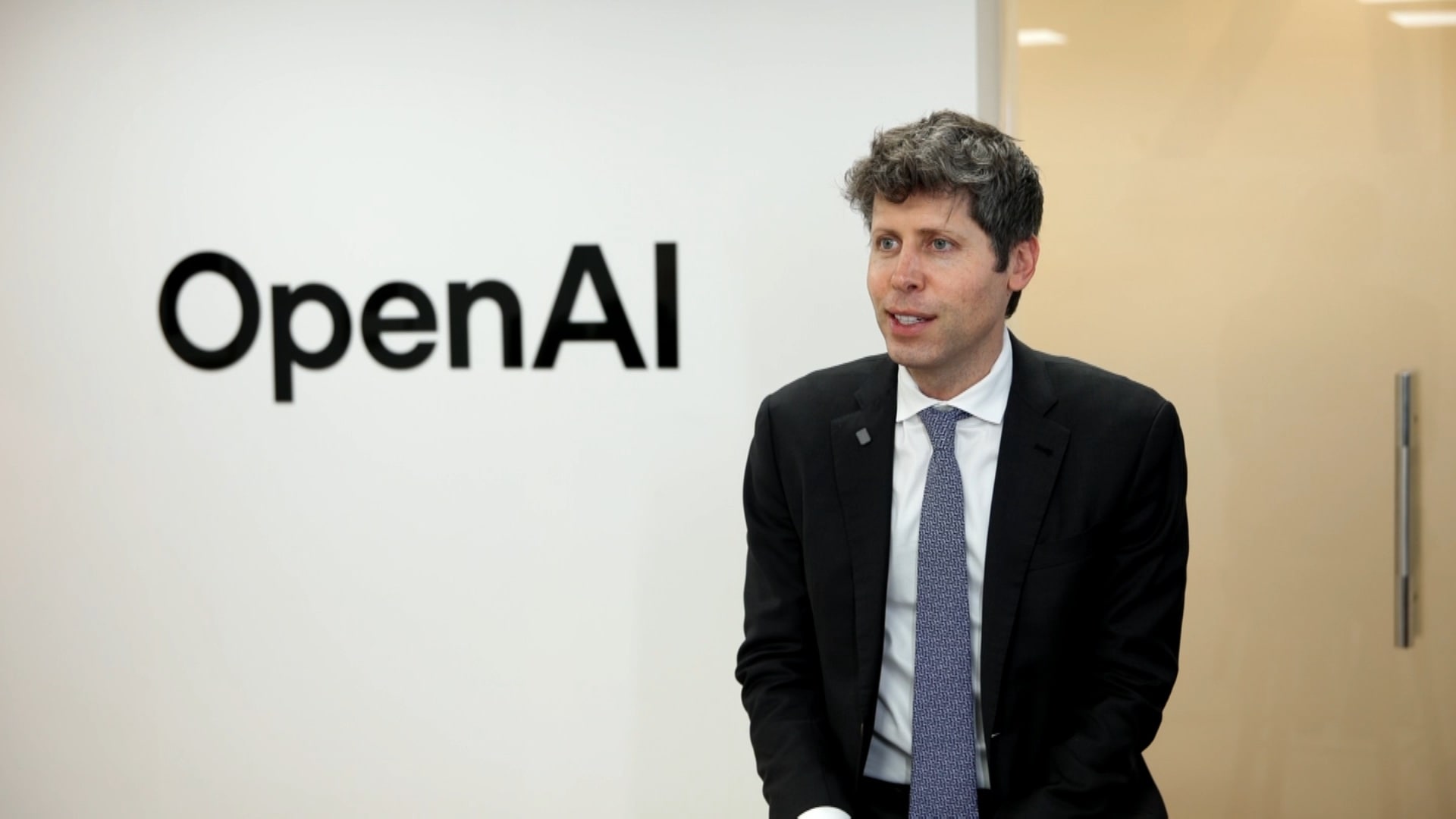
A man was just charged for throwing a Molotov cocktail at the San Francisco home of OpenAI CEO Sam Altman. This isn't just another headline about a disgruntled person. It's a massive wake-up call for the entire tech industry. When the face of the most powerful artificial intelligence company in the world becomes a target for an incendiary device, we've moved past simple internet trolling. We're in a new era of physical risk that should make every executive in Silicon Valley sweat.
I’ve followed security trends in the Bay Area for years. The tension has been building. You can feel it in the air during tech conferences and local town halls. People are scared of AI, they’re angry about job losses, and some are clearly hitting a breaking point. This specific incident at Altman's residence highlights a terrifying gap between the digital power these leaders wield and the physical vulnerability of their daily lives.
Details of the Sam Altman Property Attack
The legal system finally caught up with the individual responsible for the terrifying incident at Sam Altman’s home. Court documents reveal a calculated attempt to cause damage. On a quiet night in San Francisco, a suspect allegedly threw a homemade incendiary device—a Molotov cocktail—toward the residence. Luckily, the fire didn't engulf the house, and no one was hurt. But that’s purely a matter of luck and physics, not intent.
The suspect, identified as 35-year-old Victor S. Kim, faces serious felony charges. Prosecutors aren't playing around. They've charged him with possession of an explosive device and attempted arson. These aren't just "slap on the wrist" offenses. They carry heavy prison time. Police reports suggest the motive might be tied to a growing resentment toward AI companies, though the full manifesto—if there is one—hasn't been fully aired in public yet.
Kim wasn't just some random passerby. He reportedly had been seen in the vicinity before. This suggests a level of premeditation that should terrify any high-profile figure. It wasn't a heat-of-the-moment mistake. It was a choice.
Why OpenAI Has Become a Lightning Rod for Violence
OpenAI isn't just another software company. It represents a fundamental shift in how humans interact with reality. For some, Sam Altman is a visionary leading us to a post-scarcity utopia. For others, he’s the guy building the machine that will take their job, their purpose, and maybe their safety.
That kind of polarized reputation creates a dangerous environment. When you're the face of a technology that people think might end the world, you’re going to attract the fringe elements of society. We saw this with Bill Gates during the height of the pandemic. We see it with Elon Musk daily. But the Altman attack feels different because of the weapon used. A Molotov cocktail is a classic symbol of riot and revolution. It’s a statement of total rejection.
The Massive Cost of Protecting Tech Billionaires
Most people don't realize how much money goes into keeping these CEOs alive. Meta spent over $14 million on Mark Zuckerberg's personal security in recent years. That’s not just a couple of guys in suits. It’s armored cars, 24/7 residential details, and sophisticated surveillance.
Altman, while historically more private than Musk or Zuckerberg, has had to ramp up his personal protection significantly. You can't just walk the streets of San Francisco when you're the most talked-about man in tech. The attack on his home proves that even a multi-million dollar security budget has its limits. A person with a bottle of gasoline and a rag only needs to be lucky once. The security team has to be lucky every single second.
Security Failures and the Reality of Residential Protection
Public records show that Altman's home is in a high-end neighborhood, the kind of place where you’d expect heavy police presence and private patrols. Yet, Kim managed to get close enough to launch a projectile. This raises some uncomfortable questions:
- How did a suspicious individual get within throwing distance?
- Was there a failure in the early warning systems or perimeter sensors?
- Are these tech hubs actually safe for the people who run them?
The truth is, San Francisco has a unique set of challenges. The density of the city makes it hard to create a true "buffer zone" around a home. You’re always just a few feet away from a public sidewalk. For a determined attacker, that’s all the space they need.
The Psychology of the Anti AI Protester
We have to look at the "why" here. Honestly, the fear surrounding AI is reaching a fever pitch. There’s a segment of the population that feels completely left behind. They see ChatGPT and DALL-E as the end of their livelihoods. When you combine economic anxiety with the general instability of the world right now, you get a powder keg.
Kim’s actions, while criminal and inexcusable, are a symptom of a larger cultural rot. We’ve stopped talking to each other and started throwing things. The irony is that attacking the CEO won’t stop the code. The models are already out there. The weights are on servers across the globe. Breaking a window at Altman’s house doesn't delete the GPT-4 training data. It just ruins a life—specifically, the attacker's.
Comparing This to Previous Executive Attacks
This isn't the first time a tech leader has been targeted, but the frequency is ticking up.
- The YouTube HQ Shooting: A woman opened fire at YouTube’s campus in 2018 because she was upset about video demonetization.
- The Pelosi Attack: While political, it showed how easily a determined intruder can enter a high-profile residence in San Francisco.
- The Cruise Vandalism: We've seen people disabling self-driving cars with traffic cones. It's a low-level version of the same rage.
The Altman incident is a significant escalation from traffic cones. It’s a move toward lethal force. It marks a transition from "protesting the tech" to "eliminating the person."
Legal Consequences for Victor S. Kim
The legal system is going to make an example out of Kim. You don't get to throw fire at a billionaire and hope for probation. The charges of "possession of a destructive device" and "arson of an inhabited structure" are heavy hitters.
In California, arson of an inhabited dwelling can lead to eight years in state prison. If they tack on hate crime enhancements or specific "explosive" charges, Kim could be looking at a decade or more behind bars. The DA’s office knows the world is watching. They need to send a message that political or technological grievances don't justify violence.
What This Means for OpenAI Operations
Does this change how OpenAI does business? Probably not. Altman isn't the type to go into hiding, but he will certainly be less accessible. Expect more closed-door events. Expect more remote appearances.
Internally, OpenAI employees are likely feeling the heat too. If the CEO isn't safe at home, are the engineers safe at the office? Security at the Mission District headquarters has already been tightened. You’ll see more badge-only access points, more plainclothes security, and likely a lot more coordination with the SFPD. It’s a sad state of affairs when a company building tools for "the benefit of all humanity" has to fortify itself against the very humans it claims to help.
How High Profile Figures Can Protect Themselves Now
If you're a leader in a controversial field, you can't rely on a "nice neighborhood" to keep you safe. The playbook has changed.
First, digital privacy is the new physical security. If an attacker can't find your address, they can't throw a Molotov at it. Most of these executives have their home addresses leaked through property records or lazy data hygiene. Using LLCs and trusts to buy property is a start, but it's rarely enough anymore.
Second, the human element is the weakest link. Most residential security fails because guards get bored or neighbors get complacent. The Altman attack happened because someone was able to linger.
Finally, we need to address the rhetoric. Leaders like Altman have to find a way to talk to the public that doesn't sound like they're looking down from a mountain. When people feel heard, they’re less likely to reach for a bottle of gasoline. It’s not a guarantee, but it’s a necessary part of the defense.
The Future of Tech Dissent
We should expect more of this. It’s a grim prediction, but the trajectory is clear. As AI continues to disrupt industries, the desperation of those displaced will grow. The Molotov cocktail at Altman’s house is a terrifying milestone. It’s the point where "AI ethics" debates moved from Twitter threads to the physical world.
If you’re a tech worker or an executive, it’s time to take your personal security seriously. Check your digital footprint. Scrub your address from those "people finder" sites. Be aware of your surroundings. The "move fast and break things" era has a new, literal meaning, and it’s hitting much closer to home.
If you want to stay safe in an increasingly volatile environment, you need to be proactive. Audit your home security tonight. Set up Google Alerts for your own name to see what’s being discussed in the darker corners of the web. Don't wait for a bottle to fly through your window to realize you're a target. Stay vigilant, stay private, and for God's sake, invest in some decent cameras.