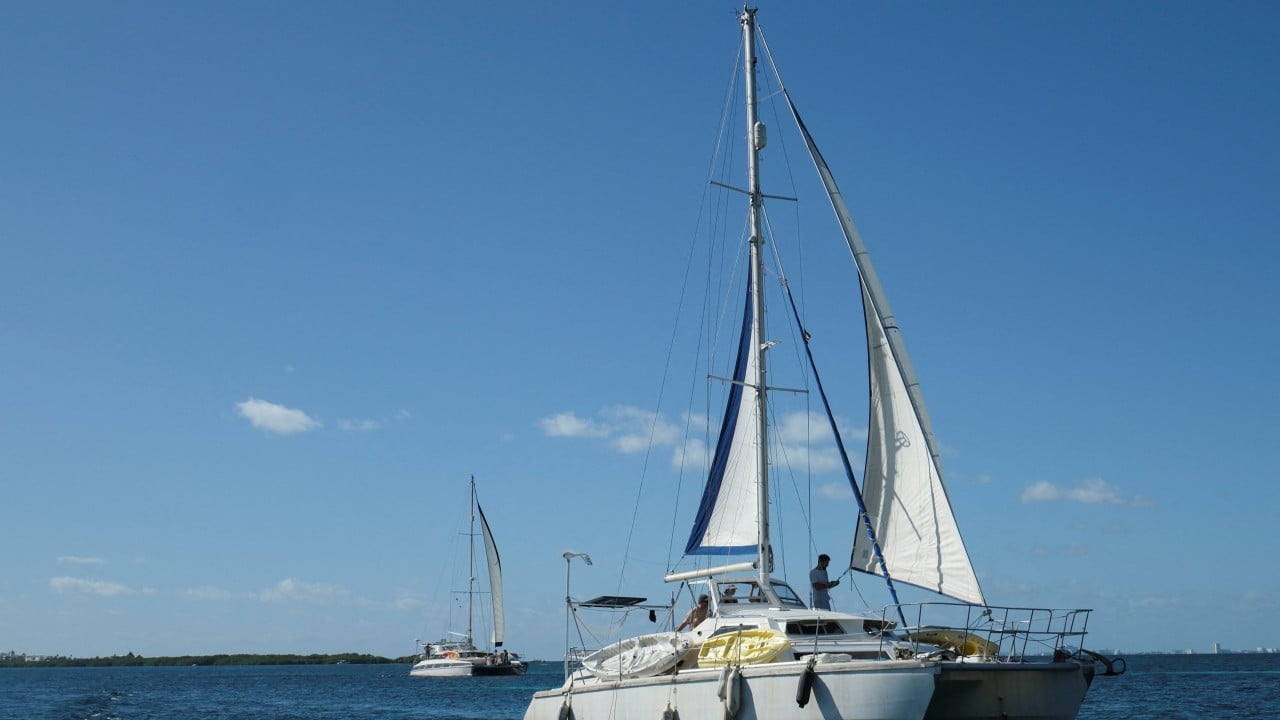
The ocean does not have a voice, but it has a way of making people scream. When the radio goes silent and the GPS coordinates stop flickering on a glowing screen, the Atlantic becomes a vast, blue interrogation room. For three days, that interrogation was all the families of those aboard the Nany and the Sea Hawk knew.
They were not supposed to be ghost ships. These were vessels of mercy, or at least vessels of intent, carrying aid and hope toward the Cuban coastline. But when the United States Coast Guard Seventh District issued a sprawling search alert across the Florida Straits, the narrative shifted from a mission of charity to a desperate calculation of survival.
The water between Key West and Havana is a deceptive stretch of history. It is only ninety miles, a distance a fit person could bike in a morning if the surface were asphalt instead of shifting, unpredictable salt water. On a map, it looks like a puddle. In reality, it is a graveyard of dreams and a gauntlet of mechanical failure.
The Math of a Disappearance
Every hour a boat is missing, the search area grows exponentially. It is a geometric nightmare. If a vessel loses power, it becomes a leaf in a storm, pulled by the Gulf Stream—a powerful, underwater river that flows northward at speeds of up to five miles per hour.
Imagine standing in a dark field, trying to find a single silver needle with a flickering penlight while the ground beneath you is moving. That is the task the Coast Guard faces when a "request for assistance" turns into a "search and rescue." The crews on the C-130 aircraft and the cutters slicing through the swells aren't just looking for boats. They are looking for a break in the pattern of the waves.
The Nany and the Sea Hawk had vanished. No distress signal. No "Mayday" crackling through the static of Channel 16. Just a void where two hulls should have been.
For the people waiting on shore, the facts are secondary to the imagery. They don't think about the $6.5$ million square miles the Coast Guard monitors. They think about the smell of diesel fumes, the sound of a sputtering outboard motor, and the way the sun reflects off the water with a blinding, indifferent intensity. They think about the person at the helm, wondering if they are rationing water or staring at a horizon that refuses to offer up a shoreline.
The Mechanics of Relief
When the news finally broke that the boats had been located, the relief was not a sudden explosion. It was a slow exhale. The Coast Guard confirmed that the vessels had reached their destination. They had crossed the invisible line into Cuban waters, safely docking in a country that is currently navigating its own labyrinth of shortages and power failures.
But why the silence?
In the age of the smartphone, we have forgotten what it means to be truly disconnected. We assume that connectivity is a human right, a constant tether to the rest of the species. On the open sea, that tether is made of glass. Satellite phones fail. Batteries die. Sometimes, the sheer weight of the mission—the pressure of delivering aid to those who have nothing—overshadows the protocol of checking in.
The boats were carrying more than just supplies. They were carrying the weight of a complicated relationship between two shores. When a boat goes missing in this corridor, it is never just a maritime accident. It is a political event. It is a human rights headline. It is a spark in a powder keg.
The Human Element in the Hull
Let’s look at a hypothetical figure: call him Mateo. He is a volunteer on a boat like the Nany. He isn’t a professional sailor; he’s a man with a cousin in Matanzas who hasn’t had medicine for a month. To Mateo, the engine's cough isn't a mechanical data point. It’s a heartbeat. If it stops, his cousin’s hope stops.
When the waves climb to six feet, the boat feels smaller. The wood or fiberglass beneath his feet starts to feel like a suggestion rather than a structure. He isn't thinking about the U.S. Coast Guard’s logistical prowess. He is thinking about the fact that the ocean is very deep, and he is very small.
The Coast Guard’s role in these moments is often misunderstood. They are the ultimate pragmatists. They do not care about the "why" of the journey until the "where" is established. Their search patterns are based on "Probability of Success" (POS) and "Probability of Detection" (POD). They use models that account for windage—the way the wind pushes against the side of a boat—and sea spray.
The fact that these boats were found safe is a testament to two things: the ruggedness of those who dare the crossing and the sheer luck that the Florida Straits decided to be merciful this time.
The Invisible Stakes
The silence that followed these boats was a reminder of the fragility of our systems. We live in a world where we can track a pizza delivery in real-time, yet two ships filled with people can vanish in a patch of water we’ve been sailing for five hundred years.
Consider the impact of the false alarm. Every time a boat "disappears" only to turn up safely, the collective anxiety of the maritime community is strained. Resources are deployed. Pilots fly hours of search grids. But more importantly, the families of the next boat to go missing will feel the shadow of this event. They will wonder if their loved ones are also "just out of range" or if the ocean has finally stopped asking questions and started taking answers.
The safe arrival of the Nany and the Sea Hawk is a victory, but it is a hollow one for those who understand the risks. It highlights a desperate reality: the need in Cuba is so great that people will risk the silence of the straits, the failure of the radio, and the wrath of the Gulf Stream to bring even a small amount of relief.
They are not just boats. They are bridges. And sometimes, bridges are built over water that wants to swallow them whole.
The sun sets over the Florida Keys, turning the water into a sheet of hammered gold. Somewhere across that line, people are unloading crates. They are shaking hands. They are breathing. The crisis has passed, the search is over, and the charts are filed away. But the water is still there, waiting for the next hull, the next engine failure, and the next time we are forced to remember that ninety miles can be an eternity.
A boat on the horizon is just a speck until it’s yours. Then, it’s the whole world.