The theater is pitch-black. In the third row, a young man named Chen leans forward, his breath hitching as the screen erupts in the thunder of 1950s artillery. He isn't watching a Hollywood superhero or a frantic sci-fi epic. He is watching The Battle at Lake Changjin. Around him, the air is thick with a collective, held breath. When the credits roll, the silence isn't just respectful; it is heavy. It is the sound of a billion-dollar message landing exactly where it was intended.
To an outside observer, a box-office record is just a number. It is a data point on a spreadsheet. But in the context of China’s current trajectory, these cinematic "smash hits" are something far more potent. They are psychological blueprints. They tell us exactly what the state wants its people to value, how it wants them to see the world, and—perhaps most crucially—where it is placing its bets for the future.
The Mirror of the Multiplex
For decades, the global box office was a monologue. Hollywood spoke, and the world listened. We learned to value the individual rebel, the wisecracking loner, and the triumph of the personal spirit over the machine. But the wind has shifted. In Beijing, the local cinema has become a mirror, reflecting a very different set of virtues.
When you look at the highest-grossing films in China over the last few years, a pattern emerges that has nothing to do with mindless entertainment. These films are "Main Melody" productions. They aren't just movies; they are civic ceremonies. They prioritize the collective over the individual. They celebrate the beauty of the grind, the necessity of sacrifice, and the absolute inevitability of national rejuvenation.
Consider the hypothetical case of a producer we’ll call Zhang. Zhang doesn’t just want to make a movie that sells tickets. He wants to make a movie that survives. To do that, he must align his creative pulse with the rhythmic beating of the state’s heart. If the government’s strategic focus is on "self-reliance" in technology, Zhang’s next protagonist won't be a wandering swordsman; he’ll be a tireless scientist working in a lab to break a foreign blockade.
The Pivot to Hard Power
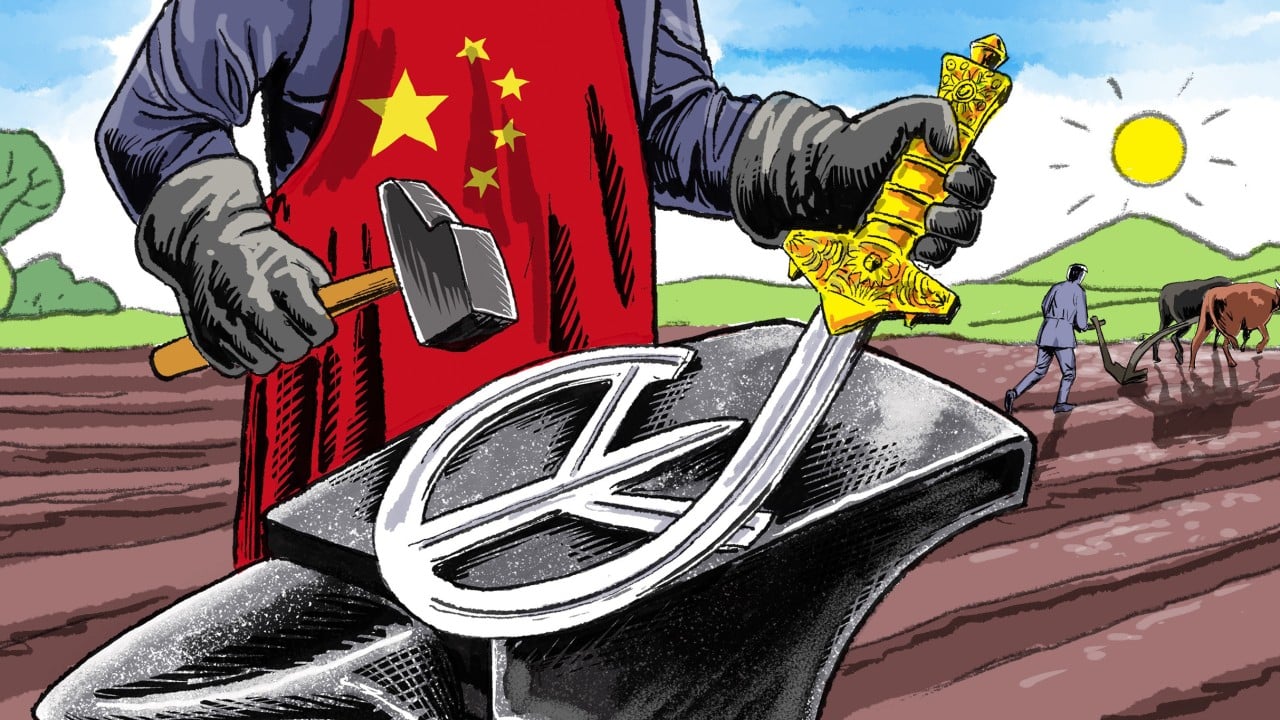
The shift in storytelling mirrors a shift in the halls of power. For a long time, the narrative was about "The World Factory." It was about growth at any cost, about joining the global neighborhood. Now, the story has changed to "The Fortress."
The strategic focus has hardened. We see this in the obsession with "chokepoint" technologies—semiconductors, AI, and green energy. The movies reflect this by moving away from the soft, romantic comedies of the early 2000s toward gritty, historical dramas that emphasize endurance under pressure. The message is clear: the world is becoming more hostile, and only through unity and technological mastery can the nation prevail.
But why the movies? Because logic rarely moves a mountain. Emotion does.
If you tell a citizen that the GDP must shift toward industrial upgrades, they might nod and go back to their coffee. If you show them a three-hour epic where their ancestors froze to death to protect a border, you aren't just sharing history. You are building a psychological infrastructure. You are preparing them for a period of "bitter struggle," a phrase that has seen a massive resurgence in official rhetoric.
The Invisible Stakes of the Popcorn Trail
There is a tension here that few discuss. It is the tension between the artist’s soul and the state’s requirements.
Imagine a director who wants to explore the nuance of a failed hero. In the current climate, that nuance is a luxury the system cannot afford. The stakes are too high. When the US-China rivalry is framed as a civilizational marathon, every piece of culture becomes a pebble in the shoe of the competitor.
The strategic focus isn't just on building better chips; it’s on building a better "national psyche." The government is terrified of the "sissy boy" culture or the "lying flat" movement—where young people give up on the rat race. To combat this, the cinema serves up a constant diet of high-octane masculinity and selfless devotion.
- The Goal: High-quality growth.
- The Obstacle: External containment.
- The Solution: Total social mobilization.
The films are the training ground for that mobilization. They are the "soft" side of a very "hard" strategic pivot.
The Cost of a Monolithic Narrative
Is there a downside? Of course. When every story must serve a strategic focus, the texture of life begins to flatten.
If you only ever hear the trumpets of war and the gears of industry, you forget how to hear the flute. The human element—the messy, contradictory, unaligned parts of being alive—gets sanded down. The risk for China is that by focusing so intensely on a singular strategic vision, it might alienate the very creative minds it needs to innovate. Innovation requires the freedom to fail, to be weird, and to be wrong. A "Main Melody" doesn't have room for a wrong note.
Yet, for now, the strategy is working. The box office numbers don't lie. People are showing up. They are crying. They are buying the merchandise. They are feeling the pull of a story larger than themselves.
The real story isn't the explosion on the screen. It is the young man, Chen, leaving the theater with a new sense of purpose. He feels like he is part of a grand, historical machine. He is ready to work harder, complain less, and believe in the vision sold to him in the dark.
The strategic focus of a nation is often hidden in dry policy papers and five-year plans that no one reads. But if you want to know where a country is going—and what it is willing to sacrifice to get there—don't look at the white papers.
Look at what makes the crowd cheer in the dark.
Look at the heroes they are being taught to worship.
The screen is flicking off, the house lights are rising, and a billion people are walking out into a world that has been carefully scripted for them, one frame at a time. The credits have finished, but the real performance is just beginning on the streets outside.