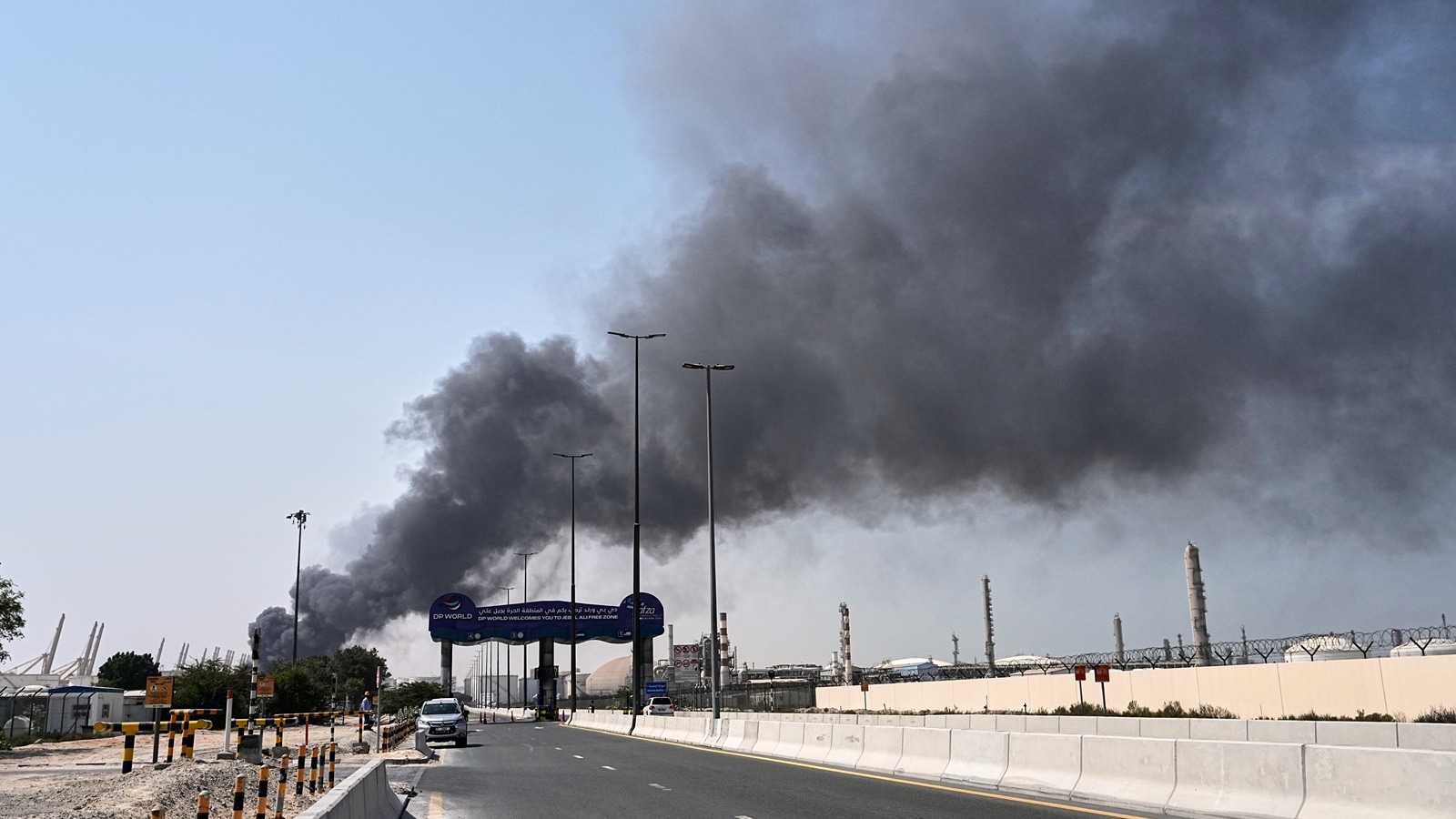
The air in Dubai usually tastes of salt and ambition. On a Tuesday afternoon, the humidity clings to the glass of the Burj Khalifa like a second skin, and the hum of the city is a constant, expensive purr. But for those working behind the reinforced glass of the American Consulate, the atmosphere changed in a heartbeat. It wasn't a roar. It wasn't a cinematic explosion that leveled city blocks. It was a high-pitched, mechanical whine—the sound of a lawnmower from hell—cutting through the haze of the Persian Gulf.
Then came the impact.
A single drone, no larger than a kitchen tabletop, struck with surgical precision near the diplomatic compound. It was a small piece of hardware carrying a massive message. For years, the shadow war between Washington and Tehran has been fought in the dark corners of the internet or through proxies in the scorched valleys of Yemen and Iraq. Now, the theater has shifted to the glittering hubs of global commerce.
The Anatomy of a Calculated Scream
To understand why a small drone in Dubai matters more than a thousand speeches in Geneva, you have to understand the math of modern terror. We aren't talking about the $100 million Global Hawk drones the U.S. flies. We are talking about "suicide" or kamikaze drones—loitering munitions. They are cheap. They are disposable. They are terrifyingly effective.
Imagine a courier who never gets tired, doesn't need a paycheck, and is programmed with a singular, suicidal devotion to a set of GPS coordinates. These devices use off-the-shelf components, the kind of chips you might find in a high-end toy or a smart refrigerator, but they are rigged with high explosives and guided by Iranian-designed flight controllers. When Iran launches these from a mobile platform hundreds of miles away, they aren't just aiming for a building. They are aiming for the psyche of the West.
The strike near the consulate wasn't a miss. In the world of geopolitical signaling, a near-miss is often more potent than a direct hit. It says, We can touch you whenever we want. We know exactly where you sleep.
The Ghost in the Machine
Consider a hypothetical security officer named Marcus. He’s spent twenty years in the shadows, from the Green Zone to the outskirts of Kabul. He’s used to the "big" threats: truck bombs, insurgent raids, ballistic missiles tracked by multi-billion dollar satellite arrays. But as he looks at the charred remains of a carbon-fiber wing on a Dubai sidewalk, he realizes the rules have changed.
The radar didn't see it coming until it was too late. These drones fly low, hugging the terrain or skimming the waves of the Gulf, hiding in the "clutter" of the city. To a standard defense system, a drone can look like a large bird or a weather anomaly. By the time the software realizes the bird is carrying five kilograms of C4, the window for a kinetic intercept has closed.
This is the democratization of destruction.
Iran has mastered the art of the "asymmetric squeeze." They know they cannot win a conventional carrier-group battle against the U.S. Navy. They don't want to. Instead, they use these swarms to create a "cost-imbalance." The U.S. might fire a Patriot missile costing $3 million to take down a drone that cost $20,000 to build. It’s a war of attrition where the side with the cheaper weapons wins by bankrupting the side with the expensive ones.
The Invisible Stakes of the Gulf
Why Dubai? Why now?
Dubai is the crown jewel of the United Arab Emirates, a place where the world comes to trade, vacation, and hide their wealth. It represents stability in a region often defined by its absence. By striking near the American consulate, Iran is piercing the veil of that stability. They are telling the global markets that no one is safe, not even in the playground of the billionaires.
The ripples go far beyond a damaged wall or a shattered window. When a drone hits near a diplomatic mission, insurance premiums for shipping in the Strait of Hormuz spike. International corporations rethink their regional headquarters. The "safe haven" starts to look like a target.
Iran is currently feeling the suffocating weight of economic sanctions and internal unrest. Their response is a classic "outward pressure" tactic. If Tehran feels the walls closing in, they ensure everyone else feels them too. They are using the drone as a scalpel, cutting away at the American promise of protection for its allies.
The Technology of Deniability
One of the most frustrating aspects of this new era of warfare is the "gray zone." When a missile is launched, there is a thermal signature, a trajectory, and a clear point of origin. When a drone is launched, it can be put together in a garage, launched from the back of a civilian truck, and flown via a pre-programmed route that loops and weaves to hide its starting point.
Tehran can shrug its shoulders. They can claim it was a "rogue element" or a local militia acting on its own. They provide the blueprints, the components, and the training, but they leave no fingerprints on the trigger.
This creates a paralyzing dilemma for American policymakers. Do you retaliate against Iran directly for a strike they claim they didn't authorize? If you do, you risk a full-scale regional war that could send oil prices to $200 a barrel and tank the global economy. If you don't, you look weak, and the drones keep coming, closer and closer each time.
The Human Cost of High-Tech Harassment
It’s easy to get lost in the talk of geopolitics and "strategic assets." But the real story is in the eyes of the people living in the shadow of the drone.
Think of the families living in the high-rises overlooking the consulate. For them, the sky is no longer just a backdrop for sunset photos. It is a source of potential sudden, violent intervention. Every distant buzz of a hobbyist's drone in a public park now carries a sting of adrenaline. The psychological toll of low-intensity, persistent conflict is a slow-motion trauma.
We are witnessing the birth of a world where "peace" is just a period of time where the drones haven't hit yet.
The strike in Dubai was a bellwether. It signaled that the constraints are off. Iran is no longer content to stay within the borders of traditional conflict zones. They are testing the perimeter of the global order. They are watching how we react. They are waiting to see if the world’s superpower can swat a fly that carries a bomb.
The silence that followed the impact in Dubai wasn't the end of the event. It was the beginning of a new, much louder chapter in a story that none of us are ready to read.
As the sun sets over the Gulf, the lights of the city flicker on, reflected in the calm waters. Somewhere across that water, another technician is soldering a circuit board, another engine is being tested, and another set of coordinates is being typed into a cheap laptop. The shadow is moving, and it doesn't care about diplomacy. It only knows its target.
The lawnmower whine is coming back. And next time, it might not just be a warning.