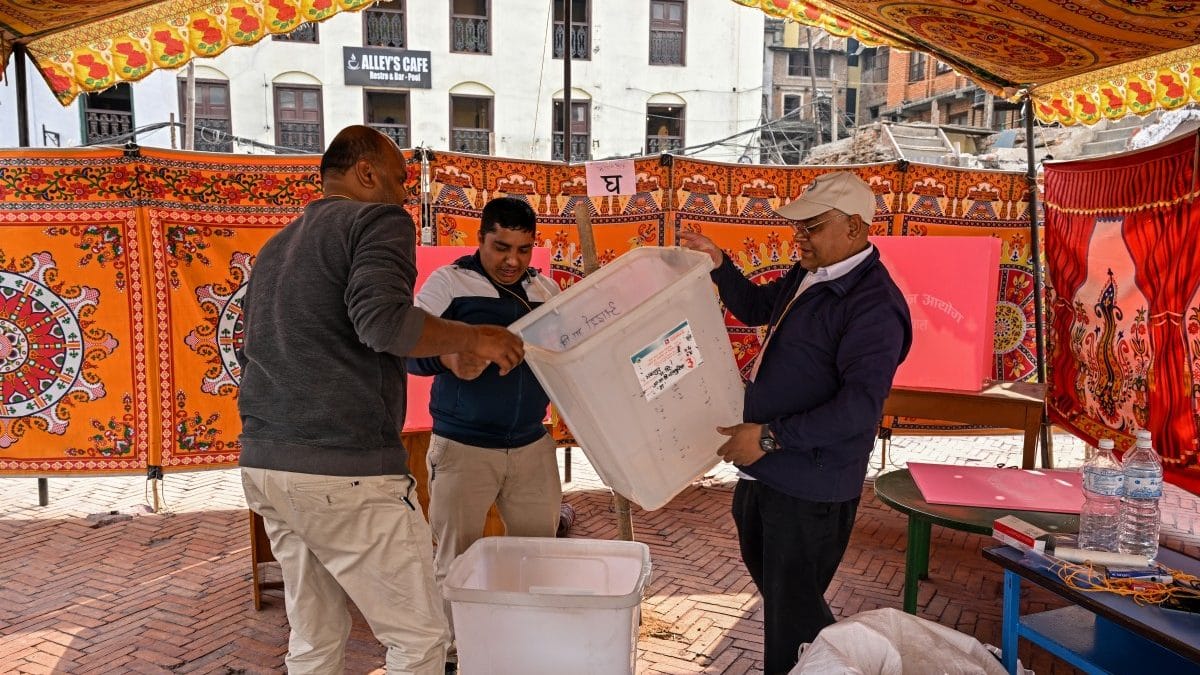
The air in Kathmandu usually tastes of brick dust and marigolds, but today it tastes like nervous sweat.
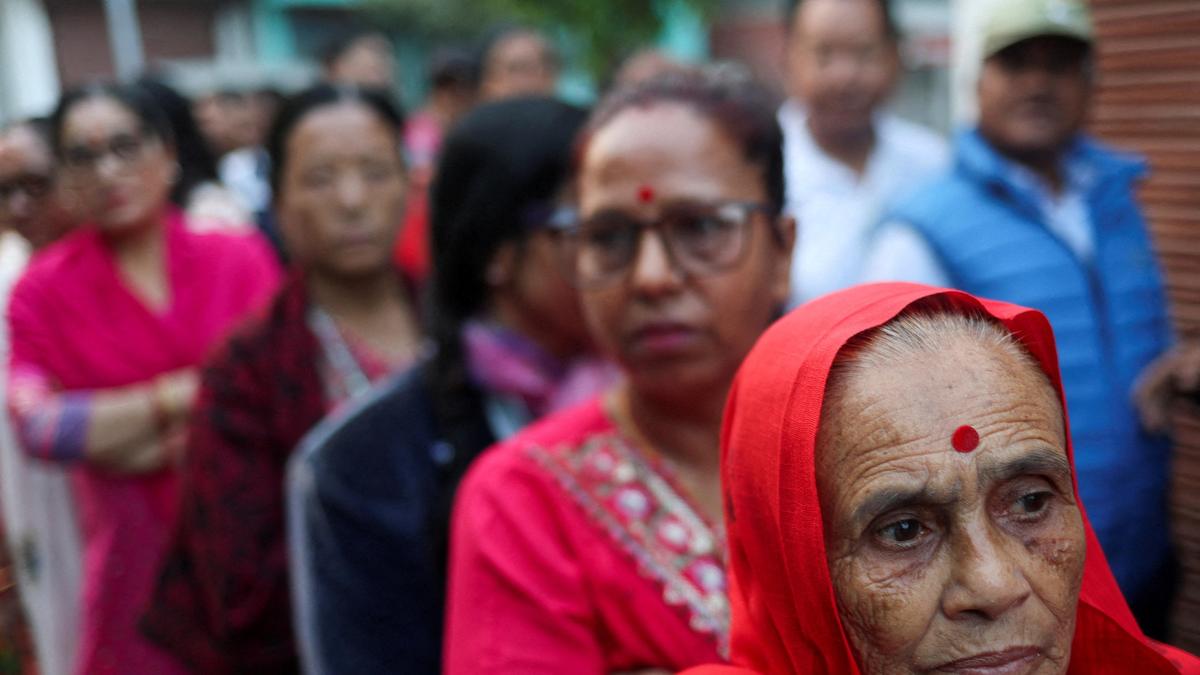
In a small polling station tucked behind a crumbling temple in Patan, an eighty-year-old man named Rajesh leans heavily on a bamboo cane. He is waiting. His eyes, clouded by cataracts but sharp with memory, are fixed on the back of a twenty-year-old girl standing two places ahead of him. She is wearing high-top sneakers and a t-shirt that says System Reboot. She is scrolling through TikTok with a thumb that will, in less than twenty minutes, be stained with indelible purple ink.
Rajesh remembers 1990. He remembers the royal massacres, the long nights of the Maoist insurgency, and the repetitive cycle of gray-haired men in topis making promises that dissolved like sugar in the monsoon rain. For him, voting was always a heavy duty, a somber ritual performed in the shadow of giants.
For the girl in the sneakers, voting is an eviction notice.
Nepal is heading to the polls for the first time since a seismic political shift that the rest of the world barely noticed, but which changed everything for the people living in the shadow of the Himalayas. This isn't just a parliamentary election. It is the final act of a play that began months ago when the youth of this nation decided they were tired of waiting for the future to be handed to them. They took it instead.
The Spark That Ate the Dry Grass
To understand the ink on those thumbs today, you have to understand the heat of the protests that came before.
Imagine a room where the windows haven't been opened in thirty years. The air is stale. The furniture is rotting. The people in charge of the room keep telling you that the smell is actually the scent of "stability." Then, imagine a generation of people born into the internet age, who can see through those dusty windows that the rest of the world is breathing fresh air.
They didn't start with stones. They started with status updates.
What the international media called the "Gen-Z Uprising" was, at its heart, a collective realization that the old guard was playing a game of musical chairs with the country’s soul. One week, a leader was a revolutionary; the next, he was a prime minister; the week after, he was in opposition; and the year after, he was back in power. It was a closed loop.
When the protests finally spilled into the streets of Kathmandu, Pokhara, and Butwal, they weren't led by seasoned political operatives. They were led by medical students, baristas, and freelance coders. They didn't want a different flavor of the same old ideology. They wanted a functioning bus system. They wanted jobs that didn't require a one-way ticket to Qatar or Dubai. They wanted a government that didn't treat the national treasury like a private piggy bank.
The government fell not because of a coup, but because of a collapse of legitimacy. When the police moved in with water cannons, the protesters sat down and began to study for their exams under the spray. How do you fight a revolution that refuses to stop being productive?
The Weight of the Paper
Now, the streets are quiet, but the tension has merely moved indoors.
Inside the polling booth, the silence is thick. There is a specific sound a ballot makes when it is folded and dropped into a plastic bin. It is a hollow thump. In a country like Nepal, where the mountains are high and the valleys are deep, that sound has to travel a long way to mean anything.
The core facts are these: hundreds of seats are up for grabs. Dozens of new, independent parties—mostly headed by people under the age of forty—are challenging the monoliths that have ruled since the end of the monarchy. The "Big Three" parties are nervous. They are spending millions on radio ads and helicopter tours, trying to convince people like Rajesh that "experience" is better than "experimentation."
But experience, in this context, has a bitter aftertaste.
Consider the "Invisible Stake." For a farmer in the Terai plains, the election isn't about grand theories of governance. It’s about the price of urea. For a tech worker in Lalitpur, it’s about the fact that the electricity flickers every time the wind blows. These are the "micro-betrayals" of the previous administration. When a government fails to provide the basics, it loses the right to ask for patience.
The Ghost in the Machine
There is a myth that young voters are flighty. The old guard banked on this. They assumed that once the excitement of the protests faded, the kids would go back to their cafes and leave the "real work" of politics to the professionals.
They were wrong.
The mobilization we are seeing today is surgical. Using decentralized networks, young activists have been running "voter literacy" campaigns in remote villages where the internet doesn't reach. They aren't just telling people who to vote for; they are explaining how the parliamentary system actually works—something the state education system neglected for decades.
It is a strange, beautiful sight to see a teenager explaining proportional representation to her grandfather while they shell peanuts on a porch.
"Is it safe?" Rajesh asks the girl in the sneakers as they move closer to the table. He isn't asking about the police. He is asking about the hope. He has seen hope curdled before. He has seen the liberators become the oppressors.
The girl looks up from her phone. She doesn't give him a campaign slogan. She doesn't promise a utopia.
"It’s not about being safe," she says softly. "It’s about being heard. If they don't listen this time, we know where the street is."
The Geography of Change
Nepal is a difficult place to hold an election. Logistics are a nightmare. Ballots have to be carried on the backs of mules to reach villages nestled in the lap of Annapurna. High-altitude polling stations often deal with snow, even in the spring.
Yet, the turnout in these "impossible" places often puts Western democracies to shame.
This is because, in a developing nation, the distance between a policy and a person is very short. If the government decides to tax imported grain, a family goes hungry the following Tuesday. There is no cushion. No safety net. The ballot is the only shield they have.
The data suggests a massive surge in first-time voters. We are talking about nearly four million people who have never cast a vote before. In a country of thirty million, that is a kingmaker demographic. If they vote as a bloc, the old political map of Nepal won't just be revised; it will be burned.
But the real story isn't in the data. It’s in the hands.
Watch the hands of the people leaving the stations. They hold their thumbs up like badges of honor. They take selfies. They show their purple marks to neighbors. There is a sense of infectious ownership. For the first time in a generation, the people don't feel like they are choosing between the lesser of two evils. They feel like they are hiring employees.
The Midnight Count
As the sun sets over the Himalayas, the mountains turn a bruised purple, matching the ink on the voters' thumbs. The counting will go on through the night. In classrooms and community centers across the country, by the light of flickering LED bulbs and battery-powered lanterns, the paper slips will be sorted.
The "Big Three" will likely retain some ground. Patronage networks run deep in the rural heartlands. You cannot erase thirty years of political machinery in a single afternoon. There will be disputes. There will be claims of irregularities. There will be the inevitable horse-trading that follows any multi-party election.
However, the shift has already happened.
The victory isn't in the final tally. The victory is in the fact that the eighty-year-old man and the twenty-year-old girl stood in the same line, looking at the same box, and for a brief moment, the power wasn't in a palace or a party headquarters. It was in the air between them.
The girl in the sneakers finishes her vote. She walks out past Rajesh, giving him a small, respectful nod. She disappears into the crowd, already texting her friends about the exit polls.
Rajesh steps up to the table. His hand shakes slightly as he takes the paper. He looks at the symbols—the sun, the tree, the hammer, the bell. He thinks about the years he spent waiting for a hero. He realizes, looking at the ink-stained thumb of the volunteer helping him, that heroes are exhausted. What they need are citizens.
He marks his choice. He folds the paper.
He listens for the thump.
It is the loudest sound in the world.
Would you like me to analyze the projected impact of these new independent parties on Nepal's foreign policy with India and China?