The air in the briefing room was thick with the scent of ozone and the heavy, metallic tang of cold machinery. Somewhere in the distance, a generator hummed—a low, rhythmic pulse that felt less like a machine and more like a warning.
In the world of high-stakes diplomacy, we are taught to listen for the roar of engines and the thunder of explosives. We look for the plumes of smoke on the horizon. But the most terrifying weapon ever conceived doesn’t make a sound. It doesn't leave a crater. It simply stops the clock.
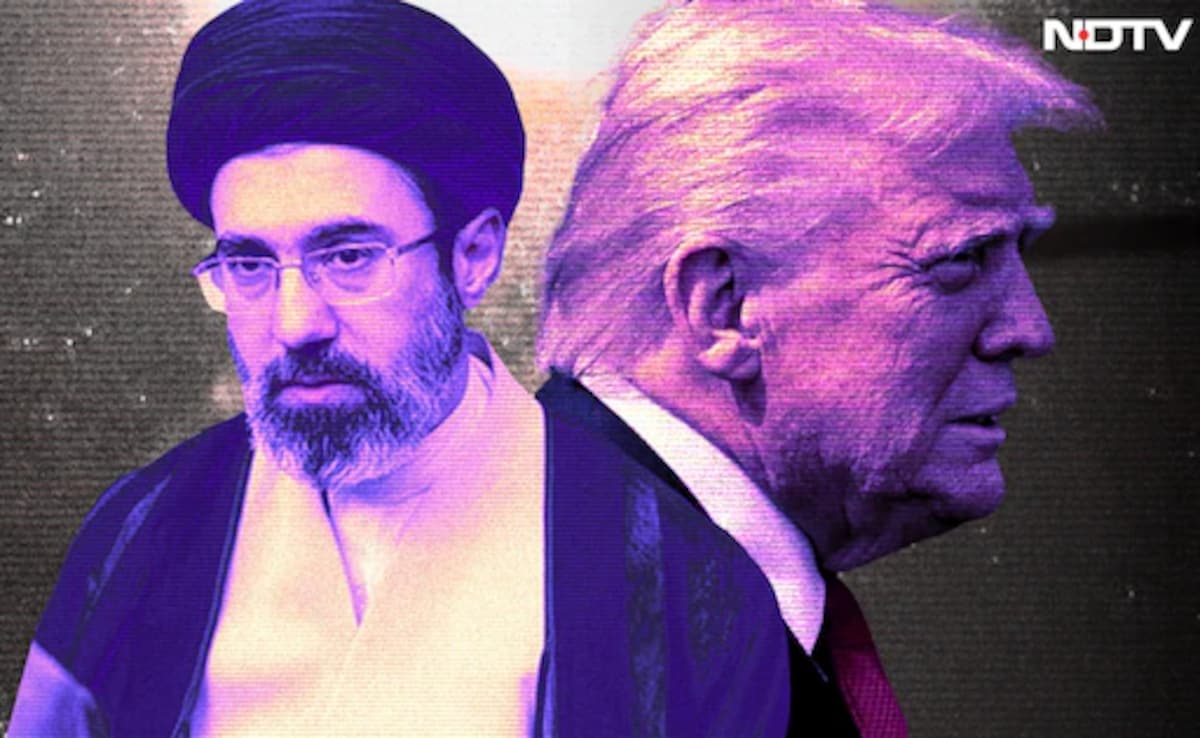
Recently, the Iranian military leadership stood before a sleek, nondescript console and made a claim that sent a literal chill through the intelligence community. They aren't just building better missiles. They are perfecting a weapon they claim can induce a "heart attack" in an entire city.
This isn't about biology. It’s about the invisible threads that keep our modern lives from unraveling.
The Spark That Never Caught
Think about your morning. You reached for a light switch. You checked your phone. Perhaps you glanced at a thermostat. These actions are so mundane we treat them as birthrights. Now, imagine a hypothetical technician named Elias working in a power substation on the outskirts of a major metropolitan area.
Elias doesn't see the weapon. No one does.
A burst of high-intensity electromagnetic energy—an EMP—shrouds the sky. It isn't a bomb in the traditional sense. There is no fire. Instead, the very air becomes an invisible sledgehammer. In an instant, the transformers Elias monitors don't just fail; they melt. The tiny silicon chips in his pocket, the ones inside his smartphone and his digital watch, are fried into useless pieces of sand.
The lights go out. The water pumps stop. The hospital backup generators, sensitive to the same pulse, refuse to kick in. In that silence, the "heart attack" begins.
Iran’s announcement comes on the heels of a total collapse in diplomatic relations. When a peace plan is rejected—when the ink on a treaty is treated like scrap paper—the vacuum is always filled by something darker. Tehran is signaling that if they cannot be part of the global order, they have the means to turn off the lights for everyone else.
The Physics of Silence
To understand why this matters, we have to look past the political posturing. The science of an EMP or a high-powered microwave (HPM) weapon is rooted in the fundamental laws of electromagnetism.
When a massive surge of energy hits an unshielded electronic circuit, it induces a current far beyond what the components can handle. It is like trying to force the volume of the Hoover Dam through a garden hose. The hose doesn't just leak. It disintegrates.
$E = mc^2$ governs the power of the sun, but the equations of James Clerk Maxwell govern the death of a city's power grid. If you can project a focused beam of this energy, you don't need to put boots on the ground. You don't need to risk a pilot in a cockpit. You simply point, click, and delete the 21st century from a specific geographic coordinate.
The Iranian "Heart Attack" weapon is touted as a strategic deterrent. By claiming they can disable the electronic nervous system of an adversary, they are attempting to bypass the massive conventional military superiority of the West. It is the ultimate equalizer. A David and Goliath story, if David had a slingshot that could turn off Goliath's brain.
A World Without a Pulse
We often talk about "cyber warfare" as if it’s a series of ones and zeros flying across the dark web. It feels academic. Distant. But the weapon being discussed here is physical. It is visceral.
Consider the logistical nightmare of a society that suddenly loses its ability to communicate. If a nation’s financial records are stored on servers that have been physically scorched by an electromagnetic pulse, money ceases to exist. Your bank account isn't a pile of gold in a vault; it is a magnetic signature on a disk. If that signature is erased, the social contract vanishes.
This is the "invisible stake" that the dry news reports miss. They focus on the "what"—the weapon itself. They forget the "who."
They forget the mother in an elevator that suddenly stops between floors. They forget the air traffic controller staring at a black screen while thirty planes circle in the clouds above. They forget the surgeon whose robotic tools go limp in the middle of a delicate procedure.
This is why the Iranian rhetoric is so pointed. By using the metaphor of a heart attack, they are acknowledging the fragility of our collective existence. We have built a world that is incredibly efficient and terrifyingly brittle. We have traded resilience for speed, and now, that speed is being used against us.
The Rejection of the Plan
The catalyst for this new posturing was the dismissal of a peace plan that many hoped would stabilize the region. In the halls of power, these rejections are seen as tactical moves. But on the ground, they are seen as the closing of a door.
When diplomacy fails, the engineers take over.
The Iranian military isn't just making a claim for the sake of bravado. They are reacting to a perceived existential threat. From their perspective, the rejection of the peace plan was a signal that the pressure would never let up. In response, they have doubled down on "asymmetric" technologies.
Asymmetric warfare is the art of fighting unfair. If your opponent has the best tanks, you build a better ditch. If they have the best satellite surveillance, you build a weapon that blinds the satellites. If they have the most integrated, technologically advanced society on earth, you build a weapon that makes that advancement their greatest liability.
The Ghost in the Machine
There is a certain irony in the fact that the more "civilized" a nation becomes, the more vulnerable it is to this kind of attack. A rural village in a developing nation would hardly notice an EMP. Their lives are tied to the soil, the sun, and the seasons. But a "smart city"? A smart city is a target.
I remember talking to a defense analyst years ago who described the electrical grid as the "Greatest Machine Ever Built." It spans continents. It is perfectly synchronized. It is also, as he put it, "one bad day away from being the world's largest graveyard."
He wasn't being hyperbolic. Without electricity, food distribution fails within 48 hours. Sanitation fails within 72. We are always three days away from the 19th century, but without the 19th century’s skills for survival.
The Iranian claim is a reminder that the frontier of war has moved. It is no longer about territory. It is about the "pulse."
The Shadow of the Future
It is easy to dismiss this as propaganda. Governments often "tout" weapons that exist only in blueprints or in the imaginations of their generals. But even if the weapon is only half as effective as claimed, the intent is the message.
The message is: "We can reach you where you feel safest."
We live in an era where the lines between peace and war have blurred into a gray haze of constant tension. We are "at peace," and yet, every day, invisible battles are fought over our data, our infrastructure, and our very sense of reality. The "heart attack" weapon is just the latest evolution in this shadow war.
It forces us to ask a question we usually try to avoid: How much of our humanity is tied to our hardware?
If the screens go dark tonight, who are we? Are we still a society, or are we just a collection of individuals trapped in the dark?
The Iranian generals standing in that ozoned-filled room think they know the answer. They are betting that we are too soft, too dependent, and too "connected" to survive a sudden disconnect. They are betting that the threat of a silent heartbeat is more powerful than the threat of a thousand bombs.
The tragedy of the rejected peace plan isn't just a political failure. It is the moment the hum of the generator started to sound like a countdown. We are now living in the space between the spark and the pulse, waiting to see if the heart of our world is as strong as we hope, or as fragile as they claim.
The silence is getting louder.