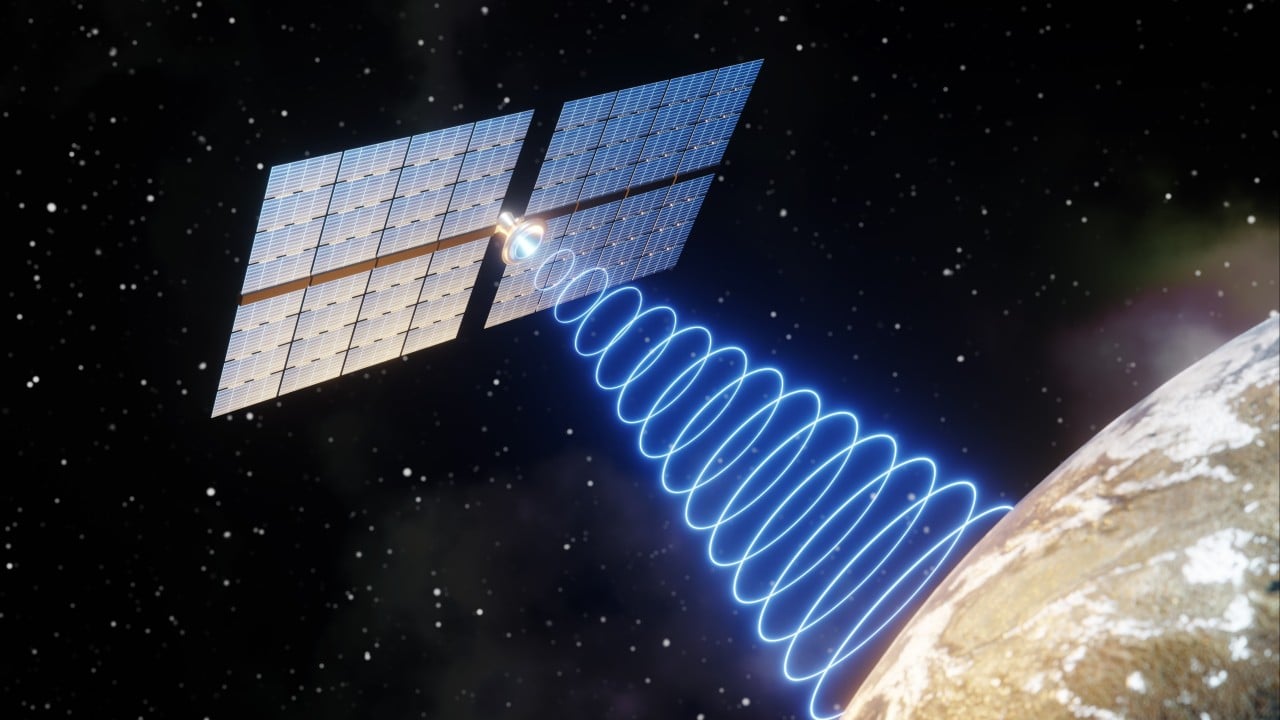
The headlines are breathless. China has supposedly cracked the code on Space-Based Solar Power (SBSP), revealing designs that double as a "military capability." Mainstream analysts are clutching their pearls over orbital death rays while techno-optimists claim we are moments away from infinite clean energy beamed from the heavens. Both groups are wrong. They are falling for a classic displacement of physics by PR.
If you think a space solar plant is an efficient way to power a city, you don't understand the Square-Inverse Law. If you think it’s an efficient weapon, you don’t understand atmospheric thermal blooming. What China—and every other nation chasing this ghost—has actually designed is a multi-billion dollar engineering vanity project that ignores the brutal reality of the launch-to-wattage ratio.
The Microwave Myth and the Thirst for Efficiency
The "lazy consensus" suggests that because the sun shines 24/7 in geostationary orbit (GEO), the energy yield is worth the trip. It isn't. Let’s look at the math that the hype-merchants ignore.
To get power from a satellite to a grid on Earth, you have to convert it three times. First, from photons to DC electricity via photovoltaic cells. Second, from DC to microwave or laser radiation for transmission. Third, back from radiation to DC at a rectifying antenna (rectenna) on the ground.
Even with the most optimistic projections, the "end-to-end" efficiency of this chain struggles to clear 15%. Meanwhile, a standard terrestrial solar farm paired with a lithium-iron-phosphate (LFP) battery bank operates with far fewer failure points and zero "launch vibration" risks. We are being told to build a Rube Goldberg machine in the harshest environment known to man because we’re afraid of the dark on Earth. It is a solution in search of a problem.
The Weaponization Fallacy
The military-industrial complex loves a good boogeyman. The "Orbital Microwave Weapon" is the current favorite. The logic goes: if you can beam 2 gigawatts of power to a rectenna, you can beam 2 gigawatts into a carrier deck or a command center.
It sounds terrifying. It’s also physically illiterate.
To beam power efficiently from GEO ($35,786$ kilometers away), you need a massive transmitter. We are talking about structures kilometers wide. The beam produced by such a system is intentionally diffuse. By the time those microwaves hit the upper atmosphere, they spread. To turn that "power beam" into a "death ray" capable of melting steel, you would need to focus it to a point of such high intensity that the air itself would ionize and become a plasma shield, absorbing the energy before it ever reached the target. This is the "thermal blooming" problem that has plagued high-energy laser research for decades.
China isn't building a weapon; they are building a target. A solar array the size of several football fields, made of thin, fragile mirrors and PV cells, is the most vulnerable asset in the history of warfare. A single bag of ball bearings launched in a retrograde orbit would turn a $50 billion "power station" into a cloud of useless glitter in minutes.
The Launch Cost Reality Check
SpaceX’s Starship promises to lower the cost of mass to orbit, but it doesn't change the laws of thermodynamics.
- Weight: A viable SBSP plant needs to be massive.
- Maintenance: Space is a vacuum filled with radiation that degrades semiconductors.
- Heat: In space, you can only shed heat through radiation. Generating gigawatts of power creates immense thermal loads. You need radiators almost as large as your solar panels just to keep the station from melting itself.
I’ve watched aerospace firms burn through venture capital trying to "disrupt" the energy sector with orbital dreams. They always hit the same wall: the cost of a kilowatt-hour from space is currently orders of magnitude higher than the most expensive offshore wind or nuclear options. Even if launch costs drop by $90%$, the insurance premiums alone on a multi-gigawatt orbital asset would bankrupt a mid-sized nation.
The Real Strategic Play
So why is China doing it? And why is the US military suddenly interested again?
It isn't about the power grid. It’s about Infrastructure Mastery.
If you can build a structure 2 kilometers wide in GEO, you have mastered robotic assembly, autonomous docking, and large-scale orbital logistics. SBSP is the "sprint" used to justify the development of the "marathon" tech: long-range power beaming for other satellites.
Imagine a "power tanker" in orbit that can recharge high-value spy satellites or maneuverable "inspector" drones without them needing heavy onboard fuel or massive solar wings of their own. That is the actual military utility. It isn't about frying a city; it's about keeping a drone fleet alive in the "dark" sectors of space.
By framing it as a "Green Energy" initiative, they secure civilian funding and international prestige for what is essentially a logistics backbone for the next Cold War.
The Ground-Based Counter-Punch
People ask: "How else will we get 24/7 solar?"
The answer is boring, and that’s why nobody likes it. We don't need to go to space. We need high-voltage direct current (HVDC) terrestrial cables. If you link the sunny side of the planet to the dark side with efficient cables, you solve the intermittency problem without needing to fight gravity.
We are obsessed with "vertical" solutions because they look like science fiction. But the real "space race" in energy is won on the ground. We have a giant fusion reactor in the sky already—the Sun. We don't need to bring it closer; we need to stop being so bad at moving the energy it already gives us for free.
Stop Chasing the Beam
The China "reveal" is a masterclass in psychological operations. They want the West to pivot resources into a prohibitively expensive, physically fragile, and thermally inefficient technology. They want us to chase the "death ray" ghost while they continue to corner the market on the actual hardware of the 21st century: terrestrial PV manufacturing, rare earth processing, and LFP battery dominance.
Space-based solar power is the ultimate shiny object. It glitters in the sun, it promises the world, and it distracts from the fact that we are losing the energy war right here on the dirt.
Stop looking up. The game is being played down here.