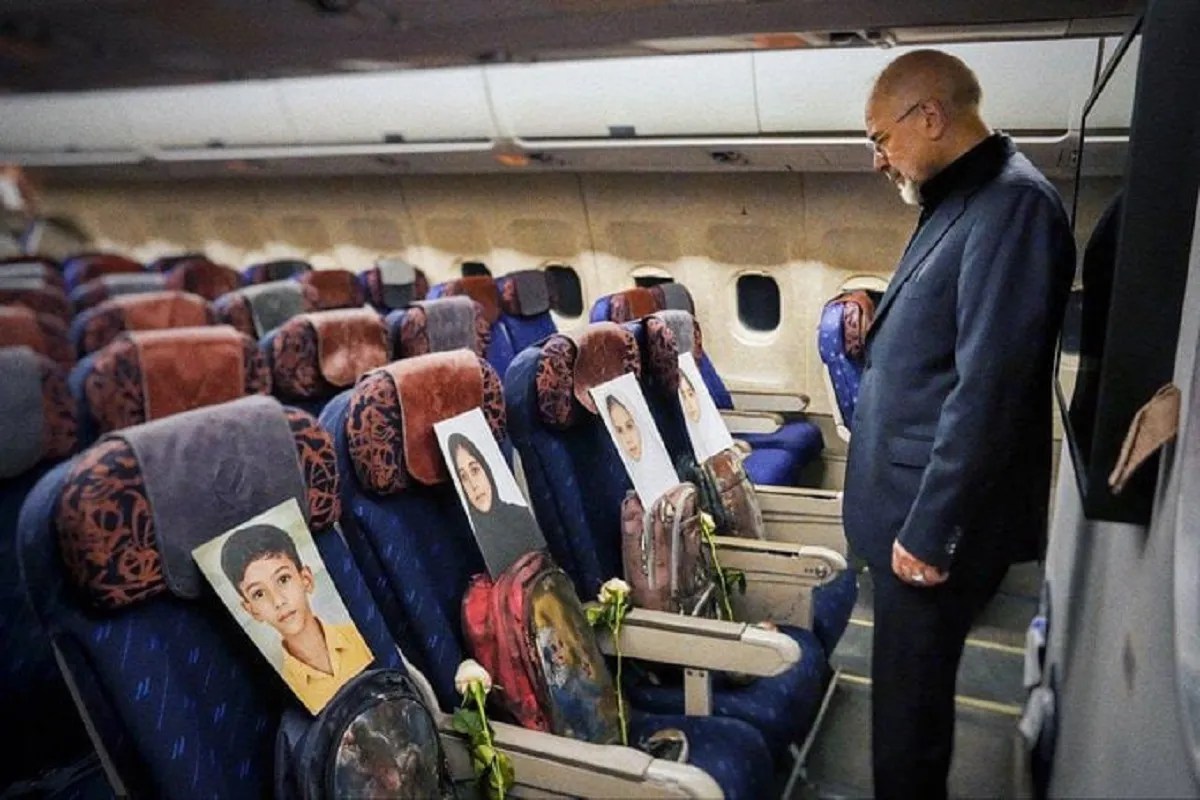
The Iranian Parliament Speaker, Mohammad Bagher Ghalibaf, recently decided to play the role of a wartime curator rather than a statesman. Carrying photos of injured children and blood-stained garments into international forums isn't a diplomatic strategy; it's a desperate admission that traditional statecraft has failed. The media eats it up, labeling it a "powerful message" to the West. They’re wrong. It’s a performative dead end that ignores the cold, hard mechanics of geopolitical leverage.
The Myth of the Moral High Ground
Most analysts look at these theatrical displays and talk about "shaming" the United States or the international community. This assumes that global politics operates on a playground level of morality. It doesn't. Washington, Brussels, and Beijing don't move their fleets because someone showed them a heartbreaking photograph. They move because of trade routes, energy security, and regional hegemony.
Using the physical remnants of tragedy as a negotiation tool is a tactic of the weak. When you bring bloodied clothes to a high-stakes meeting, you aren't signaling power. You are signaling that you have run out of economic and military chips to play. It is an appeal to an "international conscience" that has proven, time and again, to be non-existent when it conflicts with national interests.
Why Symbols Stifle Solutions
The fixation on symbolism creates a feedback loop of emotional escalation. By focusing on the "sacred" nature of the struggle through physical artifacts, the Iranian leadership traps itself. How do you negotiate a pragmatic deal on uranium enrichment or regional influence when you’ve just framed the entire conflict in the visceral, absolute terms of blood and innocence?
You can't.
Diplomacy requires the ability to compartmentalize. It requires the "grey room"—a space where emotions are checked at the door so that cold calculations can be made. By turning the negotiation table into a shrine for martyrs, the possibility of a functional compromise evaporates. You cannot trade a blood-stained shirt for a lift on banking sanctions. The currencies don’t match.
The "People Also Ask" Fallacy
People often ask: "Will these images change Western public opinion?"
The brutal honesty? No. We live in an era of digital saturation. The human brain has been rewired to swipe past tragedy in milliseconds. An image of a wounded child in a briefcase is competing with a billion other images on a smartphone screen. It doesn't spark a revolution; it sparks "compassion fatigue."
Another common question: "Is this a new era of Iranian diplomacy?"
Hardly. It's a regression. In the late 20th century, Iranian diplomacy was often defined by sophisticated, if hidden, pragmatism. This current shift toward the "politics of the artifact" suggests a leadership that is more concerned with performing for its domestic hardline base than actually moving the needle in Washington. It’s an internal PR campaign disguised as foreign policy.
The High Cost of Performance
I have watched regimes spend decades perfecting the art of the grievance. It is a seductive trap. When you define your entire identity through the lens of being a victim, you lose the agency required to be a victor.
Iran has genuine grievances regarding the JCPOA and the "maximum pressure" campaign. Those are legal and economic arguments that have weight in the halls of power. But when those arguments are replaced by props, the legalities are forgotten in favor of the spectacle.
The downside of my contrarian view? It's cynical. It demands a world where we ignore the human cost to focus on the structural mechanics of power. It’s an ugly way to look at the world. But it’s the only way that actually explains how the world works. If you want to stop the suffering that leads to those blood-stained clothes, you have to stop using the clothes as a prop and start fixing the broken machinery of the state.
Strategic Realism Over Sentimentalism
The United States isn't a monolith of emotion. It’s a bureaucracy driven by the Department of Defense and the Treasury. The Treasury doesn't care about your photo album. They care about your central bank’s transparency. The DoD doesn't care about your rhetoric. They care about your ballistic missile range.
If Tehran wants to move the needle with a future U.S. administration, they need to ditch the museum exhibits. True power in the 21st century isn't found in a suitcase of relics; it’s found in the ability to make yourself indispensable—or at least too expensive to ignore—within the global trade and security architecture.
The speaker’s display was a masterclass in 19th-century propaganda delivered to a 21st-century world that has already seen everything. It was loud, it was visceral, and it was utterly irrelevant to the actual outcome of US-Iran relations.
Stop looking at the photos. Look at the balance sheets. That’s where the real war is being fought.