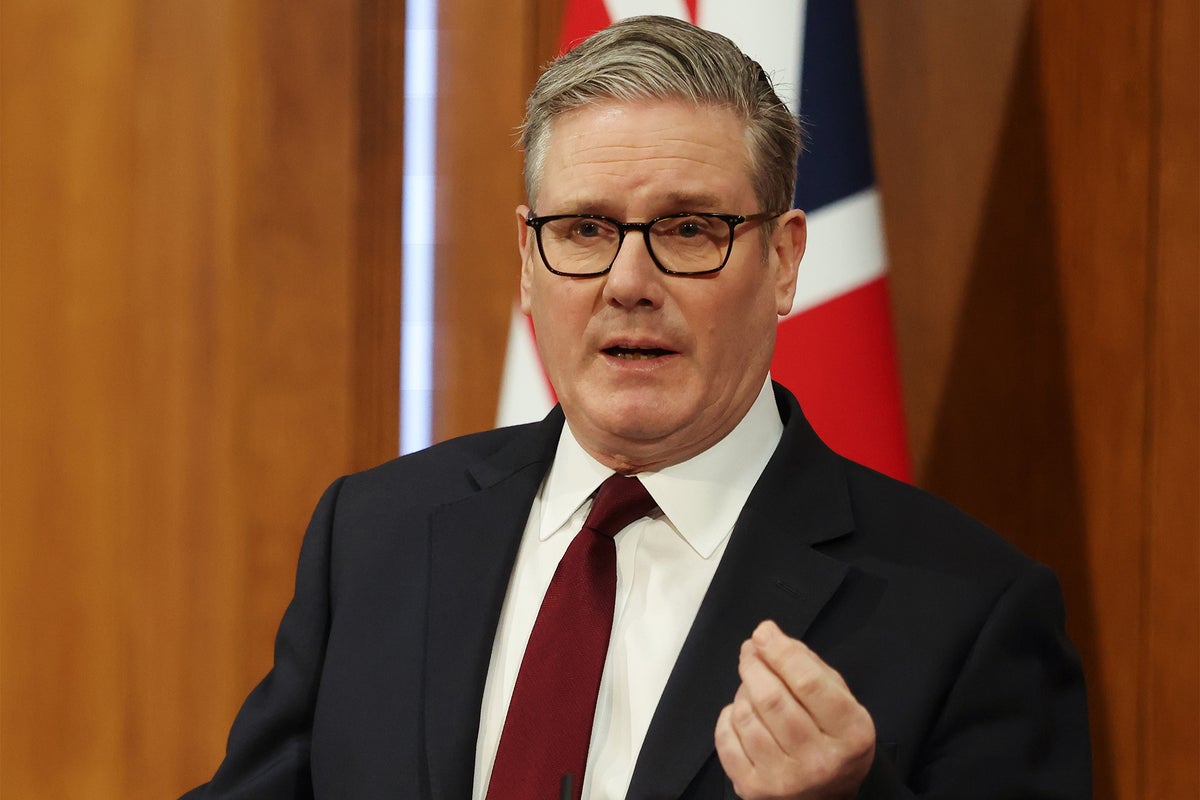
The diplomatic pleasantries between Number 10 and the White House have hit a jagged reality. Prime Minister Keir Starmer has signaled a definitive "no" to the prospect of British forces being pulled into a direct, kinetic conflict with Iran. This isn’t just about avoiding another Middle Eastern quagmire; it is a calculated attempt to preserve what remains of British strategic independence. Starmer is gambling that he can maintain the "Special Relationship" while flatly refusing to follow Washington into a regional firestorm.
The pressure from a Trump administration for a "maximum pressure" 2.0 campaign is already mounting. For the UK, the stakes involve more than just military logistics. It’s about energy prices, domestic security, and a fragile economy that cannot survive another global supply chain shock. By communicating these boundaries now, Starmer is trying to prevent the kind of mission creep that defined the early 2000s.
The Cost of Saying No
British foreign policy has long operated on the assumption that being the junior partner to the United States provides a seat at the table of global power. However, the seat is becoming increasingly expensive. The UK’s military is currently stretched to its thinnest point in decades. With significant commitments to NATO’s eastern flank and a persistent need to monitor Russian naval activity in the North Sea, the Royal Navy and the RAF simply do not have the surplus capacity to sustain a long-term campaign against a sophisticated adversary like Tehran.
Starmer’s refusal is a recognition of hardware reality. We are no longer in an era where the UK can deploy massive carrier strike groups without compromising its own territorial defense. The budget isn't there. The ships aren't there. Most importantly, the political appetite among the British public is non-existent. After years of austerity and domestic upheaval, the average voter in northern England has zero interest in seeing British taxpayers fund a missile exchange in the Persian Gulf.
Navigating the Trump Doctrine
Donald Trump’s approach to Iran has always been one of economic strangulation and targeted strikes. If he returns to the Oval Office with a mandate to "finish the job," he will expect his closest ally to provide at least a veneer of international legitimacy. Starmer’s preemptive strike against this expectation is risky. It risks alienating an administration that is already skeptical of "freeloading" allies.
Yet, there is a method to this defiance. By framing the refusal as a matter of British national interest rather than moral objection, Starmer is speaking a language that Trump understands. He isn't arguing that Iran is a "good actor"—no one in Whitehall believes that. He is arguing that a wider war is a bad investment. It’s a transactional stance for a transactional era.
The Intelligence Gap and the Red Sea Factor
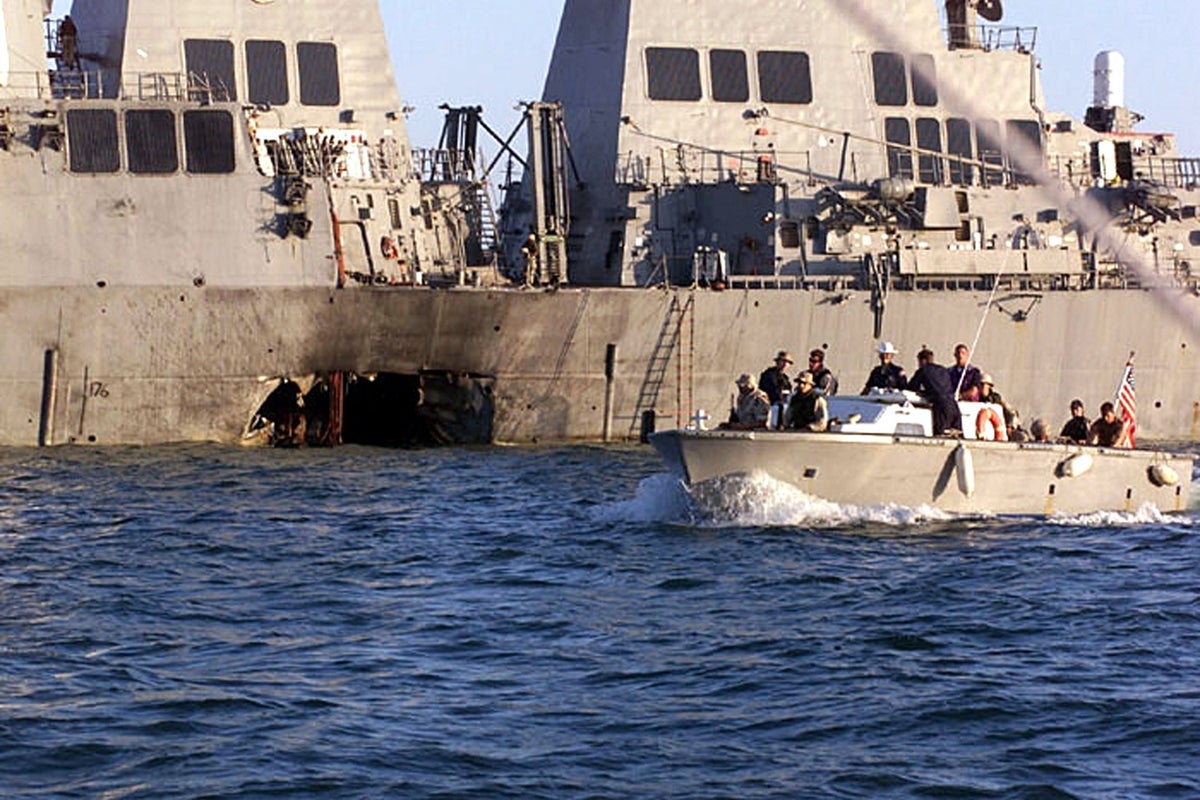
While the headlines focus on grand strategy, the real friction lies in the Red Sea. The UK is already involved in Operation Prosperity Guardian, attempting to keep shipping lanes open against Houthi interference. This is the "backdoor" to a war with Iran. The Houthis are, for all intents and purposes, the forward operating arm of Iranian foreign policy in the maritime domain.
Starmer's challenge is to continue these "defensive" operations without allowing them to escalate into "offensive" strikes against Iranian soil. It is a razor-thin distinction. If a British destroyer is targeted by an Iranian-made drone, the pressure to retaliate against the source—not just the proxy—will be immense.
The intelligence community in London is reportedly wary of "intelligence sharing" that feels like a nudge toward escalation. We saw this in the lead-up to 2003. Data is presented, threats are magnified, and suddenly, the "only option" is intervention. Starmer’s inner circle includes veterans of the Blair years who are hyper-sensitive to this pattern. They are scrutinizing every briefing note from Langley with a skeptical eye, looking for the "sexed-up" dossiers of the modern age.
Economic Suicide via the Strait of Hormuz
Let’s talk about the math of a conflict. Iran holds a metaphorical gun to the head of the global economy via the Strait of Hormuz. Roughly 20% of the world's total oil consumption passes through that narrow waterway. If Tehran feels cornered by a US-UK coalition, they will pull the trigger.
The UK is particularly vulnerable. Unlike the United States, which has achieved a high degree of energy independence through shale, Britain remains at the mercy of international markets. A spike in crude prices to $150 or $200 a barrel would wipe out any hope of the UK’s economic recovery. It would trigger an inflationary spiral that would make the recent cost-of-living crisis look like a minor inconvenience.
- Fuel prices: Immediate doubling of costs at the pump.
- Manufacturing: A collapse in industrial output due to energy overheads.
- Political Stability: Riots on the streets of London and Manchester.
Starmer knows this. He isn't being "soft" on Iran; he is being "hard" on protecting the British economy. He cannot fix the NHS or build 1.5 million houses if the country is bankrupt because of a war he didn't start and can't finish.
The European Divorce
Another factor often overlooked is the divergence between London and the rest of Europe on this issue. France and Germany have consistently favored diplomacy and the remains of the JCPOA (the Iran nuclear deal). If Starmer were to side with a hawkish US administration, he would burn his bridges with Brussels just as he is trying to "rebuild" the relationship post-Brexit.
Staying out of a war with Iran is a prerequisite for Starmer’s European "reset." You cannot ask for better trade terms with the EU while simultaneously setting the Middle East on fire against their explicit wishes. It is a balancing act that requires him to be a European leader in spirit while remaining an American ally in name.
The Proxy War Trap
Iran does not fight traditional wars. They fight through Hezbollah in Lebanon, Hamas in Gaza, and various militias in Iraq and Syria. For the UK, a "wider war" doesn't just mean ships in the Gulf; it means security threats on the streets of London.
The Home Office is acutely aware that Iranian intelligence services have become increasingly bold in targeting dissidents on British soil. A direct military conflict would likely see an escalation of "asymmetric" warfare—cyberattacks on the power grid, disinformation campaigns designed to stoke sectarian tensions, and potentially, direct kinetic attacks against infrastructure.
The military-industrial complex might want the contracts that come with a new war, but the intelligence services want the quiet. They know that the UK's domestic defenses are porous. We are a nation that relies on digital connectivity for everything from banking to healthcare. A sustained cyber offensive from Tehran could do more damage to the UK than a hundred missiles could do to a desert outpost.
The Strategy of Strategic Patience
Starmer is betting on "Strategic Patience." This involves:
- Containment: Keeping the Houthis at bay without invading Yemen.
- Sanctions: Using the financial system to squeeze IRGC funds without a total blockade.
- Diplomatic Isolation: Working with regional partners like Saudi Arabia and the UAE to balance Iranian influence.
This isn't a glamorous strategy. It doesn't provide the "mission accomplished" photo ops that politicians crave. It is a slow, grinding process of managing a threat rather than trying to eliminate it. But for a country in the UK's current position, it is the only viable path.
The message to Washington is clear: We will help you with intelligence. We will help you with maritime security. We will even help you with targeted, proportional strikes against proxy groups. But we will not sign a blank check for a regime-change war.
The Shadow of 2003
Every decision Starmer makes is haunted by the ghost of Tony Blair. The Labour Party was nearly destroyed by the Iraq War. It lost a generation of voters and created a rift in the party's soul that has only recently begun to heal. Starmer, a lawyer by trade, is obsessed with the "legality" of military action. He knows that without a clear UN mandate—which China and Russia will never provide—any strike on Iran would be legally dubious and politically fatal.
He is also watching the US domestic situation closely. If Trump wins and pursues a "MAGA" foreign policy, the UK runs the risk of being the only country left holding the bag if the US decides to abruptly "bring the troops home" mid-conflict. We saw this in Afghanistan. The UK stayed until the bitter end, only to be blindsided by a unilateral American withdrawal that left our interests and allies exposed.
The Invisible Red Lines
There are, of course, scenarios where the UK would be forced to act. If Iran were to achieve a verified nuclear "breakout," the calculus changes. At that point, the threat to global stability outweighs the economic risks of war. But until that red line is crossed, London is choosing to stay in the waiting room.
The Prime Minister’s "no" to Trump is a declaration of British realism. It is an admission that the UK can no longer afford to be the world's policeman, especially when the police chief is increasingly unpredictable. The era of the UK acting as the bridge between Europe and America is over; Starmer is now building a fortress around British interests instead.
The coming months will test this resolve. As the rhetoric in Washington heats up, the invitations to join "coalitions of the willing" will arrive with increasing frequency. Starmer must ensure that the UK's "Special Relationship" does not become a suicide pact.
Ask the Ministry of Defence for a detailed audit of the current naval readiness in the Eastern Mediterranean.