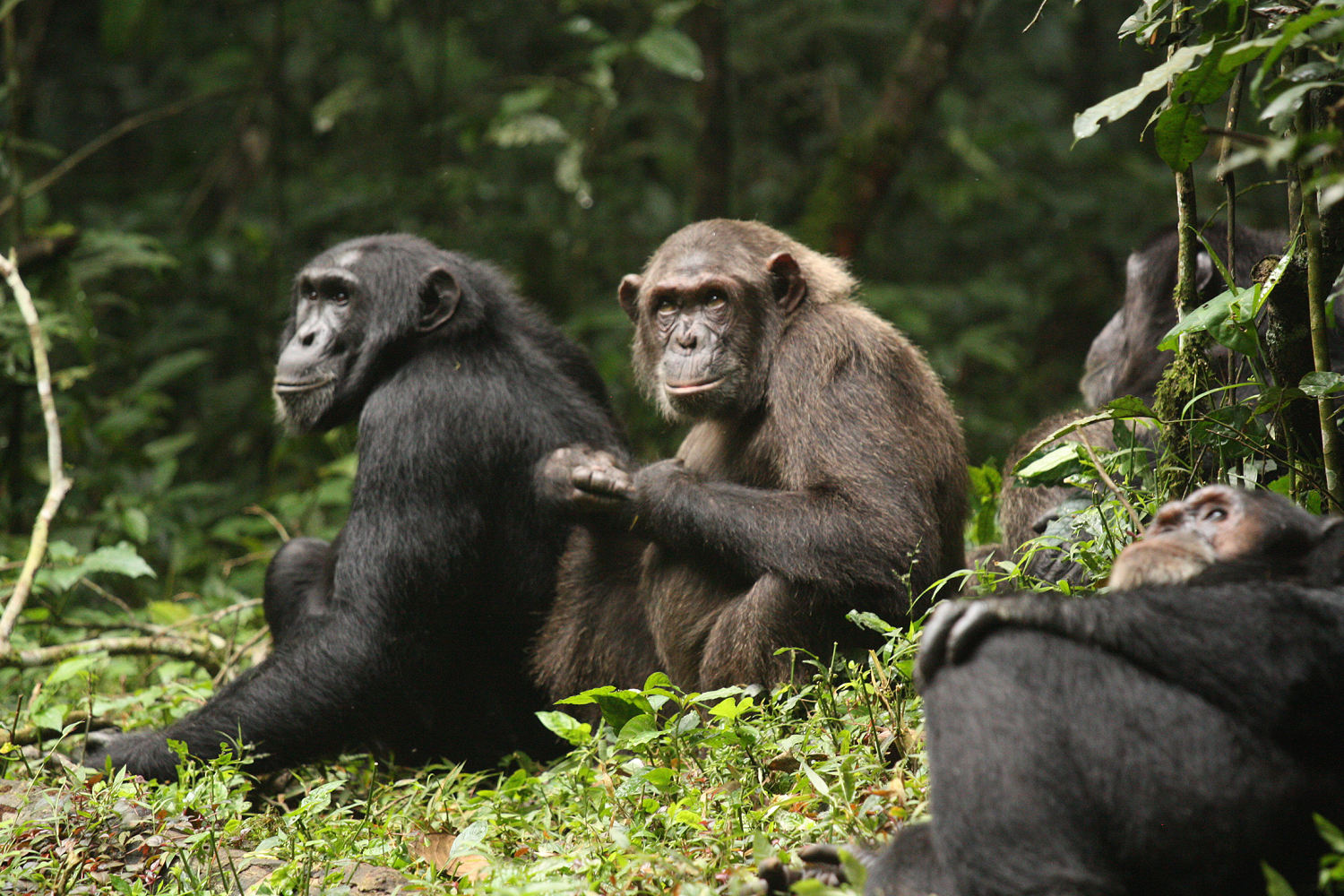
Stop looking at the Ngogo chimpanzees and seeing a mirror of human depravity. The viral headlines describing "vicious infighting" and "torn infants" are not science. They are anthropomorphic clickbait. When you read that a chimpanzee community has split into warring factions, your brain immediately reaches for words like "betrayal," "cruelty," or "senseless violence." You are falling for the oldest trap in evolutionary biology: the belief that nature cares about your ethics.
The reality is far more cold-blooded and, frankly, far more efficient than the sensationalist rags suggest. What researchers at the Ngogo Chimpanzee Project actually observed wasn’t a breakdown of social order. It was a masterclass in resource acquisition and genetic survival. If you want to understand why chimpanzees kill their own, you have to stop crying about the "horror" and start looking at the math.
The Myth of the Peaceful Primate
For decades, the public was fed a sanitized version of our closest relatives. We wanted them to be the "noble savages" of the forest—peaceful, fruit-eating hippies who only fought when humans messed with their habitat. Jane Goodall shattered that illusion in the 1970s at Gombe, but the general public still treats primate lethal aggression as an aberration.
It isn't an aberration. It is a feature.
In the case of the Ngogo chimps in Uganda—the largest known wild community—the split of the group into the "Western" and "Central" factions wasn't a tragedy. It was a strategic necessity. When a group becomes too large, the costs of maintaining social bonds outweigh the benefits of collective defense. The "infighting" being lamented by journalists is actually the process of territorial recalibration.
Infanticide Is Not Malice; It Is a Strategy
The reports focus heavily on the gore: infants being pulled from mothers. It’s designed to trigger an emotional response. But in the wild, an infant is not just a baby; it is a massive investment of time and calories for a female. For a competing male from a rival faction, that infant represents two things: a future competitor and a biological roadblock.
By killing an infant, a male forces the mother back into estrus. He effectively resets her reproductive clock, making her available to carry his genes instead of his rival's. This isn't "viciousness." It’s an evolutionary calculation. We see this across the animal kingdom, from lions to langurs. To frame it as a moral failing of the species is to fundamentally misunderstand how natural selection operates.
If you think this is "cruel," you are prioritizing the individual over the lineage. Nature does not have that luxury.
Why the "War" Narrative is Lazy
The media loves to call these conflicts "wars." It makes the chimpanzees seem more human, which sells more ads. But calling it war implies a level of political ideology that simply doesn't exist in the Kibale National Park.
Chimpanzee violence is almost always about the boundary.
- Resource Density: They aren't fighting over hurt feelings. They are fighting over the density of Pterygota mildbraedii trees.
- The Patrol: Males form cohesive units to patrol the edges of their territory. If they find a single individual from the rival group, they don't "fight." They execute.
- Numerical Advantage: Chimpanzees are surprisingly risk-averse. They rarely engage in a fair fight. They wait for a 3-to-1 or 4-to-1 advantage. This isn't "bravery" or "heroism." It’s a low-risk, high-reward assassination strategy.
The "senselessness" people see is actually a highly calculated risk-management system. If a male can expand his territory by 10% through a series of brutal skirmishes, his offspring have a significantly higher chance of reaching adulthood due to better nutrition. The violence pays for itself in survival rates.
The Flawed Premise of "Infighting"
The word "infighting" suggests a group destroying itself from within. This is factually incorrect. The Ngogo community didn't collapse; it underwent fission. Fission-fusion society is the bedrock of chimpanzee social structure. When the Central and Western groups began killing each other, they were no longer "one group." They were two distinct political entities competing for the same finite space.
The "study" everyone is citing isn't a warning about the darkness of the primate soul. It’s a data set on how social organisms manage overpopulation. When the group hit over 200 individuals, the social friction became untenable. You cannot maintain "friendships" or grooming partnerships with 200 people. You hit a biological limit—often cited in humans as Dunbar’s Number—and the system breaks.
The "violence" is simply the mechanism that enforces the new borders.
Stop Searching for "Why" and Look at "How"
People always ask: "How can they be so similar to us and yet so brutal?"
That is the wrong question. The right question is: "How has this brutality allowed them to survive for millions of years?"
We are obsessed with the idea that violence is a bug in the system. In the wild, violence is the operating system. When a male chimpanzee targets the genitals of a rival—a common tactic mentioned with horror in the articles—he isn't being a "sadist." He is removing the rival’s ability to reproduce. It is the most direct way to win the evolutionary race.
The Battle Scars of Observation
I have spent enough time looking at how industrial and biological systems fail to know that "peace" is often just a period of resource abundance. When the fruit is plentiful, everyone is a pacifist. When the fruit disappears, the teeth come out.
The researchers at Ngogo, like Dr. David Watts and Dr. John Mitani, have documented these behaviors for decades. They aren't shocked. They aren't "mourning" the loss of peace. They are recording the mechanics of a species that doesn't have the luxury of grocery stores or police forces.
The downside of this hard-nosed perspective? It’s lonely. It’s much easier to join the chorus of people saying "Oh, how tragic" than it is to admit that these behaviors are successful survival traits. But if you want the truth, you have to accept the discomfort.
The Actionable Truth
If you are looking to these studies to learn about "human nature," stop looking at the gore and start looking at the logistics.
- Watch the Borders: Conflict happens at the edges. Whether in a forest or a boardroom, tension arises where territories overlap.
- Ignore the Emotion: The "viciousness" is a human projection. Focus on the outcome: Who gets the food? Who gets the mates?
- Understand Scale: When any group gets too large, it will split. If it doesn't split through negotiation, it will split through force.
We aren't watching "infighting." We are watching the iron laws of biology dictate the map of the Ugandan forest. The chimpanzees don't need your sympathy, and they certainly don't need your moralizing. They are busy surviving.
The next time you see a headline about "brutal animal violence," remember: the only thing "brutal" about it is your refusal to see nature for what it actually is—a high-stakes game of calories and chromosomes where being "nice" is the fastest way to go extinct.
Stop weeping for the monkeys and start respecting the efficiency of the kill.