In a quiet courtroom in Prague this May, a decade-long saga of corporate sleight of hand and political survival reached a fractured conclusion. Jana Nagyová, a current member of the European Parliament and longtime lieutenant to billionaire politician Andrej Babiš, stood to hear her fate. The judge handed down a three-year suspended sentence and a fine of 500,000 Czech koruna for her role in the "Stork’s Nest" subsidy fraud. It was a victory for prosecutors who have seen this case collapse twice before, yet it remains a hollow triumph for the rule of law.
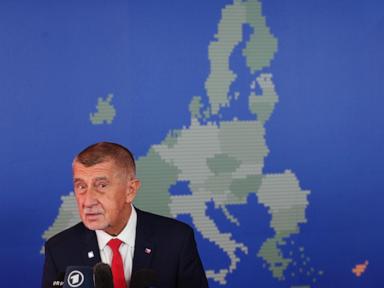
The man at the center of the storm, Prime Minister Andrej Babiš, was nowhere near the sentencing bench. Despite being the alleged architect of the scheme, Babiš remains untouchable, shielded by a parliamentary immunity that his coalition partners recently voted to uphold until at least 2029.
The Shell Game in the Bohemian Countryside
To understand why this verdict matters, one must look past the dry legal jargon of "subsidy eligibility" and see the mechanics of the maneuver. In 2008, a sprawling farm and conference center known as Čapí hnízdo (Stork’s Nest) was separated from Babiš’s massive Agrofert conglomerate.
The ownership was transferred to Babiš’s family members, creating the legal fiction of a "small-to-medium enterprise." This designation allowed the project to secure 50 million Czech koruna (roughly $2 million) in EU development funds—money strictly reserved for businesses that lack the backing of multi-billion dollar empires. Once the five-year oversight period expired, the farm was absorbed back into the Agrofert fold as if it had never left.
The Architect and the Proxy
The conviction of Jana Nagyová establishes a critical legal precedent: the court has finally acknowledged that the paperwork used to secure those funds was fraudulent. Nagyová signed the documents. She managed the application. In the eyes of the Prague Municipal Court, she was the hand that committed the act.
However, the logic of the prosecution has always been that a mid-level executive does not orchestrate a multi-million dollar fraud for a project owned by her boss's family without direction. By convicting the subordinate while the principal officer leads the country, the Czech judicial system has entered a state of legal suspended animation.
A Coalition of Non-Extradition
The timing of this verdict is a direct challenge to the political reality in Prague. After returning to power following the October 2025 elections, Babiš cemented a governing alliance with the far-right Freedom and Direct Democracy (SPD) and the "Motorists for Themselves" party. This bloc, which critics have dubbed the "Non-Extradition Coalition," moved swiftly in March 2026 to block a court request to lift Babiš’s immunity.
By a vote of 104 to 81, the lower house ensured that the Municipal Court cannot proceed with a retrial against the Prime Minister. While Nagyová faces the stigma of a criminal conviction, Babiš uses the podium of the Prime Minister’s office to dismiss the entire proceeding as a "political hit job" orchestrated by a "system" that fears his populist momentum.
The Limits of European Oversight
The Stork’s Nest case is more than a local scandal; it is a stress test for European Union financial oversight. The funds in question were European taxpayer euros. While Agrofert eventually returned the 50 million koruna under intense pressure, the European Public Prosecutor’s Office (EPPO) and OLAF (the European Anti-Fraud Office) have long pointed to this case as a prime example of "conflict of interest" at the highest levels of government.
The fact that an MEP can be sentenced for a crime tied to a Prime Minister who cannot be tried reveals a staggering loophole in how the EU protects its budget. If immunity can be used as a permanent shield against fraud charges involving international funds, the "S" in SME (Small and Medium Enterprises) becomes a gateway for the ultra-wealthy rather than a lifeline for the local entrepreneur.
Justice Deferred
For Nagyová, the legal battle is likely to continue in the appellate courts. For Babiš, the strategy is simple: wait. Under Czech law, the statute of limitations is paused while a lawmaker enjoys immunity. But in the world of high-stakes politics, a three-year delay is an eternity. By the time Babiš’s term ends in 2029, the evidence will be two decades old, witnesses' memories will have faded, and the political landscape will have shifted entirely.
This verdict confirms the crime but leaves the culprit in the highest office of the land, proving that in the intersection of big business and populist politics, the law often stops at the door of the Chancellery.


