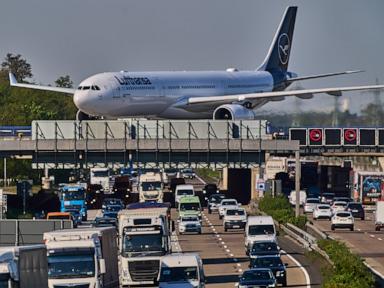
Lufthansa’s decision to excise 20,000 flights from its summer schedule represents more than a logistical retreat; it is a calculated structural response to a fractured global energy supply chain and an inflationary cost spiral. While surface-level reporting attributes these cuts to "war-driven fuel prices," a rigorous analysis reveals a deeper interplay between geopolitical volatility, labor market elasticity, and the rigidities of airline cost structures. The aviation sector is currently caught in a vice between inelastic operational overhead and hyper-elastic fuel inputs, forcing a pivot from volume-based growth to margin-focused preservation.
The Triple Constraint Fuel Labor and Infrastructure
The decision to contract capacity by 20,000 units is driven by three primary bottlenecks that render the previous flight schedule mathematically untenable.
1. The Fuel-Price Volatility Coefficient
Aviation turbine fuel (ATF) typically accounts for 20% to 30% of an airline's operating expenses. When geopolitical conflict—specifically the war in Ukraine—disrupts crude oil flows and refinery outputs, the "crack spread" (the difference between the price of crude and the refined product) widens. Lufthansa’s exposure is exacerbated by the loss of Russian airspace, which forces longer flight paths on Asian routes. This creates a geometric increase in fuel burn: a flight that is 10% longer does not just cost 10% more; it carries a higher fuel load, increasing the aircraft’s takeoff weight and further degrading fuel efficiency.
2. Labor Market Rigidity and the Re-entry Barrier
The pandemic-era downsizing resulted in a permanent loss of institutional knowledge and licensed personnel. Re-acquiring this labor is not a linear process. Security clearance backlogs at German hubs like Frankfurt (FRA) and Munich (MUC) act as a hard ceiling on operational capacity. Even if the aircraft are available, the ground handling and security infrastructure cannot process the throughput. Cutting flights proactively is a defensive maneuver to prevent a total "systemic collapse" where a single delay cascades into a week-long scheduling failure.
3. The Slot-Use Paradox
Under European Union regulations, airlines must normally use 80% of their allocated slots or risk losing them to competitors (the "use it or lose it" rule). However, the current environment has forced a re-evaluation of these thresholds. By cutting 20,000 flights, Lufthansa is betting that the regulatory environment will remain lenient or that the financial loss of flying near-empty, high-cost "ghost flights" outweighs the long-term value of the slots themselves.
The Cost Function of Operational Resilience
To understand why a 20,000-flight reduction is the optimal strategy, one must examine the Airlines Marginal Cost Formula. In a stable market, the marginal cost of adding one more flight is relatively low because fixed costs (aircraft leases, corporate overhead) are already sunk. However, in a wartime economy, the marginal cost curve shifts upward and becomes steeper.
The primary variables include:
- Variable Fuel Input ($V_f$): Subject to daily fluctuations and geopolitical risk premiums.
- Operational Friction ($O_p$): Costs associated with passenger rebooking, hotel vouchers for cancellations, and lost brand equity during service failures.
- Unit Revenue ($R_u$): The ability to pass costs to the consumer via fuel surcharges.
When $V_f + O_p > R_u$, every additional flight flown actively destroys shareholder value. Lufthansa’s strategy is to trim the "long tail" of marginal flights—those with the lowest load factors or the highest sensitivity to fuel price spikes—to protect the profitability of its core trunk routes.
Geopolitical Re-routing and the Asian Corridor Bottleneck
The closure of Russian airspace has fundamentally altered the physics of European-Asian aviation. For a carrier like Lufthansa, which relies on its Frankfurt hub as a gateway to the East, the detour south of the Himalayas adds between 1.5 and 3 hours of flight time per leg.
This creates a Resource Utilization Deficit. If an aircraft that previously performed a round trip in 24 hours now requires 27 hours, the airline effectively loses 12.5% of its fleet productivity. Over a month, this cumulative loss of time means that the same number of aircraft can physically perform fewer rotations. The 20,000-flight cut is a recognition that the "Time-Distance" map of the world has expanded, while the number of available airframes has remained static.
The Downstream Impact on Yield Management
Lufthansa is utilizing this capacity crunch to execute a "Yield Over Volume" strategy. By reducing the supply of seats while demand remains high (due to post-pandemic "revenge travel" sentiment), the airline gains significant pricing power.
We are seeing a transition from:
- Phase A (Pre-War): High frequency, lower fares, reliance on high volume to cover thin margins.
- Phase B (Current): Scarce capacity, premium pricing, and the prioritization of high-yield corporate and premium-leisure segments.
This shift moves the "Break-Even Load Factor"—the percentage of seats an airline must sell to cover its costs—higher. If fuel prices remain at historic highs, the industry may see a permanent departure from the era of hyper-accessible, low-cost long-haul travel.
Infrastructure Fragility as a Strategic Constraint
A secondary but critical driver is the degradation of the "hub-and-spoke" efficiency. Hubs like Frankfurt depend on synchronized "waves" of arrivals and departures. If ground crews are understaffed, these waves collide. A delay in the morning "feeder" flight from Berlin results in a missed connection for 50 passengers heading to New York. The cost of rebooking those 50 passengers—potentially on competitor metal—plus the logistical burden of baggage handling, makes the "feeder" flight a liability.
By preemptively removing 20,000 flights, Lufthansa is increasing the "buffer time" between rotations. This is an admission that the system can no longer operate at the 95% efficiency levels seen in 2019. It is better to operate 80% of a schedule with 99% reliability than to attempt 100% of a schedule with 70% reliability.
The Financial Hypothesis of Hedging Limits
There is a common misconception that airlines are shielded from price spikes by fuel hedging. While Lufthansa employs a sophisticated hedging program, these financial instruments have limits. Hedges are typically "rolling," meaning they only cover a percentage of fuel needs at a fixed price for a specific duration.
As old, cheaper hedges expire, they are replaced by new hedges at current, elevated market rates. Furthermore, the cost of entering into a hedge (the "option premium") skyrockets during periods of high volatility. Lufthansa’s capacity cut suggests that their internal modeling shows that even with hedging, the weighted average cost of fuel is exceeding the threshold where secondary routes remain viable.
Long-term Strategic Re-alignment
The contraction serves as a catalyst for a broader fleet renewal strategy. Older, four-engine aircraft like the Boeing 747-400 and the Airbus A340, which are fuel-inefficient, are the first to be grounded in this 20,000-flight culling. The airline is effectively accelerating its transition to twin-engine, high-efficiency models like the Airbus A350 and Boeing 787.
The immediate tactical move for the enterprise is to consolidate demand onto these more efficient airframes. This creates a more resilient, albeit smaller, core. The risk lies in the "Service Vacuum": as Lufthansa retreats, Gulf carriers (Emirates, Qatar Airways) or low-cost long-haul disruptors may attempt to capture the abandoned market share, though they face the same fuel and airspace constraints.
The path forward requires a brutal prioritization of "Net Result per Seat-Kilometer" over "Market Share Percentage." Any route that cannot sustain a 15% to 20% fuel price premium through direct fare increases must be eliminated. Operations must shift from a "growth-at-all-costs" mindset to a "capital-preservation-and-yield-maximization" framework until the energy supply chain stabilizes or a new equilibrium in global airspace is established.