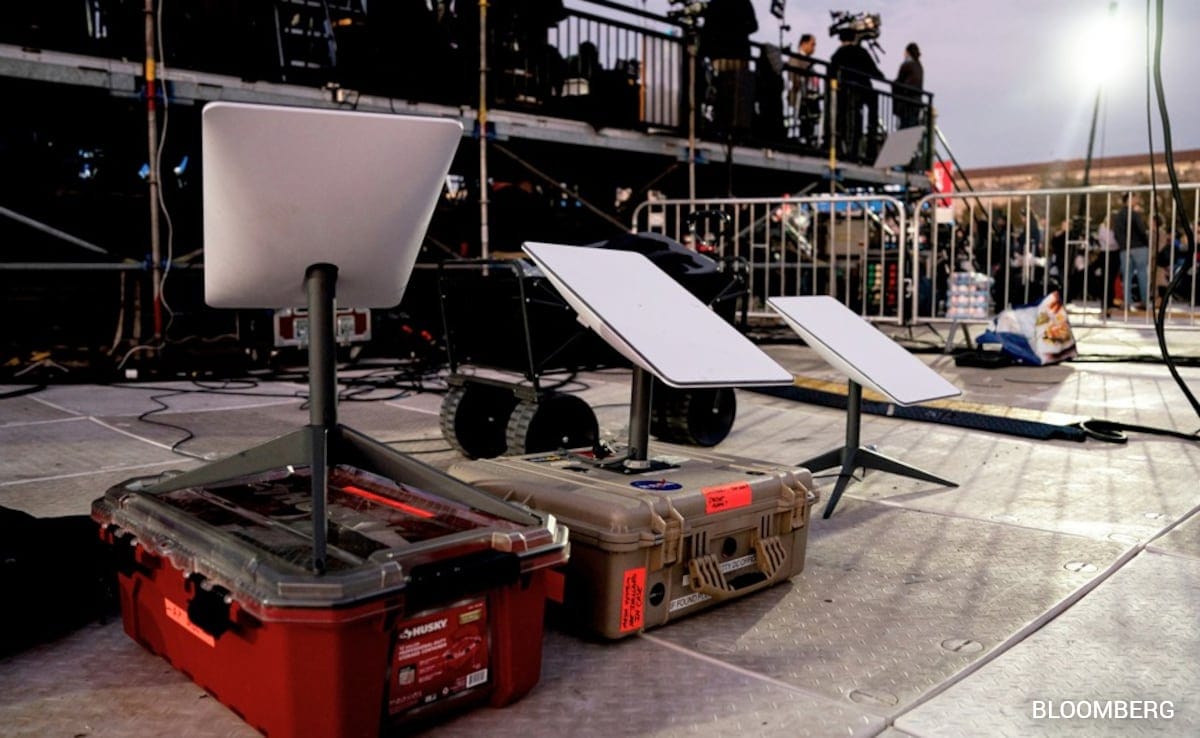
The recent interruption of Starlink services during United States military drone testing reveals a critical failure in the Pentagon’s current procurement logic: the conflation of commercial scale with mission-critical reliability. This outage does not merely represent a technical glitch; it exposes the structural fragility of the Department of Defense (DoD) "vendor-lock" on low-earth orbit (LEO) constellations. The current reliance on SpaceX creates a single point of failure within the national security infrastructure, where a commercial firm’s firmware updates or orbital adjustments can grounded billion-dollar defense assets without prior coordination.
The Triad of SATCOM Vulnerability
Military dependence on commercial SATCOM (COMSATCOM) involves three distinct risk vectors that were triggered during the Starlink outage. Understanding these vectors is essential for evaluating why the U.S. drone program remains at the mercy of a private enterprise.
- Asymmetric Control of the Ground Segment: Unlike Purpose-Built Military SATCOM (MILSATCOM), where the DoD owns the gateways and terminal encryption keys, Starlink operates a proprietary, closed-loop system. When a network-wide outage occurs, the military lacks the administrative transparency to diagnose whether the cause is a cyberattack, solar activity, or a routine software patch.
- The Latency-Reliability Trade-off: The advantage of LEO constellations lies in low-latency communication, which is vital for the real-time piloting of Unmanned Aerial Systems (UAS). However, LEO satellites travel at high velocities relative to the ground, requiring constant handoffs between satellites. Any degradation in the constellation's synchronization logic—the "brain" of the network—immediately severs the command-and-control (C2) link.
- Priority Preemption Deficit: Commercial Service Level Agreements (SLAs) often lack the "Preemption and Proportionality" clauses found in military contracts. In a crisis, a commercial provider may prioritize the stability of their global consumer base over a specific military test range, especially if the fix for the military’s problem risks de-stabilizing the broader network.
The Mechanics of the C2 Link Failure
To understand why a Starlink outage is particularly devastating for drone operations, one must analyze the Signal-to-Noise Ratio (SNR) and the handoff protocol within the Ku and Ka bands used by SpaceX. Military drones, specifically Group 4 and 5 UAS like the MQ-9 Reaper or experimental stealth platforms, require a high-bandwidth pipe to transmit high-definition sensor data while simultaneously receiving flight commands.
When the Starlink constellation undergoes an outage, the drone’s onboard SATCOM terminal enters a "search-and-acquisition" loop. Because Starlink uses phased-array antennas to track satellites moving at approximately 17,500 miles per hour, the loss of a heartbeat signal from the network causes the antenna to lose its steering vector. The time required to re-acquire a signal once the network returns is often longer than the drone’s autonomous "lost link" emergency orbits allow, potentially forcing an automated landing or a crash in unmonitored territory.
The specific failure during recent tests suggests a breakdown in the Ephemeris Data Distribution. Satellites need precise location data to know where their neighbors are. If the update containing this data is corrupted or delayed, the entire mesh network fails. For the Pentagon, this means that a clerical error in a Hawthorne, California office can effectively "jam" U.S. airpower more effectively than an adversary’s electronic warfare unit.
Economic and Strategic Monopsony
SpaceX has achieved a "first-mover monopsony" where it is the only buyer of launch services (itself) and the dominant provider of high-speed LEO bandwidth. This creates a distorted market where the DoD cannot easily pivot to a competitor because no other constellation currently offers the same density of orbital nodes.
- Barrier to Entry: The capital expenditure required to build a competing LEO constellation (like Amazon’s Project Kuiper or OneWeb) is measured in the tens of billions. This ensures that for the short-to-medium term, the DoD is stuck in a "captured" relationship with Starlink.
- Infrastructure Path Dependency: The military has already invested heavily in Starshield—the military-specific variant of Starlink—and integrated SpaceX-compatible terminals into various vehicle and drone platforms. Switching to a different provider would require a complete overhaul of the physical hardware layer across the fleet.
This path dependency creates a "Security of Supply" risk. If the provider decides to change its terms of service, or if its CEO makes a unilateral decision regarding the geographic boundaries of service (as has been reported in international conflict zones), the U.S. military loses its primary communication vector.
The Myth of Redundancy in LEO
The Pentagon often cites "proliferated LEO" (pLEO) as a solution to resilience, arguing that thousands of small satellites are harder to kill than five large ones in Geostationary Orbit (GEO). While this is true for kinetic warfare (missiles), it is false for systemic software failures.
[Image comparing Geostationary (GEO) and Low Earth Orbit (LEO) satellite architectures]
The outage highlights that pLEO constellations are more akin to a single distributed computer than a collection of independent satellites. If the operating system of that distributed computer has a bug, the "proliferation" actually works against the user, spreading the failure at the speed of light across the entire globe. True redundancy requires Heterogeneous Constellation Integration—the ability for a drone to switch from Starlink to a completely different architecture, such as a medium-earth orbit (MEO) satellite or a different LEO provider, in milliseconds. Currently, the hardware and software protocols to allow this "roaming" between different satellite brands do not exist in a deployable format.
Quantifying the Cost of Downtime
The financial impact of a SATCOM outage during drone testing is not limited to the hourly operating cost of the aircraft. It includes:
- Data Atrophy: High-fidelity sensor data that is not captured during a specific test window can delay a program’s Milestone C approval by months.
- Operational Security (OPSEC) Risk: A drone that loses its link may be forced to orbit in a predictable pattern, making it an easy target for terrestrial observation or electronic sniffing by adversaries.
- Recovery Logistics: If a drone performs an emergency landing at a non-primary site due to link loss, the cost of the recovery team, secure transport, and site sanitization can exceed seven figures per incident.
Tactical Realignment of Defense SATCOM
To mitigate the risks exposed by the Starlink outage, the Pentagon must shift from being a "subscriber" to an "architect." This requires a fundamental change in how space-based internet is integrated into the kill chain.
The Multi-Transport Terminal Mandate
The DoD must stop purchasing terminals that are locked to a single provider. Future drone platforms must be equipped with Software Defined Radios (SDRs) and electronically steered antennas (ESAs) capable of switching frequencies and protocols across Starlink, Kuiper, and future military-owned LEO constellations. This creates a "Competitive Resilience" model where the failure of one provider triggers an automatic failover to another.
Sovereign Gateway Control
The Air Force and Space Force must negotiate the right to host "Sovereign Gateways." These are ground stations owned and operated by the military that tap directly into the commercial satellite mesh. By controlling the gateway, the military can bypass the commercial provider's standard internet exchange points, reducing the risk that a civilian network outage takes down military traffic.
Orchestrated Autonomy
The reliance on a constant high-bandwidth link is a design flaw in an era of contested space. Drone manufacturers must increase the onboard processing power (Edge AI) of the aircraft. If the SATCOM link is severed, the drone should be capable of completing its immediate mission objective or identifying a threat autonomously, rather than defaulting to a "return to home" or "loiter" mode that assumes the sky is a safe place to wait for a signal.
The Zero-Trust Space Architecture
The military must treat commercial SATCOM as an "untrusted" transport layer. This involves end-to-end encryption that is independent of the provider’s encryption and a network logic that assumes the link will fail at the most critical moment. By designing for "Expected Disconnection," the impact of a Starlink outage moves from a mission-ending event to a manageable technical friction.
The strategy forward necessitates an aggressive move toward the Hybrid Space Architecture (HSA). This model integrates commercial, civil, and military satellites into a single seamless network. The goal is to ensure that no single company’s software update can ground the United States' primary method of power projection. The Starlink outage was a free lesson in the dangers of the "convenience trap"; ignoring it will result in a much higher price in a kinetic environment.