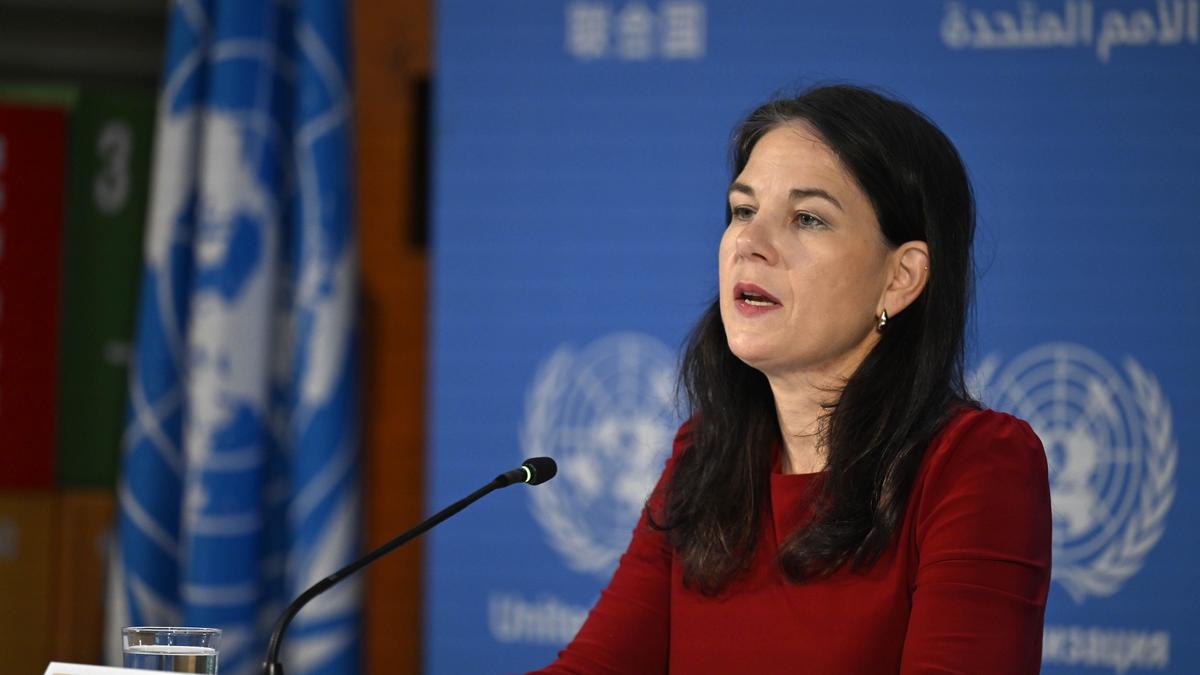
The pursuit of global stability operates within a fundamental economic paradox: the collective goods required for "just peace" cannot be purchased through transactional membership fees, yet the infrastructure of diplomacy requires a liquid, solvent bureaucracy to function. When the President of the UN General Assembly defends the United Nations system against claims that it is an expensive, inefficient relic, the debate often collapses into ideological rhetoric. A rigorous analysis reveals that the utility of the UN is not found in its budgetary efficiency, but in its role as a low-friction clearinghouse for geopolitical risk.
The Operational Architecture of Global Neutrality
The United Nations functions as a centralized node in a decentralized network of sovereign states. To evaluate its efficacy, one must categorize its functions into three distinct mechanical pillars: Building on this idea, you can also read: Diplomatic Friction and Tactical Stasis The Structural Impact of US Leadership Turnover in Kyiv.
- The Normative Framework: The establishment of international law and standards that reduce the "transaction costs" of interstate interactions.
- The Humanitarian Logistics Engine: The physical delivery of food, medicine, and shelter in regions where market mechanisms and state capacities have failed.
- The De-escalation Buffer: A permanent physical and legal space where adversaries maintain communication channels to prevent accidental kinetic escalation.
Critics often point to the membership dues—assessed based on a country's Gross National Income (GNI), debt burden, and per capita income—as a "fee" for service. This is a category error. These payments represent an investment in a global insurance policy against systemic collapse. The cost of maintaining the UN Secretariat and its core functions is negligible when compared to the capital flight, supply chain disintegration, and military expenditures triggered by regional instability.
The Cost Function of Collective Security
The "fee" model of international organizations fails because peace is a non-excludable public good. In economic terms, if one nation-state contributes to a stable maritime corridor, every other nation benefits from that stability regardless of their financial contribution. This creates a "free-rider" problem that threatens the solvency of the system. Observers at The New York Times have also weighed in on this situation.
The President of the UNGA’s defense hinges on the reality that "just peace" is an outcome of sustained diplomatic friction and consensus-building, not a commodity that can be bought. The financial stress on the UN—characterized by chronic liquidity crises and arrears from major contributors—indicates a breakdown in the perceived ROI (Return on Investment) of multilateralism.
Variables Affecting the Multilateral ROI
- Veto Asymmetry: The power dynamics of the Security Council (P5) often paralyze the "De-escalation Buffer," leading member states to question the value of their contributions.
- Logistical Redundancy: Overlap between various UN agencies (UNDP, UNICEF, WFP) can lead to bloated overhead, where a significant percentage of the "fee" is consumed by internal administration rather than field impact.
- Mandate Creep: As the UN expands its focus from core security and health to broader social and digital governance, its resources are spread thin, diluting its effectiveness in its primary mission: preventing major power conflict.
The Causality of Institutional Skepticism
The skepticism toward the UN system is a direct result of a lag between institutional output and modern geopolitical threats. The current system was designed for a post-1945 landscape dominated by state-on-state warfare. Today, the primary threats are asymmetric: cyber warfare, climate-induced migration, and non-state actor proliferation.
The logic of the UNGA President suggests that the UN is the only viable architecture for global coordination. While true by default, this creates a bottleneck. If the organization cannot reform its decision-making speed, member states will continue to bypass it in favor of "minilateral" arrangements—smaller, more agile coalitions like the Quad or the G7. This shift from universalism to minilateralism increases the risk of a fragmented world order where "just peace" is replaced by "bloc-specific stability."
The Mechanics of Reforming the Fee-to-Value Ratio
To restore the legitimacy of the UN system, the organization must move beyond defending its existence and begin optimizing its operational transparency. High-authority analysis suggests three structural pivots:
1. Decoupling Humanitarian Logistics from Political Deliberation
The UN’s humanitarian arm is its most quantifiable success. By ring-fencing the budgets for agencies like the World Food Programme from the political friction of the General Assembly, the "value" of the organization remains visible even when its political wing is deadlocked.
2. Implementing Performance-Based Budgeting
The current assessment model is based on ability to pay, not on the efficiency of the spending. Introducing metrics that track the speed of aid delivery or the success rate of mediated disputes would provide a data-driven defense against accusations of waste.
3. Redefining the "Price" of Participation
Membership should be viewed as a commitment to a set of operational protocols, not just a financial transaction. When states violate core tenets of the UN Charter while remaining in good standing, it devalues the "brand" of the organization, making the membership fees feel like a hollow tax.
The Geopolitical Risk of Solvency Failure
If the UN system collapses due to financial neglect or political obsolescence, the "just peace" sought by the UNGA President does not simply become more expensive; it becomes unattainable. The alternative to a centralized, fee-supported UN is a return to a chaotic balance-of-power model. In that scenario, the costs are not measured in membership dues, but in the exponential increase of military budgets and the disruption of global trade.
The United Nations remains the only platform with the "legitimacy of universality." While its bureaucracy is often sluggish and its funding precarious, it provides a crucial service: a standardized interface for 193 disparate entities to negotiate their survival. The "fees" are the price of keeping the lights on in the only room where everyone is required to talk.
The strategic imperative for member states is not to withdraw or withhold funds in a misguided attempt at "efficiency," but to aggressively mandate structural reforms that align UN output with 21st-century risks. The survival of the system depends on transforming it from a forum of grievances into an engine of actionable stability. Failure to do so ensures that the next global crisis will be managed not through a flawed but functional UN, but through the high-velocity, high-cost mechanisms of uncontrolled conflict.