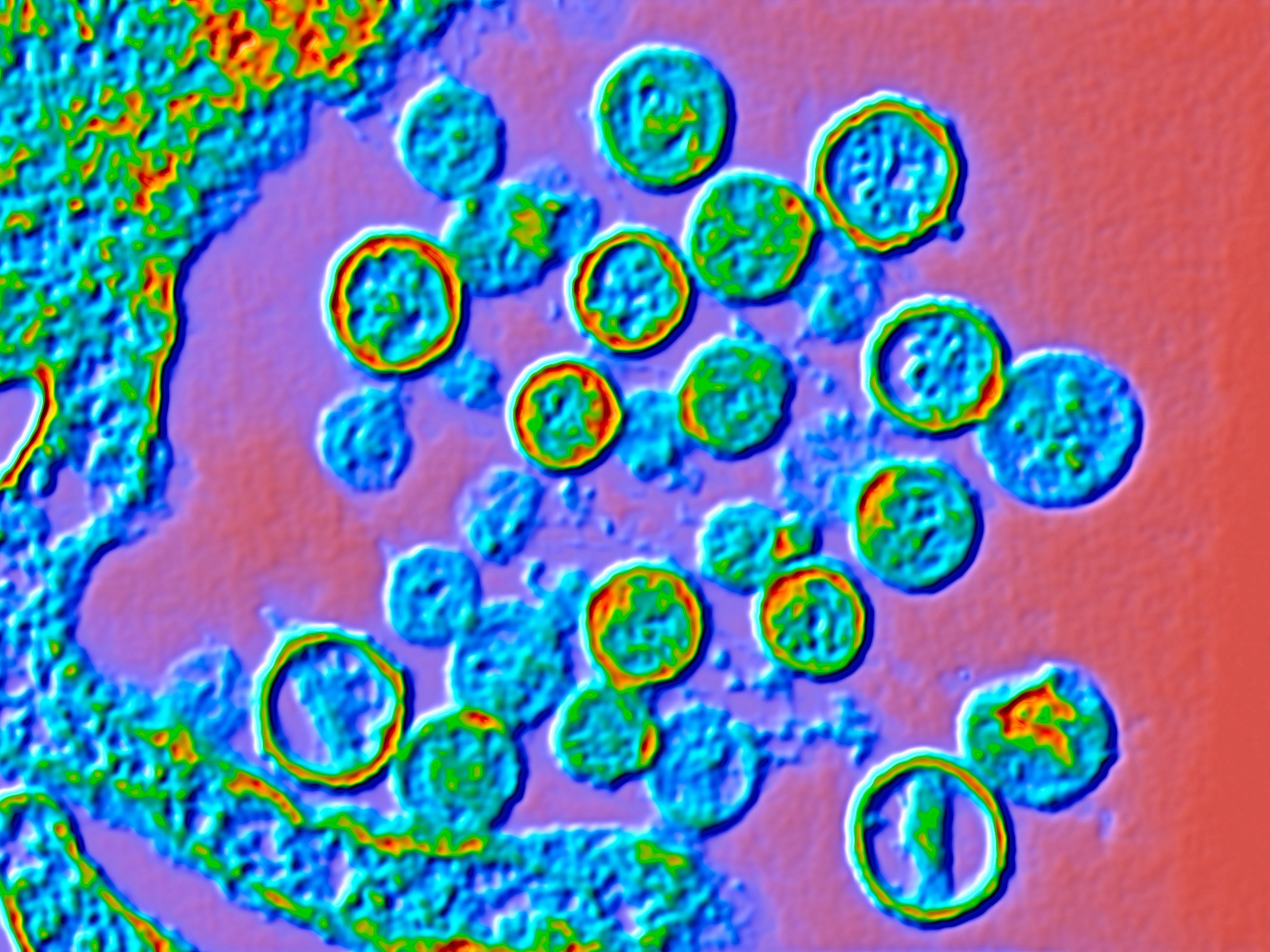
The perception of a public health threat is often decoupled from its actual transmission dynamics, leading to a misallocation of political and social capital. When an administration claims a pathogen is "under very good control," it implies a functional mastery over the biological and environmental variables governing that pathogen. In the case of Hantavirus, such control is not a product of active intervention, but rather a byproduct of the virus’s inherent biological limitations. To assess the risk accurately, one must look past the optics of "monitoring" and evaluate the structural barriers that prevent Hantavirus from achieving pandemic status.
The Pathogen Architecture: Orthohantavirus Biological Constraints
Unlike respiratory viruses such as SARS-CoV-2 or Influenza, Hantaviruses (specifically those found in the Americas, such as Sin Nombre virus) operate within a rigid ecological silo. The risk to human populations is governed by a specific cost function: the frequency of human-rodent interaction multiplied by the viral load present in the local reservoir.
Hantavirus Pulmonary Syndrome (HPS) is characterized by a high case-fatality rate (CFR), often exceeding 35%. In clinical terms, this high virulence is a Darwinian bottleneck. Pathogens that kill or incapacitate their hosts rapidly, and fail to achieve efficient human-to-human transmission, are structurally incapable of causing large-scale outbreaks. The "control" mentioned by administrative bodies is effectively a gift of the virus's own biology.
The Three Pillars of Transmission Prevention
The stability of Hantavirus case counts in the United States is maintained not by centralized medical "monitoring," but by three specific mechanical barriers:
- Reservoir Host Specificity: Each Hantavirus strain is evolved to a specific rodent host (e.g., the deer mouse for Sin Nombre). The virus does not jump between species easily. Consequently, the geographic spread of the virus is strictly capped by the habitat range of its primary rodent reservoir.
- Environmental Degradation: The virus is an enveloped RNA virus. It is notoriously fragile when exposed to UV light and desiccation. Viral particles shed in rodent urine or feces have a limited half-life in the open air. This creates a spatial constraint; infection requires proximity to a concentrated, fresh source of viral shedding, typically in enclosed, poorly ventilated spaces.
- Human-to-Human Transmission Failure: With the notable exception of the Andes virus in South America, Hantaviruses do not transmit between humans. This represents a terminal point in the infection chain. Every human case is a "dead-end" host, meaning the reproductive number ($R_0$) in human populations remains effectively zero.
Deconstructing Administrative Monitoring vs. Public Health Infrastructure
When executive statements focus on "monitoring," they refer to the passive surveillance systems maintained by the CDC and state health departments. This is a reactive rather than a proactive posture. Passive surveillance relies on clinicians recognizing the symptoms of HPS—which initially mimic common influenza—and ordering specific serological testing or PCR.
The bottleneck in this system is the diagnostic window. Because HPS progresses rapidly from "flu-like symptoms" to acute respiratory failure, the lag between infection and reporting means that "monitoring" provides a historical record rather than a real-time defense. The administration’s claim of control is technically accurate in terms of outcome stability, but it masks the fact that the primary defense mechanism is public education regarding rodent control, not a sophisticated clinical intervention.
The Ecological Cost Function of Zoonotic Spills
The prevalence of Hantavirus in human populations is a direct function of rodent population density, which is in turn dictated by trophic cascades.
- Precipitation Events: Increased rainfall leads to a surplus of seeds and insects, causing a spike in rodent populations.
- The "Lurking" Period: There is often a 12-to-18-month lag between a significant weather event and a spike in human Hantavirus cases.
- Encroachment Dynamics: Human risk increases as residential development pushes into previously undisturbed rural or semi-rural habitats.
If an administration truly sought to "control" Hantavirus, the metrics would need to shift from counting human cases to measuring rodent seroprevalence and habitat moisture levels. Without these leading indicators, "monitoring" remains a trailing metric that offers no preventive value.
Clinical Management and the Myth of Therapeutic Control
There is no WHO-cleared vaccine or specific antiviral treatment for Hantavirus that has demonstrated high-level efficacy in human trials. Ribavirin, while effective in vitro, has shown inconsistent results in clinical settings.
The management of the virus relies entirely on "supportive care," specifically:
- Extracorporeal Membrane Oxygenation (ECMO): Providing cardiac and respiratory support by circulating blood outside the body.
- Early Intubation: Managing the rapid onset of pulmonary edema.
The high fatality rate persists because the damage is immunopathological. The virus triggers an intense immune response that increases vascular permeability, causing the lungs to fill with fluid. This is a "cytokine storm" mechanism. Because we lack a way to toggle the immune response without compromising the host's ability to fight the virus, medical "control" is a misnomer. We are merely managing the symptoms of a biological collision.
Structural Risks in the Surveillance Model
The current US model for Hantavirus surveillance faces several systemic vulnerabilities that high-level administrative rhetoric tends to overlook:
Diagnostic Fragmentation
Most rural clinics—where Hantavirus is most likely to present—lack the specialized laboratory equipment required to confirm a Hantavirus diagnosis on-site. Samples must be sent to state labs or the CDC. This creates a data latency that prevents immediate local health warnings.
Economic Disincentives for Prevention
The most effective way to prevent Hantavirus is "rodent-proofing" structures. For agricultural workers or individuals in low-income rural housing, the capital expenditure required to seal a home or barn is often prohibitive. Public health messaging that advises "avoidance" without providing the resources for structural mitigation is a strategy with diminishing returns.
Misidentification and Under-reporting
While the "administration is monitoring" the known cases, a significant number of mild or sub-clinical Hantavirus infections likely go unrecorded. While Sin Nombre is known for severe disease, other strains may cause milder symptoms that are never tested. This means our understanding of the true viral "footprint" is skewed toward the most extreme outcomes.
Comparative Risk: Hantavirus vs. Emergent Respiratory Pathogens
To understand why Hantavirus remains "under control" while other viruses escape containment, we must examine the transmission vector. A virus that requires a rodent intermediary is fundamentally easier to manage than one that utilizes a human intermediary.
The logistical challenge of Hantavirus is a problem of geography and sanitation. The logistical challenge of a pandemic-potential virus is a problem of human behavior and global trade. By grouping Hantavirus into the same "monitoring" bucket as high-transmission viruses, administrative statements create a false sense of security regarding the government's ability to manage more complex, human-centric outbreaks.
Hantavirus is a "stable" threat. Its behavior is predictable, its host is known, and its transmission path is inefficient. It does not evolve at the speed of respiratory viruses, nor does it possess the ability to hide in asymptomatic human carriers who travel via international flight paths.
Strategic Allocation of Public Health Capital
The primary strategic move for managing low-frequency, high-consequence zoonotic diseases like Hantavirus is the hardening of the "Last Mile" of healthcare. This involves:
- Distributed Diagnostics: Investing in point-of-care testing for rural health centers to bypass the central laboratory latency.
- Ecological Surveillance: Shifting the focus from human case counts to rodent population monitoring. If we know a "mast year" for seeds has occurred, we can predict a Hantavirus spike a year in advance.
- Targeted Infrastructure Subsidies: Providing grants for rodent-proofing in high-risk agricultural sectors.
Effective management of Hantavirus is not a matter of high-level administrative "observation." It is a matter of localized, ecological intervention and the recognition that the virus's current "controlled" status is a result of its own biological limitations, not the inherent strength of current surveillance systems. The strategy must move from passive observation to the active mitigation of the human-rodent interface.