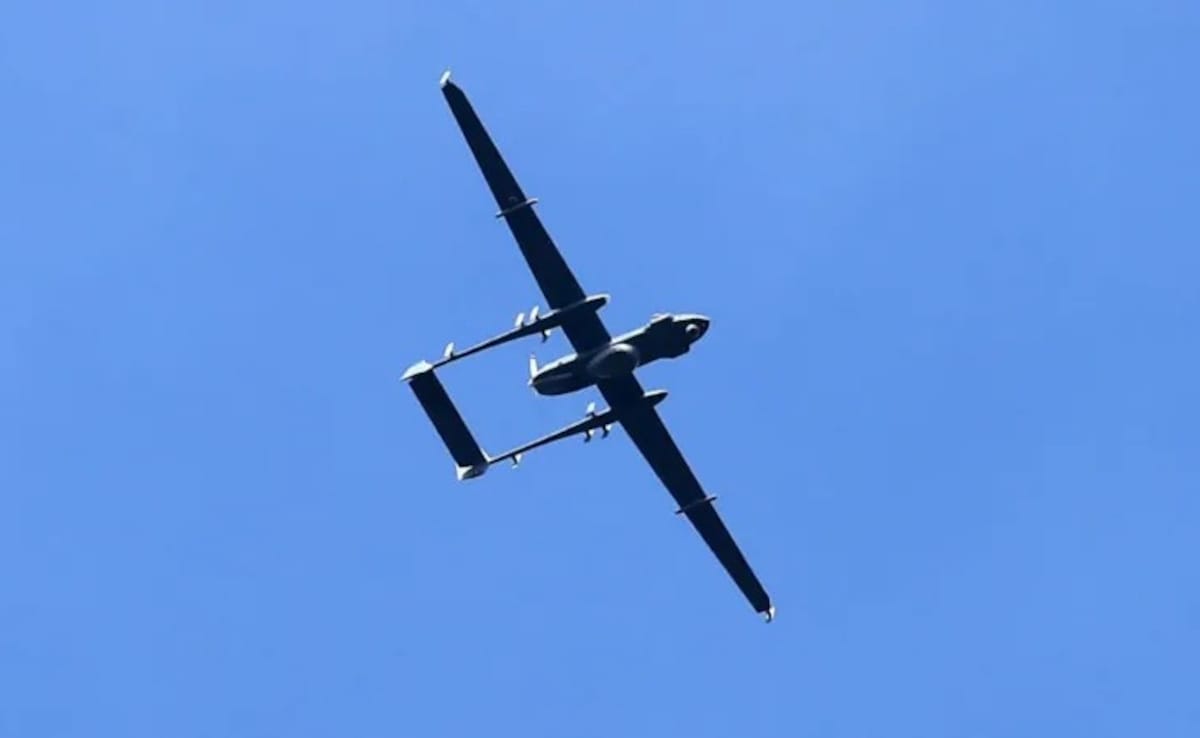
The recent swarm of unidentified aerial systems (UAS) over Barksdale Air Force Base represents a failure of traditional kinetic perimeter security and highlights a widening gap between legacy defense architecture and modern low-cost attrition warfare. While the Air Force confirms an ongoing investigation into these incursions, the incident is not an isolated breach but a data point in a systemic shift: the democratization of tactical reconnaissance. The core issue is not the presence of drones themselves, but the inability of existing electronic warfare and physical security protocols to achieve a 100% interdiction rate against low-RCS (Radar Cross Section) targets in sensitive airspace.
The Triad of Asymmetric Vulnerability
The threat profile of a UAS incursion at a Global Strike Command installation can be categorized into three distinct operational vectors. Each vector imposes a different cost-benefit ratio on the defender, creating a structural disadvantage for the Air Force.
- Intelligence, Surveillance, and Reconnaissance (ISR) Saturation: Unlike satellite overflights, which are predictable and limited by orbital mechanics, persistent UAS presence allows for real-time monitoring of "Pattern of Life" (PoL) data. This includes maintenance cycles of B-52H Stratofortresses, security shift rotations, and the specific movement of nuclear weapon storage containers.
- Kinetic Proximity Risk: Even if a drone is not armed, its presence near flight lines creates a "FOD" (Foreign Object Debris) hazard that can ground an entire wing. The mere threat of a collision forces a cessation of operations, effectively achieving a mission-kill without firing a shot.
- Electronic Signature Mapping: Advanced UAS can carry SIGINT (Signals Intelligence) payloads designed to map the radio frequency environment of the base. By loitering, these systems can identify the exact frequencies used by encrypted comms or the blind spots in ground-based radar arrays.
The Detection Bottleneck and Sensor Fusion Failures
The difficulty in neutralizing these incursions stems from a physics-based limitation in current sensor arrays. Most military-grade radar systems were designed to track high-velocity, high-altitude metal targets with significant heat signatures. A small, plastic or carbon-fiber quadcopter loitering at 500 feet presents a near-zero Doppler shift and a radar return often indistinguishable from avian activity.
The Signal-to-Noise Ratio Problem
To detect a small drone, a radar operator must lower the filtering threshold. This increases the probability of detection ($P_d$) but simultaneously spikes the false alarm rate ($P_{fa}$). At a high-readiness installation like Barksdale, a high $P_{fa}$ is unacceptable as it leads to "alarm fatigue" and the unnecessary mobilization of security forces. The current infrastructure lacks the integrated sensor fusion—combining acoustic, thermal, and radio frequency (RF) sensors—required to filter out environmental noise in real-time.
The Non-Attributable Origin
The logic of traditional deterrence relies on attribution. If a sovereign state flies a manned aircraft into US restricted airspace, the response is governed by established diplomatic and military protocols. UAS incursions operate in a "gray zone." If the drone is commercially off-the-shelf (COTS) and lacks an active transmitter (relying instead on pre-programmed GPS waypoints), tracing the operator in real-time becomes a logistical impossibility within the few minutes the drone is airborne.
Counter-UAS (C-UAS) Internal Contradictions
The Air Force faces a "Cost-per-Interdiction" crisis. Using a multimillion-dollar surface-to-air missile or a manned fighter to intercept a $2,000 drone is economically unsustainable. However, the alternative—electronic jamming—carries significant risk to the base's own infrastructure.
- RF Jamming Collateral: Wide-spectrum jamming intended to sever the link between a drone and its pilot can inadvertently disrupt base communications, navigation aids (ILS), and local civilian cellular networks.
- Directed Energy Limitations: High-power microwave (HPM) and laser systems (HEL) offer a lower cost-per-shot but require clear lines of sight and significant power generation, making them difficult to deploy rapidly across a sprawling 22,000-acre installation.
- The Legal Friction: Outside of specific war-zone authorities, the destruction of drones over domestic soil involves complex legal hurdles involving the FAA and the Department of Justice, even on military land.
The Strategic Cost Function of Inaction
Each day these incursions continue without a kinetic or electronic "hard stop," the deterrent value of the installation erodes. The adversary—whether a foreign intelligence service or a sophisticated non-state actor—gathers data on the response time, the specific equipment deployed to track them, and the rules of engagement (ROE) followed by Air Force security personnel.
The "Cost Function" for the defender is calculated as:
$$C_d = (O_{cost} + R_{loss} + I_{risk})$$
Where:
- $O_{cost}$ is the operational cost of grounding aircraft or scrambling security.
- $R_{loss}$ is the reputational loss of sovereignty over restricted airspace.
- $I_{risk}$ is the intelligence value leaked to the adversary.
Currently, the $C_d$ is increasing while the adversary's cost remains fixed at the price of a consumer-grade battery and a plastic chassis.
Integration of Autonomous Interceptors
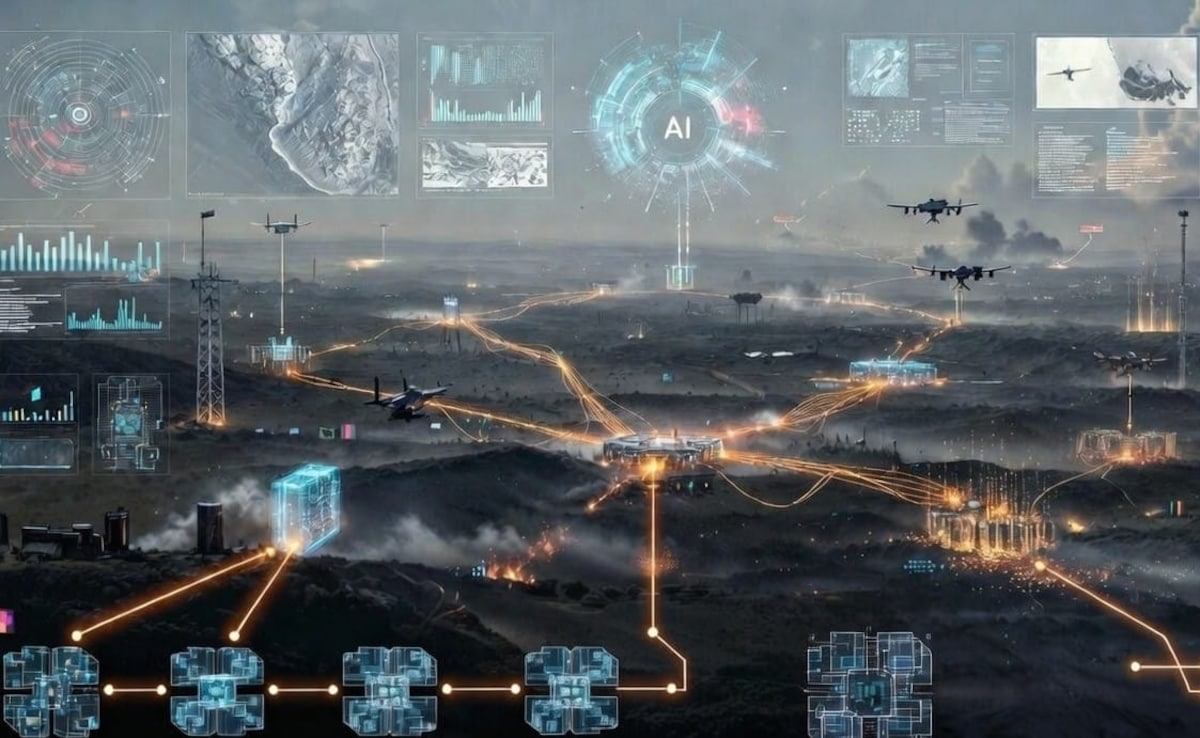
To move beyond the current reactive posture, the strategy must shift toward autonomous, tiered defense. This involves the deployment of "Interceptor Drones" or "Drone Dogs" that reside in automated nesting stations along the perimeter. Upon a sensor hit, these interceptors launch automatically, using onboard AI to track and physically disable the intruder (via nets or kinetic impact) without requiring a human operator to maintain a constant link or risking the frequency interference of wide-area jamming.
This approach solves the attribution problem by neutralizing the threat immediately and provides a scalable way to handle "swarms" that would overwhelm a single human-operated C-UAS station. The reliance on manual reporting and civilian-style law enforcement investigations after the fact is a legacy mindset that fails to account for the speed of autonomous flight.
Securing the skies over Barksdale and similar strategic hubs requires an immediate pivot from ground-centric security to a multi-layered, autonomous aerial policing model. If the Air Force cannot demonstrate the ability to deny access to low-cost surveillance assets, the perceived security of the nuclear triad’s most vital ground components will continue to be called into question. The move from "investigating" to "interdicting" is the only viable path to restoring operational integrity.