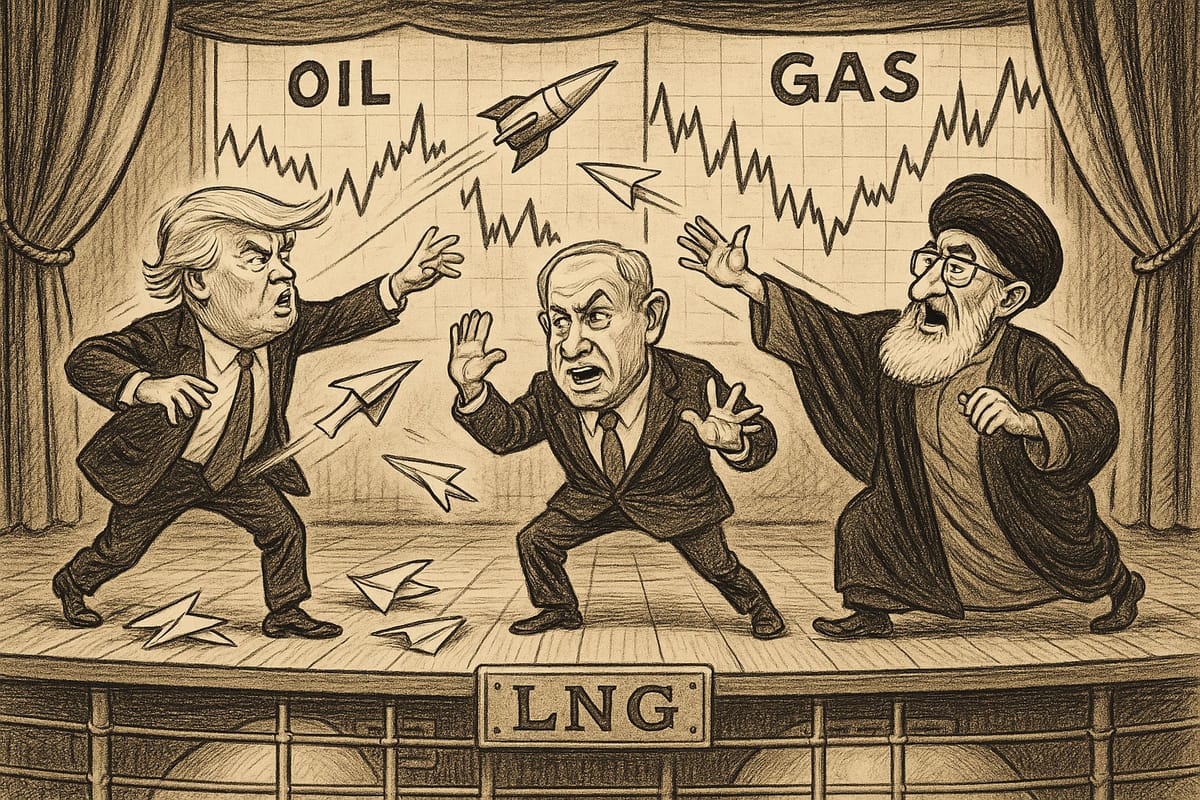
Iran stands at a precipice that the Islamic Republic has spent four decades trying to avoid. With the passing of Supreme Leader Ayatollah Ali Khamenei, the transition of power is no longer a theoretical exercise for the Assembly of Experts; it is a live-fire drill occurring under the shadow of a regional war. The ritualistic placement of the body at Tehran’s Grand Mosalla is a choreographed display of continuity, but the reality behind the velvet curtains is one of intense friction. Simultaneously, Tehran has signaled a dramatic escalation by threatening Israel’s Shimon Peres Negev Nuclear Research Center near Dimona. This is not merely a reflexive lash-out during a period of mourning. It is a calculated attempt to project strength at the exact moment the regime feels most vulnerable.
The Power Vacuum and the Assembly of Experts
The death of a Supreme Leader in a theocratic autocracy creates a unique type of gravity well. Everything pulls toward the center, yet the center is currently empty. While the Grand Mosalla serves as the stage for public grief, the real movement is happening in the corridors where the 88 members of the Assembly of Experts meet. Their task is to select a successor who can balance the competing interests of the traditional clerics and the increasingly dominant Islamic Revolutionary Guard Corps (IRGC).
For years, the IRGC has been cannibalizing the Iranian economy, moving from a paramilitary force to a multi-billion-dollar conglomerate. They do not want a leader who will rein them in. They want a figurehead who provides religious legitimacy while they manage the geopolitical "Forward Defense" strategy. The selection process is rarely about the most learned scholar. It is about the candidate with the fewest enemies who can still command the loyalty of the armed forces. If the transition stumbles, the facade of the velayat-e faqih—the guardianship of the jurist—could crack, leaving the IRGC as the sole arbiter of Iranian power.
Dimona as a Shield
Threatening Dimona is a classic page from the Iranian deterrent playbook, but the timing changes the stakes. By putting Israel’s nuclear infrastructure in the crosshairs, Tehran is attempting to "freeze" the board. They are telling Jerusalem and Washington that any attempt to capitalize on the internal instability of the succession will result in a catastrophic regional exchange.
The logic is simple. Iran knows that its conventional air defenses are porous. Recent engagements have shown that long-range precision strikes can penetrate their airspace. Therefore, they must rely on the threat of asymmetric or "ultimate" escalation. By naming Dimona, they are signaling that the era of "strategic patience" has been buried alongside the late Supreme Leader. This is a high-stakes bluff, or a terrifying new doctrine, designed to ensure that the world stays at arm's length while the new leadership in Tehran cements its grip on the bureaucracy.
The IRGC Shadow Government
We have to look at the internal mechanics of the IRGC to understand why the Dimona threat is being amplified now. The Guard is not a monolith. Within its ranks, there are hardliners who believe that the only way to save the revolution is to sprint toward a nuclear breakout. With the stabilizing, albeit conservative, hand of Khamenei gone, these factions may see an opening.
- Internal Security: The IRGC must prevent any domestic uprising that might take advantage of the transition period.
- Regional Proxies: Groups like Hezbollah and the Houthis are looking for a sign that the "Axis of Resistance" still has a benefactor.
- Nuclear Ambition: The threat to Dimona serves as a reminder that Iran has its own cards to play regarding atomic infrastructure.
If the new Supreme Leader is perceived as weak, the IRGC may take more aggressive unilateral actions to prove they are still the masters of the house. This makes the period between the funeral at the Mosalla and the official appointment of a successor the most dangerous window in modern Middle Eastern history.
The Geography of the Grand Mosalla
The choice of the Grand Mosalla for the public viewing is symbolic. It is one of the largest mosque complexes in the world, a brutalist monument to the Islamic Republic’s endurance. In Iranian political theater, size equals legitimacy. By filling this space with millions of mourners, the regime seeks to provide a visual mandate for whoever takes the seat next. It is an attempt to drown out the voices of dissent that have grown louder in recent years over economic mismanagement and social restrictions.
However, crowds are volatile. The regime remembers the funeral of Qasem Soleimani, where a stampede killed dozens. They also remember that large gatherings can pivot from grief to protest with a single spark. The security presence in Tehran is currently at a level not seen since the 2022 demonstrations. Every street corner is a checkpoint. The mourning is mandatory, but the vigilance is desperate.
The Dimona Target and Global Intelligence
Western intelligence agencies are likely parsing the Dimona threat for technical sincerity. Is Iran moving its road-mobile missiles? Are the command-and-control links to the proxy networks seeing increased traffic? Threatening a nuclear site is a breach of the unwritten rules of the shadow war that has played out between Iran and Israel for decades.
Usually, these two powers hit each other in the dark—cyberattacks, assassinations in the streets of Tehran, or "mysterious" explosions at shipping ports. To name Dimona directly is to bring the shadow war into the blinding light. It suggests that the new decision-makers in Tehran may be less risk-averse than their predecessor. This shift in risk tolerance is the most significant variable in the current crisis.
The Economic Cost of the Transition
While the world watches the missiles and the mosques, the Iranian rial is in a freefall. Markets hate uncertainty, and there is no greater uncertainty than a vacuum at the top of a sanctioned oil state. The incoming leader inherits an economy that is effectively decoupled from the global banking system and a population that has reached the limit of its endurance.
The "Dimona Gambit" is also a distraction for the domestic audience. If the state can manufacture a high-stakes external crisis, it can justify the continued suppression of economic grievances under the guise of national security. It is a cynical but effective tool. By framing the moment as one of "existential threat" from Israel, the regime demands absolute unity, making any criticism of the succession process look like treason.
Potential Successors and the Hardline Pivot
The names being floated in the backrooms—names like Mojtaba Khamenei or various high-ranking clerics—all share one trait: they are ideologically rigid. There is no "reformer" waiting in the wings. The system has been purged of anyone who might advocate for a pivot toward the West.
The next Supreme Leader will likely be a product of the security apparatus. This means the threat against Dimona might not just be a temporary rhetorical flourish. It could be the first pillar of a new, more aggressive foreign policy. If the new leader feels he lacks the religious credentials of his predecessor, he will compensate with military bravado. He will need the IRGC to keep him in power, and the IRGC wants a more confrontational stance against Israel and the United States.
The Logistics of the Funeral and the Message to the World
The funeral at the Grand Mosalla is being broadcast in high definition to every capital in the world. The message is clear: the system is intact. The mourners are numerous. The state is powerful. But seasoned observers know that the more a regime performs "stability," the more unstable it likely is.
Foreign dignitaries attending the service will be watching the body language of the key players. Who is standing closest to the coffin? Who is leading the prayers? These are the tea leaves of theocratic succession. In a country where the political structure is opaque, these public rituals are the only data points available.
The threat to Dimona, meanwhile, serves as the audio track to these visuals. It is the roar meant to keep the spectators from getting too close to the cage. Israel has remained officially quiet, but their defense posture speaks for itself. The Arrow and David's Sling batteries are on high alert. The region is holding its breath.
The Redefinition of Deterrence
We are witnessing the end of an era. The death of the Supreme Leader marks the final departure of the revolutionary generation that took power in 1979. The new guard has no memory of the revolution itself, only the long, grinding war with Iraq and the decades of sanctions that followed. They are more cynical, more militaristic, and perhaps more desperate.
The Dimona threat indicates that the old guardrails are gone. For years, there was a sense that Tehran knew exactly how far it could push before triggering a total war. That certainty has evaporated. If the transition in Tehran does not go smoothly, the temptation to "export" the crisis through a military strike or a massive proxy escalation will be immense.
The Grand Mosalla is currently a place of prayer and mourning, but it is also the center of a geopolitical hurricane. The decisions made in the next 72 hours will determine the map of the Middle East for the next twenty years. It is no longer about one man’s legacy. It is about the survival of a system that is prepared to burn the region down rather than admit it is failing.
Check the readiness of the regional missile defense networks.