Iran has fundamentally shifted the geometry of Middle Eastern power not by detonating a warhead, but by achieving a state of "permanent breakout capability" that renders traditional diplomacy obsolete. While Washington remains fixated on the number of spinning centrifuges at Natanz or Fordow, the reality on the ground has bypassed the negotiation table. Tehran has mastered the full nuclear fuel cycle and integrated it into a sophisticated "ring of fire" defense strategy, effectively gaining the deterrent benefits of a nuclear weapon without the international pariah status of a declared test. This threshold status is the new "nuclear weapon" in the Iranian arsenal. It is a psychological and tactical lever that forces the United States and its allies to choose between an unwinnable regional war or the acceptance of a Persian hegemony.
The old playbook relied on the belief that sanctions could starve a program into submission. That failed. The new reality is that Iran has built a distributed, hardened, and technologically redundant infrastructure that can produce weapons-grade uranium in a matter of days. This isn’t a future threat. It is a current capacity.
The Myth of the Breakout Clock
For decades, intelligence agencies and think tanks obsessed over the "breakout clock"—the theoretical time it would take Iran to produce enough 90% enriched uranium for a single device. This metric is now a relic of a simpler era. By maintaining a massive stockpile of 60% enriched uranium, Iran has shortened the final sprint to a point where detection and military intervention are physically impossible before the task is complete.
The technical barrier has dissolved. Converting 60% enriched uranium to 90% weapons-grade material requires significantly less "separative work" than the initial jump from 5% to 20%. Tehran has already done the heavy lifting. They are standing at the one-yard line, and they have no intention of crossing it unless provoked, because the threat of crossing is more valuable than the act itself. This is "latent deterrence." It provides the regime with a shield under which it can expand its conventional influence, fund proxies, and dictate oil prices without fearing a regime-changing invasion.
Hardened Silos and the Failure of Cyber Warfare
The era of Stuxnet is over. While the 2010 cyberattack on Iranian centrifuges was a masterpiece of digital sabotage, it taught Tehran a vital lesson: air-gapped systems and indigenous hardware are the only way to survive a superpower’s technical onslaught.
Since then, the Iranian nuclear program has moved deep underground. The Fordow facility, carved into a mountain near the city of Qom, is shielded by hundreds of feet of rock and reinforced concrete. Standard "bunker buster" munitions in the U.S. inventory, such as the GBU-31, would struggle to reach the primary enrichment halls. Even the Massive Ordnance Penetrator (MOP), the 30,000-pound behemoth designed specifically for this purpose, faces a mathematical problem of physics versus geology.
You cannot bomb knowledge. Even if a strike successfully collapsed the tunnels at Fordow, the thousands of scientists, engineers, and technicians who have mastered the enrichment process remain. They have the blueprints, the experience, and the domestic manufacturing base to rebuild. Iran no longer relies on the "black market" for parts. They build their own IR-6 and IR-9 centrifuges, which are significantly faster and more efficient than the early models based on stolen designs.
The Drone and Missile Shield
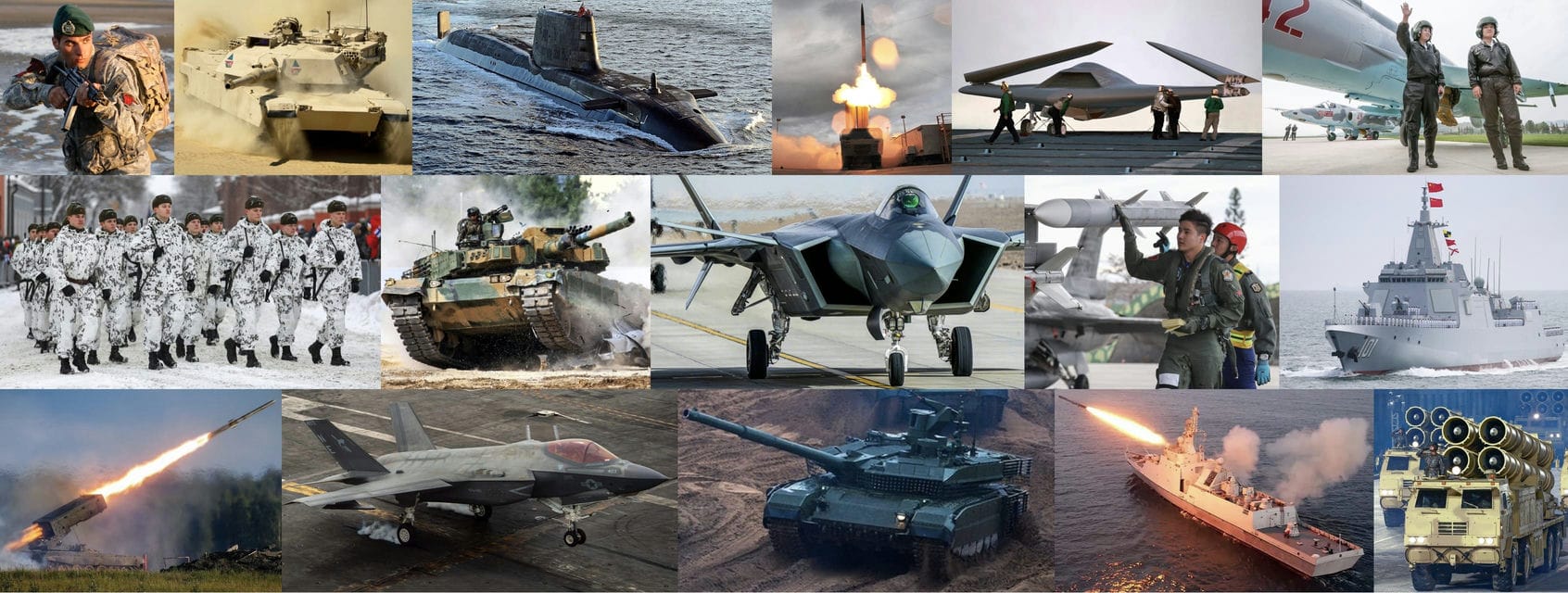
A nuclear program does not exist in a vacuum. It is protected by a conventional umbrella that has become increasingly lethal. The proliferation of Iranian-made suicide drones and precision-guided ballistic missiles has changed the cost-benefit analysis for any regional actor considering a preemptive strike.
The strategy is simple: saturation. In any conflict, Iran intends to overwhelm sophisticated missile defense systems like the Iron Dome or the Patriot battery through sheer volume. By launching hundreds of low-cost drones in coordination with high-speed missiles, they ensure that even the most advanced defense will suffer "leakage." For a country like Israel or a high-value target like a U.S. carrier group, a few hits from precision munitions can be catastrophic.
This conventional capability serves as the "bodyguard" for the nuclear program. It creates a "porcupine effect." Sure, you can try to eat the porcupine, but you will bleed out in the process. This reality has forced a quiet, desperate recalibration in Gulf capitals, leading to a wave of de-escalation and diplomatic hedging as regional powers realize the U.S. security guarantee is no longer a definitive shield against a threshold nuclear state.
The Russian and Chinese Connection
Geopolitics is no longer unipolar. The war in Ukraine has forged a "marriage of convenience" between Moscow and Tehran that fundamentally alters the nuclear equation. In exchange for the thousands of Shahed drones that have harassed Ukrainian infrastructure, Russia is providing Iran with advanced military technology, including Su-35 fighter jets and potentially S-400 missile defense systems.
More importantly, Russia and China are providing diplomatic cover in the UN Security Council. The era of "snapback" sanctions and unified global pressure is dead. Beijing continues to buy Iranian oil, providing the hard currency necessary to keep the centrifuges spinning and the internal economy from total collapse. This "Eurasian Integration" means that Iran is no longer an isolated pariah; it is a critical node in a new axis that views Western-led non-proliferation efforts as a tool of American imperialism rather than a global good.
The Intelligence Blind Spot
We are entering a period of profound uncertainty. As Iran restricts access for International Atomic Energy Agency (IAEA) inspectors and "de-designates" experienced monitors, the West’s "eyes on the ground" are failing. We are moving from a state of "monitored transparency" to a "black box."
In this environment, miscalculation is the greatest risk. When intelligence is murky, military planners tend to assume the worst-case scenario. Conversely, politicians may ignore mounting evidence to avoid being forced into a war they cannot afford. This gap between technical reality and political will is where Iran thrives. They have mastered the art of the "creeping red line," pushing just far enough to gain an advantage, but not so far that it triggers an immediate, overwhelming response.
The Failure of the JCPOA Framework
The Joint Comprehensive Plan of Action (JCPOA) was built on the assumption that Iran could be incentivized to trade its nuclear ambitions for economic integration. This was a fundamental misunderstanding of the regime's priorities. For the leadership in Tehran, nuclear capability is not a bargaining chip; it is an existential requirement. They watched what happened to Muammar Gaddafi in Libya after he surrendered his nuclear program. They watched what happened to Saddam Hussein. They see North Korea, a destitute state that is treated as a global power solely because it possesses the bomb.
The lesson learned was clear: security comes from strength, not signatures on a page. Even if a new deal were signed tomorrow, the "knowledge gain" from the last several years cannot be unlearned. You cannot put the toothpaste back in the tube. Iran has now operated advanced centrifuges and enriched uranium to near-weapons levels. That experience is permanent.
Beyond Enrichment
The final piece of the puzzle is weaponization—the process of turning enriched uranium into a functioning warhead that can survive the heat of re-entry and detonate on target. While there is no public intelligence suggesting Iran has resumed the "Amad" program in full, the components are modular.
Miniaturizing a warhead and integrating it into a missile nose cone is a significant engineering challenge, but it is not an impossible one for a nation that can put satellites into orbit. Iran’s space program is effectively a laboratory for Intercontinental Ballistic Missile (ICBM) technology. Every time they launch a satellite, they are testing the propulsion and staging systems necessary to hit targets halfway across the globe.
A New Regional Arms Race
The consequence of Iran’s threshold status is the inevitable nuclearization of the Middle East. Saudi Arabia has made it clear that if Iran gets a bomb, they will follow suit. Turkey and Egypt are watching closely. We are witnessing the slow-motion collapse of the Non-Proliferation Treaty (NPT) in the world’s most volatile region.
This isn't just about Tehran anymore. It's about a fundamental shift in how mid-sized powers view sovereignty. In a world where the U.S. is perceived as retreating and traditional alliances are fraying, the nuclear option becomes the ultimate insurance policy.
The Strategic Trap
Washington is currently caught in a strategic pincer movement. To stop the Iranian program through military means would require a campaign of such scale and duration that it would likely ignite a regional conflagration, spike oil prices to ruinous levels, and draw the U.S. back into a Middle Eastern quagmire just as it tries to pivot to the Indo-Pacific.
To ignore the program is to accept a world where a revolutionary, anti-Western regime holds a permanent gun to the head of the global economy.
The "nuclear weapon" Iran found isn't a device sitting in a silo. It is the realization that they can achieve the status of a nuclear power through technical persistence and strategic patience, without ever having to face the consequences of a test. They have effectively hacked the international system. By the time the world decides to act, the "target" will have already moved, buried itself under a mountain, and surrounded itself with a wall of drones and diplomacy.
The traditional tools of statecraft—sanctions, treaties, and limited strikes—are being outpaced by a regime that has decided its survival depends on being too dangerous to touch. This is the new status quo. It is not a problem to be solved, but a reality to be managed. The leverage has shifted. Tehran knows it, and the rest of the world is just starting to wake up to the sound of centrifuges that will never truly stop.