Stop romanticizing the dead.
The breathless reporting surrounding Sardinia’s Domus de Janas—the so-called "fairy houses" recently inducted into the UNESCO World Heritage list—is a masterclass in travel industry infantilization. We are taking a sophisticated, gritty, and technologically advanced Neolithic culture and wrapping it in glitter.
By calling these structures "fairy houses," we aren't just being cute. We are actively erasing the engineering brilliance of the people who lived 5,000 years ago. These aren't whimsical cottages for forest spirits. They are rock-cut hypogea that represent a massive shift in human consciousness regarding death, property, and the architectural mastery of hard volcanic stone.
If you want to understand why the current UNESCO hype is actually a disservice to the Mediterranean's real history, you have to stop looking for magic and start looking at the physics of the pickaxe.
The Myth of the "Small People"
The term Domus de Janas translates from Sardinian as "House of the Fairies" or "House of the Witches." It’s a folk name born from medieval peasants who couldn't fathom how their ancestors carved into solid basalt and granite without iron tools.
They saw small openings and assumed small inhabitants.
Modern travel writers have swallowed this hook, line, and sinker. They focus on the "enchantment" of the 3,500 sites scattered across the island. But here is the cold, hard reality: the people of the Ozieri culture (c. 3200–2800 BCE) weren't small. They were efficient.
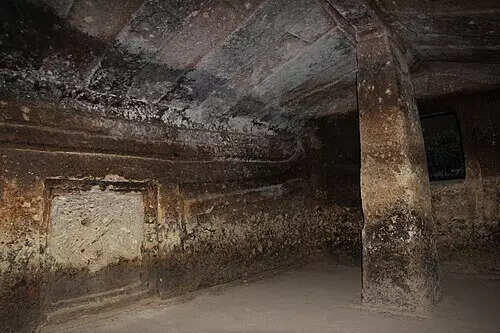
The entryways are narrow because heat management and structural integrity matter when you are carving into a hillside. They weren't building for the living; they were replicating the homes of the living for the eternal dead. These sites are mirrors of a lost architecture. Inside, you find carved rafters, pillars, and even faux-windows.
When you call them fairy houses, you ignore the fact that these people were using obsidian and stone mallets to achieve precision that would make a modern contractor sweat. It wasn't magic. It was grueling, calculated labor.
The UNESCO Kiss of Death
UNESCO status is the ultimate double-edged sword. While it supposedly "protects" these sites, it often serves as a neon sign for "over-tourism."
I have watched historic sites from Venice to Machu Picchu get hollowed out by the very recognition meant to save them. Sardinia is currently one of the few places in Europe where you can still feel the weight of deep time without being elbowed by a tour group from a cruise ship.
By branding the Domus de Janas as a "fairy" attraction, the local government is invited a specific, shallow type of tourism. They want the Instagram crowd. They want the "magical Sardinia" hashtags.
What they will get is a slow degradation of the actual archaeological value. The more we lean into the fairy narrative, the less we fund the actual carbon dating and chemical analysis of the red ochre used on the walls. We trade science for storytelling because storytelling sells tickets.
The Engineering Reality of the Neolithic
Let’s talk about the actual "tech" of the Domus de Janas.
These tombs were often carved into vertical cliffs or subterranean outcrops. To do this, the Ozieri people had to understand the cleavage planes of the rock. If you hit the stone the wrong way, the ceiling collapses.
They used a technique of thermal shock and percussion. They weren't just "digging holes." They were creating multi-room apartments. Some sites, like the Necropolis of Anghelu Ruju, contain over 35 individual tombs.
Why the "Home" Metaphor Matters
The most radical thing about these sites isn't their age. It’s their mimicry.
- Architectural Replication: The tombs feature carved "beams" in the ceiling. Why? Because their actual wooden houses had them.
- Symbolic Color: The walls are often coated in red ochre, representing blood and rebirth.
- Spatial Utility: They weren't just dumping bodies. These were ceremonial centers where the living interacted with the dead.
The "fairy" label suggests a separation from humanity. In reality, these sites prove how deeply the Neolithic Sardinians were connected to the earth and their own lineage. It was a cult of the ancestors, not a cult of the supernatural.
Stop Asking if They Are Real
The most common question in the "People Also Ask" section of search engines is: Are the fairy houses in Italy real?
It’s a flawed premise. They are real, but they aren't houses, and there were no fairies.
If you want the "brutally honest" answer: they are burial vaults. They are morgues carved with the tenderness of a master carpenter. To visit them expecting a fantasy novel is to miss the point of human evolution. We are the only species that spends this much energy decorating the place where we put our bones.
The Sardinian hypogea are evidence of a complex society with a hierarchy, a religion, and a surplus of resources. You don't spend three years carving a "fairy house" unless your society is stable enough to feed the carver while he works.
The Counter-Intuitive Guide to Visiting
If you actually care about history, stop following the UNESCO trail maps.
The "major" sites will soon be cordoned off behind plexiglass and gift shops. If you want to experience the power of the Domus de Janas, you need to go to the interior of the island—the Barbagia region.
Find a site that hasn't been scrubbed clean for tourists. Look for the tool marks on the walls. Notice how the light enters the chamber during the equinox. This wasn't a whimsical coincidence; it was archaeoastronomy.
A Warning for the "Enchanted" Traveler
If you go there looking for fairies, you will find a bunch of small, dark, damp holes in the ground. You will be disappointed.
But if you go there looking for the origins of Mediterranean urbanism, you will see the blueprint for the Roman villa and the modern apartment. You will see the first time humans decided that "nature" wasn't enough—that we had to reshape the very bones of the earth to match our imaginations.
The Cost of the Fairy Tale
There is a danger in making history "approachable."
When we simplify the Domus de Janas into a fairy tale, we lose the "battle scars" of the archaeologists who spent decades fighting to prove these weren't just natural caves. People like Giovanni Lilliu spent their lives trying to elevate Sardinian prehistory to the level of the Egyptian Pyramids.
Turning these into a "fairy" attraction is a slap in the face to that scholarship. It suggests that the real history isn't "interesting" enough on its own.
It is. The truth is always more interesting than the myth.
The people who built these tombs survived the transition from stone to copper. They traded obsidian across the entire Mediterranean. They were the masters of the sea before the Phoenicians even had a name.
They don't need your fairy stories. They need your respect for their engineering.
Stop looking for wings. Start looking at the stone.