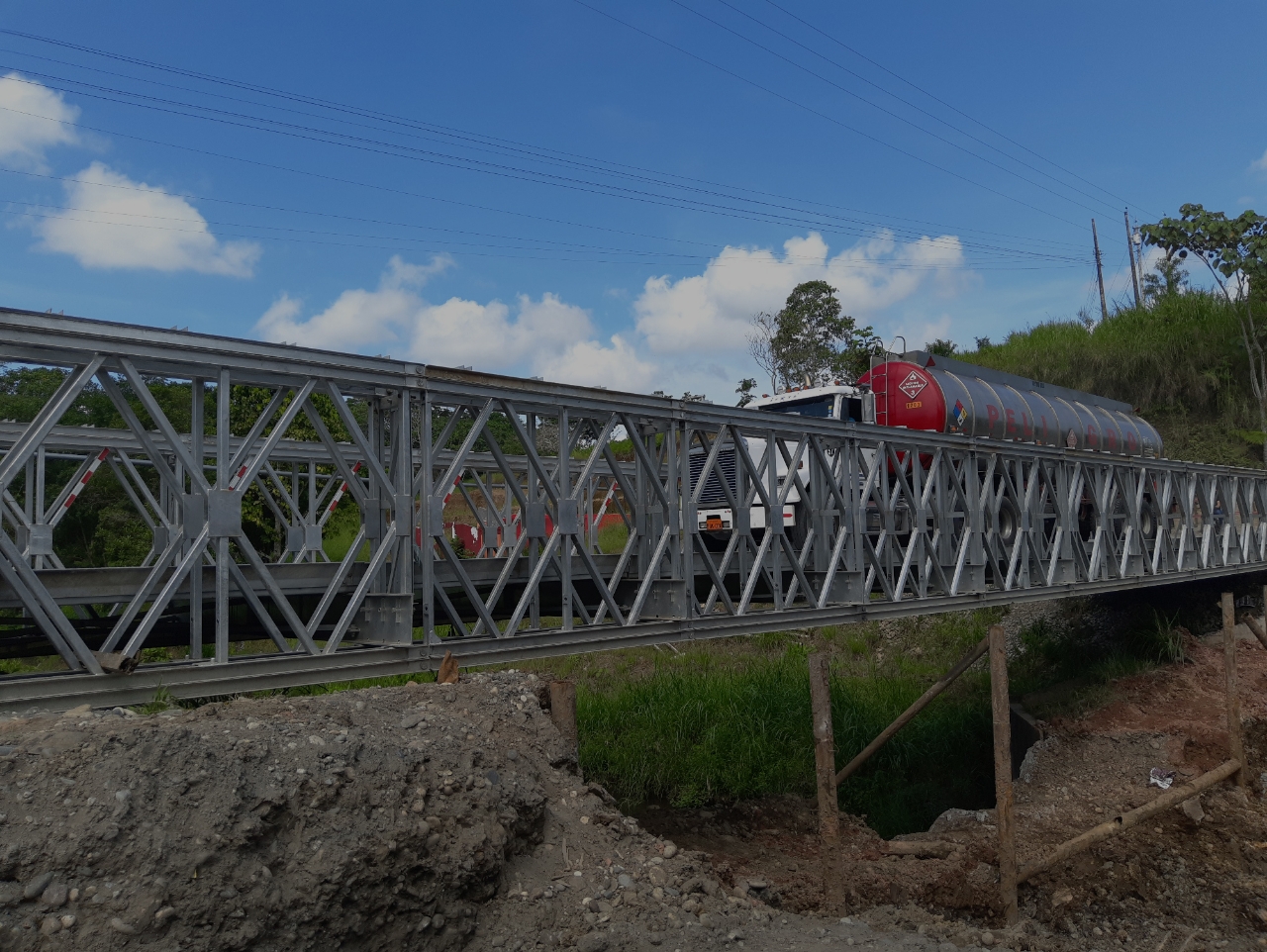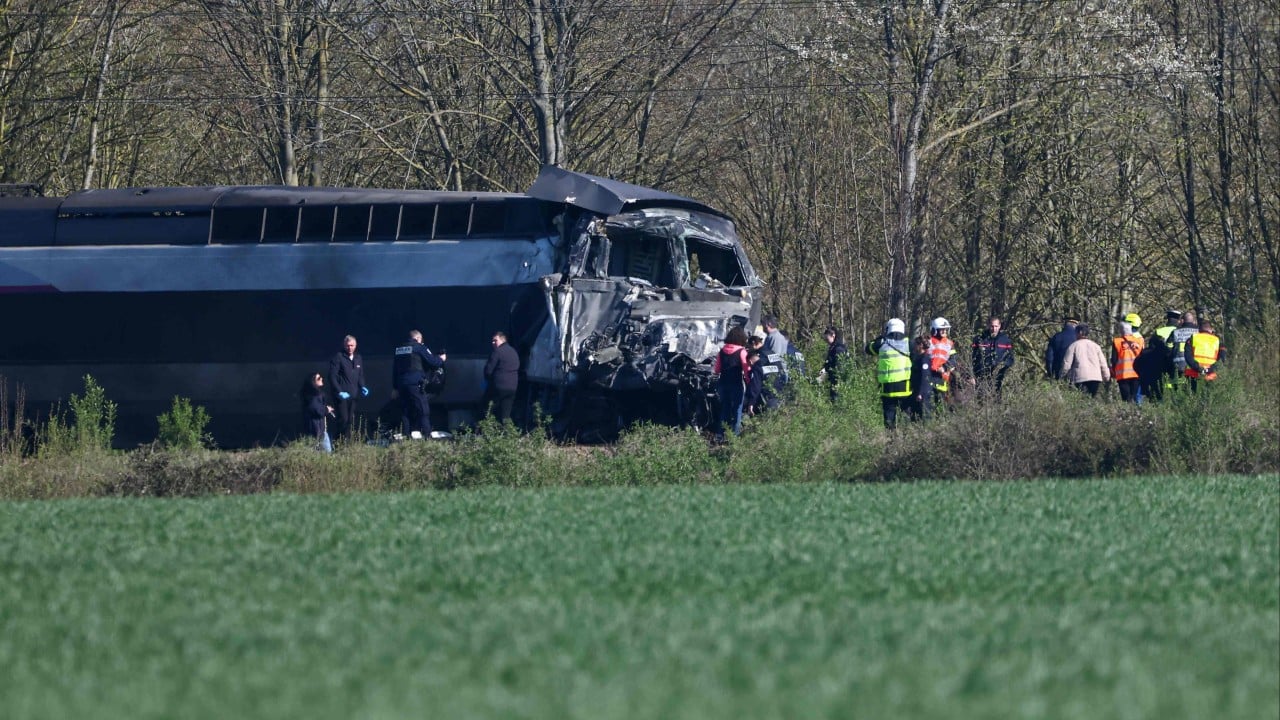
A high-speed train hitting a heavy goods vehicle isn't just a transport delay. It's a violent, terrifying event that shatters lives in seconds. The recent tragedy in France, where a TGV slammed into a truck stalled on the tracks, serves as a brutal reminder of a vulnerability we often ignore. We think of high-speed rail as the gold standard of safety, and usually, it is. But when you mix 300 km/h speeds with traditional road infrastructure, the results are predictably catastrophic.
The driver of the train didn't stand a chance. He died at the scene. He was doing his job, piloting one of the most sophisticated machines on the planet, only to be taken out by a vehicle that shouldn't have been there. It brings up a hard truth about modern infrastructure. We’re pushing the limits of speed while relying on 19th-century concepts like level crossings.
Why Level Crossings are a Disaster Waiting to Happen
Level crossings are the weak link in any rail network. In France, the SNCF (National Society of French Railways) has been working for years to remove them, but there are still thousands scattered across the countryside. When a TGV or a regional high-speed train travels through these areas, the margin for error disappears.
If a truck stalls on a crossing, the train driver has almost no time to react. A train moving at high speed requires kilometers, not meters, to come to a full stop. By the time the driver sees the obstruction, the physics of the situation have already decided the outcome. The momentum is simply too great. It's an unstoppable force meeting a very heavy, very stationary object.
Most people don't realize how much energy is involved here. We're talking about hundreds of tons of steel moving at speeds that would make a supercar blush. When that hits a truck, the truck effectively becomes a projectile or a crumpled heap of shrapnel. The kinetic energy doesn't just dissipate; it tears through the lead car of the train. In this specific incident, the impact was so severe that the front of the train was unrecognizable.
The Human Cost and the Driver's Burden
We talk about logistics, delays, and safety protocols, but we rarely talk about the person in the cabin. The train driver is often the first person to see the disaster coming and the last person who can do anything about it. They have to sit there, knowing what's about to happen, pulling every emergency lever available while the world rushes toward them.
- The physical trauma of the impact is often fatal for the driver.
- Survivors deal with lifelong PTSD from the "near-miss" or the sight of the collision.
- The responsibility felt by drivers, even when they are blameless, is immense.
This isn't an isolated French problem. It's a global issue. Whether it's the Acela in the US or the Shinkansen in Japan, the goal is always total separation of tracks and roads. Japan has largely succeeded by using elevated tracks for its high-speed lines. France and much of Europe still have segments where the "old world" meets the "new world" of transit. That's where people die.
Safety Systems That Failed This Time
Every level crossing is supposed to have fail-safes. Sensors, lights, and heavy barriers are the standard. So, what went wrong? In many of these accidents, the vehicle gets trapped. Sometimes the driver tries to beat the lights. Sometimes the truck simply breaks down at the worst possible millisecond.
There is a system called the "emergency telephone" at these crossings. If your car stalls, you're supposed to run to that phone. It alerts the rail dispatchers immediately. But in the real world, panic sets in. A truck driver might spend those precious thirty seconds trying to restart the engine instead of making the call. By then, the TGV is already around the bend.
Investigative bodies like the BEA-TT (Bureau d'Enquêtes sur les Accidents de Transport Terrestre) look into these crashes. They don't just look at the wreckage. They look at the timing of the signals and the response of the track sensors. If a sensor didn't trigger a signal to the train fast enough, that's a systemic failure.
The Massive Cost of Infrastructure Upgrades
The solution seems easy: get rid of all level crossings. Build bridges. Dig tunnels. But the reality is a budget nightmare. Replacing a single level crossing with an overpass can cost millions of Euros. Multiply that by the 15,000+ crossings in France, and you see why the progress is slow.
The government has to prioritize. They look at "high-risk" crossings—those with high traffic or poor visibility. But "low-risk" crossings still kill people. The crossing involved in this crash might not have been on a priority list yesterday, but it certainly is today. It shouldn't take a death to move a project up the schedule, but sadly, that's often how public spending works.
What You Need to Do at a Level Crossing
Most of us get impatient. We see the lights flash and think we can make it. Don't. It sounds like a cliché, but the train is faster than you think. Because of their size, high-speed trains often look like they're moving slower than they actually are. It's an optical illusion that has killed thousands.
If you ever find yourself stalled on the tracks, follow these steps. They aren't suggestions; they're the only way to stay alive.
- Get everyone out of the vehicle immediately. Forget your bags. Forget your phone. Just get out.
- Move away from the tracks. Don't run down the tracks. Run away from the tracks at a 45-degree angle toward the direction the train is coming from. If you run away from the train, the debris from the impact could hit you.
- Find the emergency phone or call emergency services. Tell them exactly which crossing you're at. There is usually a number or a name on a sign near the crossing.
The rail industry is moving toward autonomous detection. New systems use AI-powered cameras to spot obstructions and automatically signal trains to slow down miles before they reach the crossing. But until that tech is everywhere, we're stuck with the physical reality of steel on steel.
Rail travel remains the safest way to get around Europe. It's greener than flying and faster than driving. But this accident shows that "safe" isn't the same as "invincible." When we ignore the interface between our roads and our rails, we're gambling with lives. The driver who died in this crash paid the ultimate price for a gap in our infrastructure that we've known about for decades. It's time to stop talking about the cost of bridges and start talking about the cost of doing nothing.
Check your local transport authority's map for high-risk crossings on your daily commute. If you see a crossing that feels dangerous or has poor visibility, report it. Constant public pressure is often the only thing that gets these "slow-track" safety projects funded and finished.