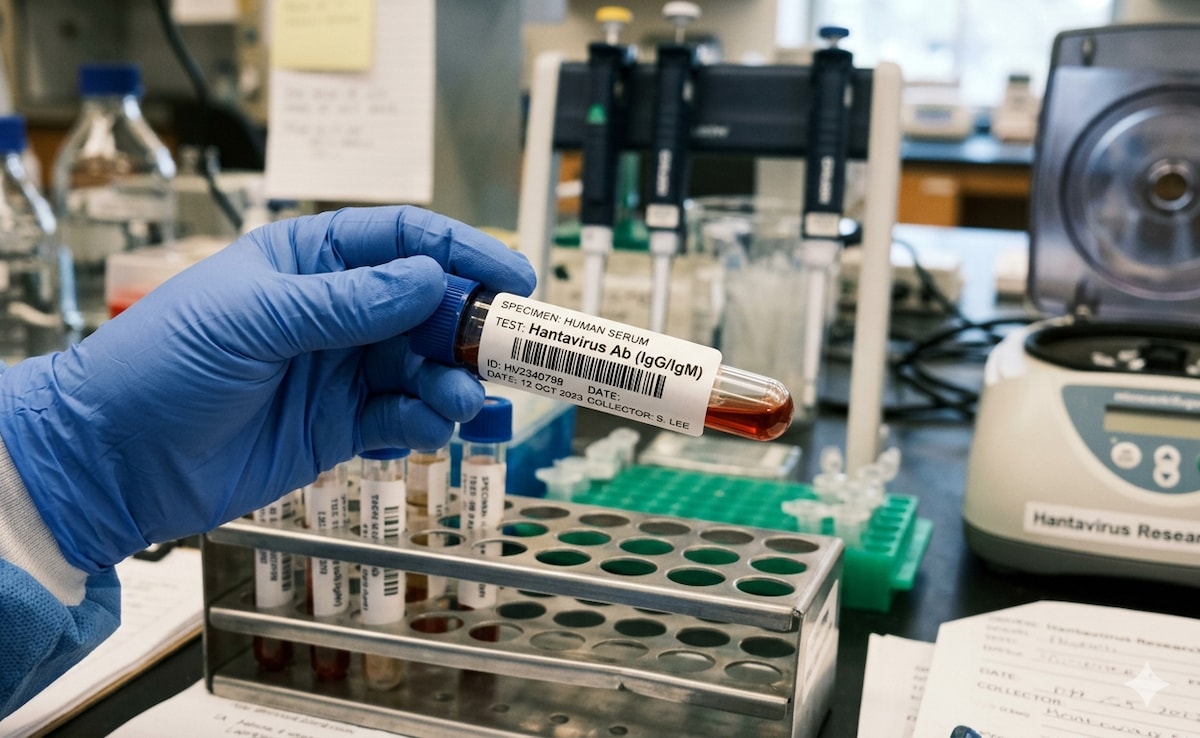
Public health history is littered with "what if" moments that haunt researchers for decades. The story of the Hantavirus vaccine is exactly that. It's a tale of brilliant science hitting a brick wall made of dollar signs and bureaucracy. While we pour billions into diseases that capture the public imagination, Hantavirus remains a terrifying outlier that kills about 35% of the people it infects in the Americas.
Scientists actually got close. They had a viable path. Then the money dried up.
You might think that a virus with such a high mortality rate would be a top priority for pharmaceutical giants. It isn't. Because Hantavirus outbreaks are sporadic and usually affect rural populations, the "market" isn't big enough to justify the R&D costs for a private company. This leaves life-saving research dependent on government grants and military funding. When those budgets shift, the lab lights go out.
Why Hantavirus Is a Scientific Nightmare
Most viruses have a predictable way of moving through the world. Hantavirus is different. It’s primarily carried by rodents—deer mice, rice rats, and cotton rats. You don't even need to be bitten to get sick. You just have to breathe in dust contaminated with their droppings or urine.
Once it’s in your lungs, the clock starts.
In South America, specifically with the Andes virus strain, person-to-person transmission has been documented. That’s a massive red flag. Yet, we still don't have a single FDA-approved vaccine or specific antiviral treatment. Doctors basically provide supportive care—ventilators and fluid management—and hope your body can fight it off.
The research was moving. Decades ago, teams at places like the U.S. Army Medical Research Institute of Infectious Diseases (USAMRIID) were making headway. They developed DNA-based vaccines that showed incredible promise in animal models. They even moved into Phase 1 clinical trials. These trials aren't just for show. They proved the vaccine was safe and could trigger an immune response in humans.
Then everything stopped.
The Financial Void Between Lab and Pharmacy
Science isn't just about microscopes and petri dishes. It’s about logistics. Transitioning from a successful Phase 1 trial to the much larger Phase 2 and Phase 3 trials costs hundreds of millions. This is where the "Valley of Death" happens in drug development.
Private investors look for a return on investment. If a disease only affects a few hundred people a year in the U.S., the profit isn't there. It's a cold, hard calculation that ignores the human cost. For Hantavirus, the primary funders are often military-linked because the virus is seen as a potential bioweapon or a threat to troops in the field.
When the geopolitical focus changes, so does the funding.
I've talked to researchers who spent their entire careers on this. They describe the frustration of having a freezer full of potential cures that they aren't allowed to test because they can't pay for the clinical infrastructure. It's not that the science failed. The funding model failed.
What the Competitor Reports Missed
Most news bites on this topic focus on the "scientists ran out of money" headline. That's true, but it's lazy. The real issue is the lack of a "warm" manufacturing base for orphan diseases.
If we had a permanent, government-funded facility dedicated to producing vaccines for rare but deadly pathogens, we wouldn't be in this mess. Instead, we rely on a system where we build everything from scratch every time there's a crisis. We saw this with Ebola. We saw it with Zika. We wait for a disaster, throw billions at it in a panic, and then stop funding the second the headlines fade.
Hantavirus is particularly tricky because it exists in two main forms:
- Hantavirus Pulmonary Syndrome (HPS): Common in the Americas. It fills your lungs with fluid.
- Hemorrhagic Fever with Renal Syndrome (HFRS): More common in Europe and Asia. It attacks the kidneys.
Developing a "universal" Hantavirus vaccine is the holy grail. Researchers were actually looking at using a "multivalent" approach—one shot to cover multiple strains. That research was shelved not because it was impossible, but because the paperwork and the trial costs for a multi-strain vaccine are even more complex and expensive.
The Cost of Inaction
Let’s talk about the 35% mortality rate again. Compare that to the seasonal flu or even early COVID-19 strains. Hantavirus is an apex predator of the viral world.
When a young, healthy person in Colorado or New Mexico dies three days after cleaning out a shed, that’s a failure of our medical system. We have the technology. We have the genetic maps of these viruses. We even have the delivery systems, like mRNA technology which proved its worth recently.
The DNA vaccine candidates developed years ago were precursors to the tech we use today. If that funding had stayed steady, we might have had a blueprint for rapid-response vaccines long before 2020. We keep paying the price for being reactive instead of proactive.
Breaking the Cycle
We can't keep letting "market size" dictate who lives and who dies.
Public-private partnerships like CEPI (Coalition for Epidemic Preparedness Innovations) are trying to bridge this gap, but they can't do it alone. They need consistent, multi-year commitments from wealthy nations.
If you live in an area where Hantavirus is endemic, you can't wait for a vaccine that might never come. You have to take the "low-tech" route.
- Seal up your home. Mice can fit through a hole the size of a dime.
- Wet down old droppings. Use a bleach solution before sweeping. Never, ever dry sweep or vacuum mouse nests.
- Wear a mask. If you’re cleaning a barn or a crawlspace, an N95 is the bare minimum.
The scientists are still there. The data is still in the archives. The only thing missing is the political will to treat a rare, deadly virus with the same urgency as a pandemic. Until that changes, the Hantavirus vaccine remains a ghost in a freezer, a victim of a system that values profit over preparedness.
Check your local health department's guidelines on rodent control. It’s the only real defense you have while the funding debates continue in air-conditioned offices far away from the dust and the deer mice.