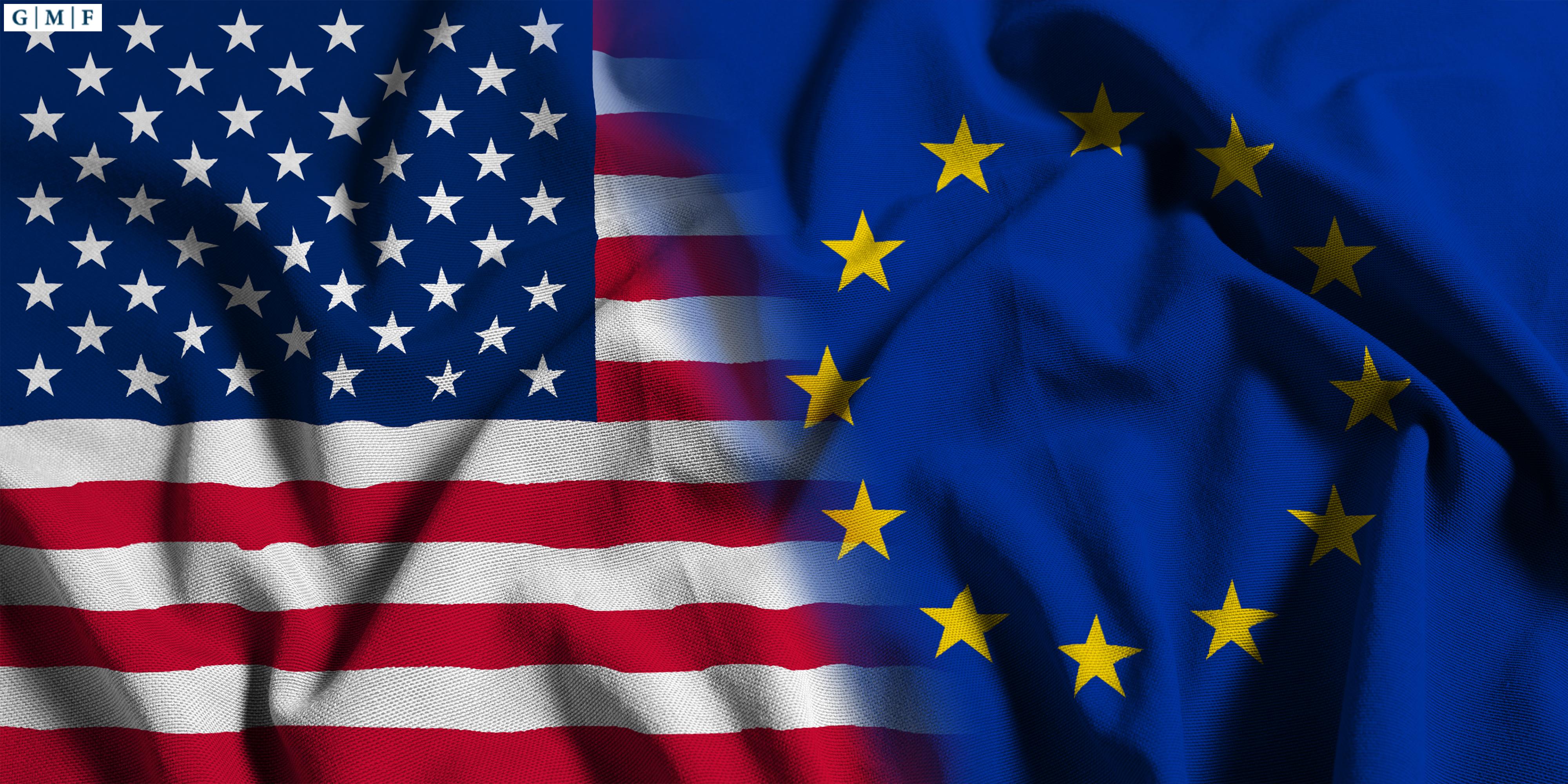
The United States and Europe do not maintain an alliance based on sentiment; they maintain a high-friction, high-output machine for risk mitigation. To view the transatlantic relationship as a choice is to fundamentally misunderstand the structural dependencies of the global order. The partnership functions through a tri-pillared architecture: the pooling of defense externalities, the integration of advanced supply chains, and the enforcement of a unified financial architecture. When one of these pillars erodes, the cost of sovereignty for every individual state involved increases exponentially.
The Defense Calculus: Pooling Externalities
Modern security is a capital-intensive utility. For European nations, the North Atlantic Treaty Organization (NATO) acts as a risk-pooling mechanism that allows member states to underwrite their security at a fraction of the cost required for independent deterrence. This is the Security Cost-Efficiency Ratio. For another perspective, read: this related article.
The US provides the "backbone" assets—strategic airlift, satellite intelligence, and nuclear deterrence—that are prohibitively expensive for mid-sized powers to develop in isolation. European states, in turn, provide the geographic depth and forward-deployed logistical hubs necessary for US global power projection. The logic is simple:
- Lower Entry Barriers: Shared standards (STANAGs) ensure that hardware from different nations is interoperable, reducing the "integration tax" during active conflicts.
- Deterrence as a Public Good: One nation’s investment in a missile defense shield protects the neighbor, creating a network effect where the total security output is greater than the sum of individual military budgets.
- Industrial Specialization: European firms like BAE Systems, Rheinmetall, and Leonardo plug into a broader Western defense-industrial base, ensuring that the technology gap between the West and its peer competitors remains wide.
The bottleneck in this pillar is the Asymmetric Burden Distribution. When the US accounts for roughly 70% of total NATO defense spending, the relationship moves from a partnership to a dependency. This creates political fragility, as the provider of the "utility" gains disproportionate leverage over the consumers. Similar analysis on the subject has been shared by Al Jazeera.
The Logistics of Interdependence: Decoupling and Derisking
The transatlantic trade corridor is the most significant economic artery in the world, not because of raw volume, but because of Complexity Density. Unlike the trade relationship with China, which is heavily weighted toward finished consumer goods and raw materials, US-EU trade is defined by intra-firm transfers and high-value components.
The Value Chain Feedback Loop
In sectors like aerospace, pharmaceuticals, and semiconductors, a single product may cross the Atlantic multiple times during its manufacturing lifecycle. This creates a "Locked-In" effect:
- R&D Synchronization: Collaborative research between US universities and European research institutes (like Fraunhofer) ensures that the next generation of standards—from 6G to quantum computing—are developed within a shared regulatory mindset.
- Regulatory Gravitas: The "Brussels Effect" ensures that EU regulations on data privacy (GDPR) or AI governance set the global floor. When US firms align with these standards, they create a de facto Western standard that forces the rest of the world to adapt or face exclusion from the two largest consumer markets.
- Capital Depth: The flow of Foreign Direct Investment (FDI) between the two regions is the primary driver of high-skilled employment. US companies are the largest investors in Europe, and vice versa. This is not "hot money" looking for quick returns; it is infrastructure-grade capital that anchors political interests to economic stability.
The Financial Hegemony Architecture
The true strength of the US-Europe axis lies in the Institutional Rails of the global financial system. The dominance of the Dollar and the Euro provides a combined "Sanctions Moat" that allows for the projection of power without kinetic force.
When the US and Europe act in concert to disconnect an adversary from the SWIFT messaging system or freeze central bank assets, the impact is systemic. Acting alone, the US can cause significant pain; acting with Europe, it can effectively sequester an economy from the global trade network.
The mechanism of this power is the Currency Reserve Dominance. Together, the Dollar and Euro account for over 80% of global foreign exchange reserves. This creates a feedback loop:
- Stability attracts global capital.
- Global capital reinforces the liquidity of these currencies.
- Liquidity lowers the cost of borrowing for Western governments, allowing them to fund the very defense and technology programs that maintain their dominance.
Structural Vulnerabilities and the Efficiency Trap
No system is without failure points. The transatlantic machine currently faces three primary "Friction Coefficients" that threaten to stall its output.
1. The Energy Divergence
The US has achieved energy independence through shale gas, while Europe remains in a volatile transition period. This creates a Cost of Production Gap. European industry, particularly in Germany, faces energy prices that are structurally higher than those in the US, leading to fears of deindustrialization. If Europe cannot secure a stable, low-cost energy floor, its role as the "High-Tech Workshop" of the alliance will crumble.
2. Digital Sovereignty vs. Platform Dominance
There is a fundamental tension between US-based "Big Tech" platforms and European regulatory ambitions. Europe views the dominance of US firms in cloud computing and AI as a strategic vulnerability. The US views European regulation as protectionism. This creates a Standardization Split. If the two sides diverge on AI ethics and data flows, the "Value Chain Feedback Loop" mentioned earlier will break, leading to a balkanized tech environment.
3. The Pivot to Asia
The US is increasingly prioritizing the Indo-Pacific. This creates a Strategic Attention Deficit. Europe is forced to confront the reality that it can no longer outsource its regional security to a distracted superpower. This transition period is dangerous; if Europe re-arms too slowly, it leaves a power vacuum. If it re-arms in a way that is not interoperable with US systems, it destroys the "Security Cost-Efficiency Ratio."
Quantitative Realities of the Alliance
To understand the scale, one must look at the Direct Investment Position. The US investment in the UK and the Netherlands alone is significantly higher than its investment in all of South America and Africa combined. This is the "Skin in the Game" metric. It is impossible for a US administration to "pivot" away from Europe without triggering a domestic economic crisis, just as it is impossible for Europe to "strategically autonomize" without a multi-decade, multi-trillion-euro investment in its own military and energy infrastructure.
The relationship is not about liking one another; it is about the Cost of Disintegration. The price of replacing the transatlantic security and economic architecture is higher than any participating nation is currently willing or able to pay.
Strategic Recommendation: The Integrated Industrial Base
To survive the current geopolitical volatility, the US and Europe must move beyond "consultation" and toward Industrial Co-production.
- Action 1: Harmonize Defense Procurement. The current model of "buying American" or "buying European" is inefficient. The alliance must move toward a model where components are standardized across both continents, allowing for a surge in production capacity during crises.
- Action 2: The Energy-Security Swap. The US must prioritize LNG and energy technology exports to Europe to stabilize the European industrial base, while Europe must increase its naval presence in the Mediterranean and North Atlantic to free up US assets for the Pacific.
- Action 3: Unified Technological Frontier. Rather than fighting over the regulation of existing tech, the two powers must create a "Transatlantic Data Space" that allows for the seamless flow of industrial data while maintaining high privacy standards for citizens.
The path forward requires treating the alliance as a singular, integrated operating system. Optimization of this system is not a luxury; it is the only way to maintain the current standard of living and security across the Western hemisphere. The era of the "free rider" is over, but the era of the "lone superpower" is equally dead. The only remaining viable model is the Integrated Power Bloc.