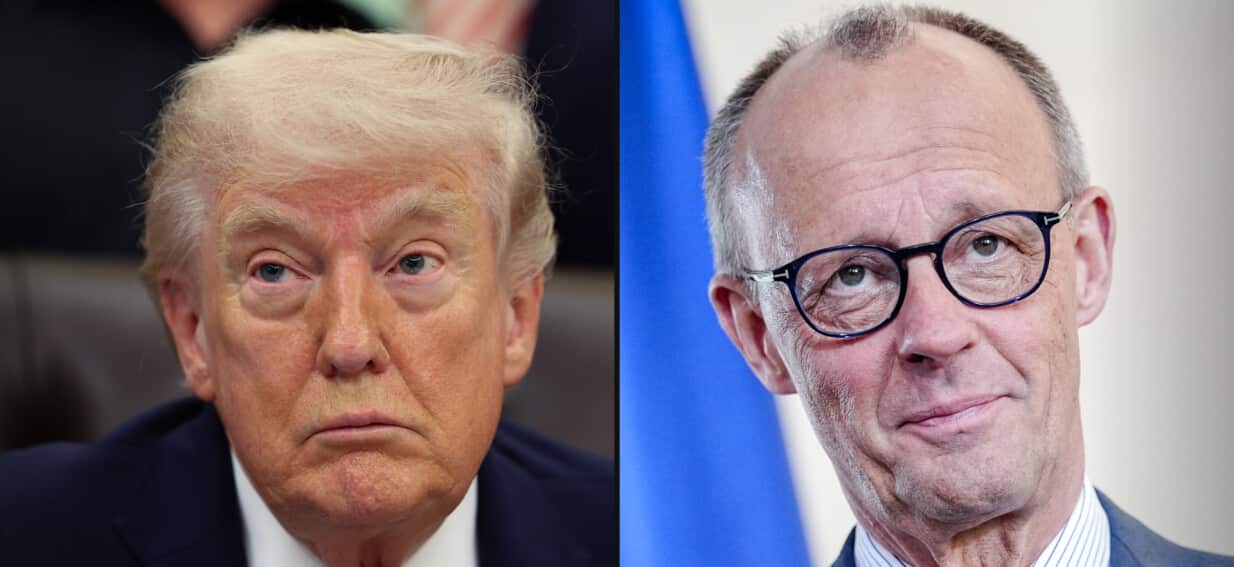
The media is hyperventilating again. If you read the standard beltway rags, the narrative is scripted: a "stoush" between Donald Trump and Angela Merkel is fracturing the liberal world order, weakening NATO, and handing Vladimir Putin a victory on a silver platter. They paint the potential withdrawal of thousands of American troops from German soil as a temper tantrum.
They are wrong. They are looking at the chessboard through a 1945 lens while the world has already moved into a multipolar era where geography matters less than energy independence and fiscal reality.
The real story isn't about a diplomatic spat. It is about the expiration date of a parasitic security relationship that has allowed Europe’s largest economy to atrophy its own defense capabilities while funding its social safety net with American tax dollars. Removing troops isn't an "escalation." It is a long-overdue market correction.
The Myth of the "Security Vacuum"
Mainstream analysts love to talk about "power vacuums." The theory suggests that if 10,000 U.S. soldiers leave bases like Ramstein or Grafenwoehr, Russian tanks will immediately start rolling toward the Rhine.
This is fiction. It ignores the fundamental shift in modern warfare.
The Kremlin isn't looking for a kinetic land war with a nuclear-armed NATO. They are winning through disinformation, pipeline diplomacy, and cyber-attacks. Stationing thousands of American infantrymen in the German countryside does exactly zero to stop a hack on a power grid or the influence of Nord Stream 2.
Germany has a GDP of nearly $4 trillion. They aren't a fragile post-war state in need of a permanent babysitter. By maintaining a massive troop presence, the U.S. provides a "moral hazard" for German leadership. Why should Berlin spend the political capital to hit the 2% NATO spending target when they know Washington will always pick up the tab?
I have seen this same dynamic in corporate turnarounds. When a parent company subsidizes a failing subsidiary for too long, the subsidiary loses the muscle memory required to compete. Germany has lost its "defense muscle." Its fighter jets are often grounded for lack of parts. Its submarines have, at various points, been entirely out of service.
The troop reduction isn't a threat; it’s an incentive. It forces Germany to decide if it wants to be a sovereign power or a protectorate.
The Nord Stream Paradox: Funding the Enemy
You cannot claim to be terrified of Russian aggression while simultaneously writing multi-billion dollar checks to Gazprom. This is the glaring hypocrisy the "stoush" headlines conveniently omit.
Germany’s energy policy is a masterclass in strategic incoherence. They shuttered their nuclear plants—the most reliable source of carbon-free baseload power—and replaced them with a reliance on Russian natural gas.
- Fact: Germany is the largest buyer of Russian gas in the world.
- Reality: U.S. troops are essentially guarding a country that is actively financing the very "threat" those troops are meant to deter.
From a cold, hard business perspective, this is an absurd ROI for the United States. If Berlin truly believed Russia was an existential military threat, they wouldn't be building pipelines to the Kremlin. Trump’s move to pull troops is simply aligning military presence with the reality of Germany’s own trade choices. If you want to sleep in the same bed as the bear, don't ask the neighbor to stand guard at the door.
Moving Beyond the "Empire" Model
The U.S. military footprint in Germany is a vestige of the Cold War. In that era, we needed "forward-deployed" forces because logistical chains were slow and communication was analog.
Today, the Pentagon operates on a "Global Response Force" model. We can move a brigade anywhere on the planet in 72 hours. Maintaining massive, permanent "Little Americas" in the middle of Europe is an inefficient use of resources. It’s the equivalent of a company keeping a massive physical office in a high-rent district when everyone can work remotely.
- Cost of living: It is exponentially cheaper to house and train troops in Poland or the United States.
- Strategic positioning: Poland actually wants the troops. They see the threat clearly. They aren't hedging their bets with Russian gas deals. They are meeting their spending obligations.
The critics argue that moving troops to Poland "provokes" Russia. This is a weak-kneed argument. Russia is already provoked. They are already active. Moving assets from a reluctant host (Germany) to a willing and strategically positioned host (Poland) is just smart logistics.
The Fiscal Reality No One Wants to Face
The United States is currently carrying a debt load that would make a third-world dictator blush. Every dollar spent maintaining a bowling alley and a Burger King on a base in Germany is a dollar not spent on hypersonic missiles, AI-driven defense systems, or domestic infrastructure.
We are subsidizing the defense of a competitor. Make no mistake—Germany is a trade competitor. They have used the "peace dividend" provided by U.S. security to bolster their manufacturing sector and dominate the Eurozone.
I’ve seen executives at Tier 1 defense firms quietly admit that the current arrangement is unsustainable. They know the future isn't in "boots on the ground" in stable democracies. The future is in orbital defense and cyber-resilience. The "troop reduction" is a pivot away from the 20th century and toward a leaner, more effective 21st-century posture.
Dismantling the "Broken Alliance" Narrative
"Is NATO dead?" the pundits ask.
No. NATO is just being audited.
An alliance where one member provides 70% of the hardware and the other members provide "thoughts and prayers" isn't an alliance. It’s a charity. Trump is the first president in decades to treat NATO like a contract rather than a religious cult.
If a contract isn't being fulfilled, you renegotiate. That is what we are seeing. It’s messy, it’s loud, and it breaks "diplomatic protocol." But protocol is what gave us thirty years of European defense stagnation.
People ask: "Won't this hurt our relationship with Germany?"
Perhaps in the short term. But a relationship based on honesty and shared burden is infinitely more "robust" than one based on resentment and freeloading. Germany will moan, they will protest, and then—eventually—they will buy more of their own planes. They will fix their own tanks. They will become the leader Europe needs them to be, rather than the pampered child of the American taxpayer.
The Brutal Truth
The "stoush" isn't an escalation. It's a reality check.
The United States is no longer willing to be the world's unpaid security guard, especially for clients who have the money to pay but choose to spend it on Russian gas and shorter work weeks.
If you are a German policymaker, the message is clear: the free ride is over. Start spending on your own defense, or get used to seeing "For Rent" signs on those American bases. This isn't about isolationism. It’s about professionalism.
The liberal world order won't collapse because 9,500 soldiers move from Stuttgart to Kentucky or Warsaw. It will collapse if the nations within that order refuse to defend themselves.
Stop mourning the end of the Cold War status quo. It’s been dead for years. We’re just finally stoping the payments on the coffin.