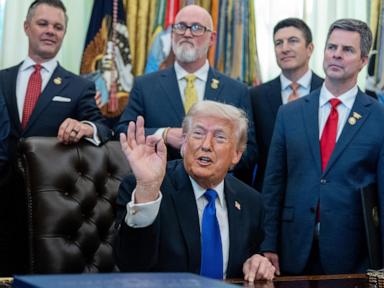
Donald Trump just cleared the path for the Keystone XL pipeline. It’s a move that feels like a massive déjà vu for anyone who followed the energy wars of the last decade. By granting a new presidential permit, he didn’t just sign a piece of paper. He basically threw a lit match into a powder keg of environmental protests, legal battles, and economic speculation.
The project is massive. We’re talking about an 1,179-mile artery designed to carry roughly 830,000 barrels of crude oil every single day from the Alberta oil sands down to Steele City, Nebraska. From there, it links up with existing infrastructure to hit the Gulf Coast refineries. It’s a logistics dream for oil producers and a nightmare for activists.
Most people think this is just about "more oil." It isn’t. This is about where that oil comes from and who controls the flow. It’s a direct challenge to the previous administration's climate legacy. It also sets up a high-stakes showdown between federal authority and local resistance.
The Economic Reality of the Keystone XL Pipeline
Let’s talk money. TC Energy, the company behind the project, has been playing a long game. They’ve spent billions already. When the permit was denied previously, the project sat in a state of expensive limbo. Now, the green light means thousands of construction jobs.
Estimates usually land around 42,000 "direct, indirect, and induced" jobs. But let’s be real. Most of these are temporary. They last as long as the welding and digging last. Once the oil starts flowing, the permanent workforce is tiny. Critics point this out constantly. Proponents, however, argue that the ripple effect in local economies—hotels, diners, equipment rentals—is where the real value lives during the build.
There's also the tax revenue. Local counties along the route are looking at millions in property taxes. For a small town in Montana or South Dakota, that’s not just a statistic. That’s a new school or a paved road. You can't ignore that kind of local incentive.
Why Canada Is All In
Alberta is sitting on the third-largest oil reserve in the world. Their problem? They’re landlocked. Without pipelines, they’re forced to ship oil by rail.
Rail is expensive. It’s also arguably more dangerous than a pipeline when you look at the frequency of spills. For the Canadian government, Keystone XL is a lifeline. It narrows the price gap between Western Canadian Select and West Texas Intermediate. When that gap shrinks, Canada gets richer.
I’ve talked to folks in the industry who say this isn't just about profit margins. It's about energy security. They’d rather get their heavy crude from a stable neighbor like Canada than from places like Venezuela or the Middle East. It's a compelling argument if you look at it through a geopolitical lens.
The Environmental Wall and Legal Hurdles
You can't talk about Keystone XL without talking about the Ogallala Aquifer. This is one of the world's largest freshwater deposits. It sits right under the proposed route in Nebraska. Farmers there aren't all "anti-oil" radicals. They're people worried about their water.
If a leak happens, it’s not just a mess. It’s a catastrophe for American agriculture. The bitumen being moved is thick. It’s harder to clean up than light crude. This isn't theoretical; we’ve seen what happens when these lines fail.
Indigenous Rights and Land Sovereignty
The pipeline crosses through ancestral lands and critical watersheds for several Tribal Nations. The Rosebud Sioux Tribe and the Fort Belknap Indian Community have been vocal. They aren't just worried about spills. They're asserting their legal right to protect their territory.
This isn't a simple permit issue. It’s a treaty issue. We’re going to see these cases tied up in the 9th Circuit Court of Appeals for a long time. Trump’s permit might bypass some bureaucratic red tape, but it doesn't automatically erase the legal standing of sovereign nations.
The Carbon Math
Climate change is the elephant in the room. The State Department previously suggested that the oil would be extracted anyway and shipped by rail if the pipeline wasn't built. Their logic? The pipeline itself doesn't "cause" the emissions.
That's a bit of a stretch. Pipelines make extraction cheaper and more efficient. When you make it easier to sell a product, people produce more of it. Alberta's oil sands are carbon-intensive to process. By building the infrastructure, you're essentially locking in decades of high-carbon energy production at a time when the global focus is shifting toward renewables.
What Happens Next for Investors and Observers
If you’re watching this from an investment perspective, don't pop the champagne yet. A presidential permit is a start, but it's not the finish line.
- Watch the Courts: Every move the administration makes will be met with a lawsuit. Federal judges in Montana and Nebraska have a history of halting construction based on environmental reviews.
- Follow the Steel: TC Energy needs to move equipment and mobilize a massive workforce. Watch for "pre-construction" activities as a sign of how confident they actually are.
- The Political Swing: This project is now a political football. If the administration changes again in four years, the permit could be revoked again. That kind of uncertainty is a nightmare for long-term infrastructure.
The reality is that Keystone XL has become a symbol. To some, it’s the path to energy independence and blue-collar jobs. To others, it’s a "carbon bomb" that threatens our water and climate. Both sides are digging in.
Stop waiting for a "simple" resolution. This project will be fought inch by inch. If you're a landowner or an investor, your next step is to monitor the specific court filings in the District of Great Falls. That’s where the real power lies right now. The paperwork is signed, but the shovels aren't in the ground for good just yet.
Keep an eye on the crude oil price spreads. If the gap between Canadian and US oil stays wide, the pressure to build will only intensify. If it narrows, the economic argument starts to lose its teeth. The market might eventually decide what the politicians can't.